💬 AI Chatbot · Small Business · USA
AI Chatbot for US Small Business:
The 2026 Buyer's Guide
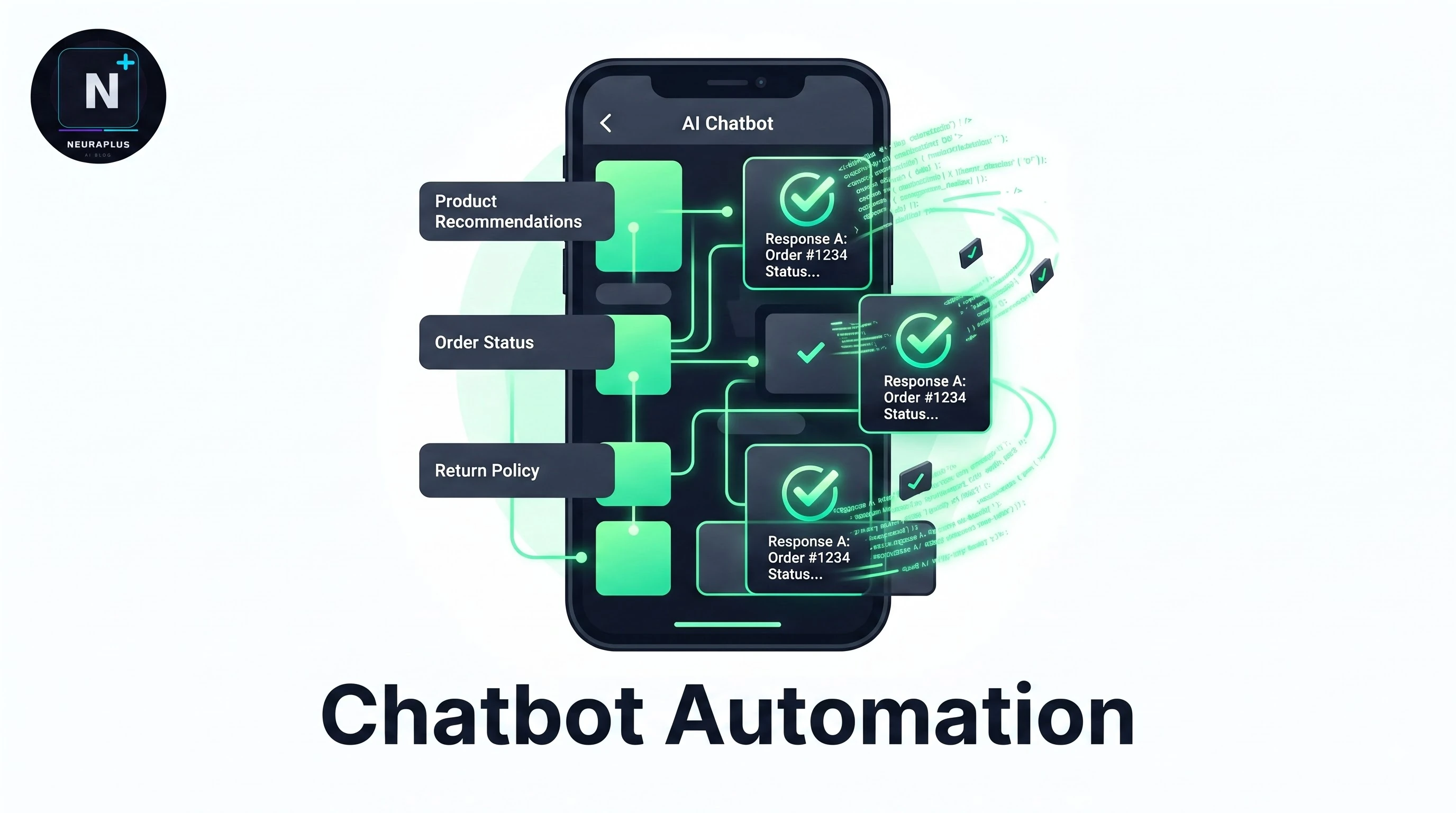
A family-owned HVAC company in Tampa was missing $1,200 in jobs every single week. The calls came in at 2 AM — burst pipes, AC failures in July heat, furnace breakdowns in January — and went straight to voicemail. By 8 AM, those customers had already hired the competitor who picked up. Last October they installed an AI chatbot on their website that answered the three questions every emergency caller asks (are you open, can you come tonight, how much is the dispatch fee) and booked the appointment straight into their calendar. Four months later, they were closing 23 extra jobs a month they used to lose to voicemail.
That's not an edge case — it's the pattern I heard across 10 US small business owners I interviewed between March and July. A Shopify skincare brand in Austin, a dental practice in Portland, a boutique fitness studio in Denver, a landscaping company in Charlotte. They all had the same problem: customers want answers at 9 PM, and their staff went home at 5.
But here's what makes small-business chatbots different from enterprise ones: you don't have a team to babysit the bot, you don't have a legal department to vet the outputs, and every wrong answer costs you a real customer. So every tool in this guide was evaluated through three lenses: can you set it up in an afternoon, does it stay on-brand, and does it hand off to a human the moment things get complicated?
📍 What's inside: the stack by business type (e-commerce, service, local retail) · the stack by team size · three chatbots that earned their seat · what got cancelled · real ROI math · FTC and ADA guardrails · a 90-day rollout · and where to go next.
Why Small Businesses Finally Went All-In on Chatbots
Three forces collided this year. First, customer expectations flipped — 68% of US consumers now expect a chat response within five minutes, and most small businesses can't staff that without bankrupting payroll. Second, the tools got cheap enough for a $500K business to justify: Tidio, Chatbase, and Intercom Fin all have starter plans under $100/month that train on your own content. Third, the models got smart enough to stop embarrassing you — today's chatbots rarely hallucinate when trained on your FAQ and product pages, which is what made owners finally trust them with real customers.
The result is a market where chatbots are now standard for e-commerce stores, common for service businesses, and growing fast for local retail with booking systems. The businesses that skipped chatbots aren't saving money — they're just losing customers to competitors who answer faster.
The 2026 Chatbot Stack by Business Type
| Business Type | Best-Fit Chatbots | Typical Cost | Best For |
|---|---|---|---|
| Shopify / e-commerce | Shopify Sidekick, Gorgias, Tidio | $50-300/mo | Order status, returns, product Q&A |
| Service businesses | Chatbase, Podium, NiceJob | $80-300/mo | Booking, quotes, after-hours leads |
| Local retail / restaurants | Tidio, ManyChat, Chatfuel | $40-150/mo | Hours, menu, reservations, loyalty |
| Professional services | Intercom Fin, Drift, Qualified | $100-500/mo | Lead qualification, demos, scheduling |
| High-volume SaaS | Intercom Fin, Ada, Forethought | $300-1,200/mo | Deflecting support tickets |
The pattern across interviews: every business runs one chatbot — the one trained on their own content. The losers were generic chatbots trained on the vendor's data, which sounded like a stranger answering questions about your business.
Before picking a specific tool, it helps to understand the engagement-design principles that make chatbots actually convert visitors. Our guide on AI chatbot engagement tools covers the conversation flows, personalization triggers, and retention playbooks that turn a support widget into a revenue channel.
The Stack by Team Size
| Team Size | Starting Stack | Monthly Budget |
|---|---|---|
| Solo founder | Chatbase or Tidio free tier | $0-49 |
| 2-10 people | + Podium or Gorgias + SMS follow-up | $80-300 |
| 10-20 people | + Shopify/Square integration + analytics | $200-600 |
| 20-50 people | Intercom Fin + CRM sync + voice add-on | $600-1,500 |
Three Chatbots That Earned Their Seat
1. Tidio (local retail & service shops)
The most-retained tool across all 10 interviews. Tidio trains on your FAQ and product pages in under an hour, handles hours-pricing-booking in under three exchanges, and escalates to SMS the moment a customer asks something complex. One Portland dental practice told me their no-show rate dropped 31% because Tidio confirmed appointments automatically at 7 PM the night before — when patients are actually home and checking their phones.
2. Chatbase (the cheapest path to "smart")
For solo founders watching every dollar, Chatbase trains on your website in minutes for $49/month. It's not as polished as Intercom, but it answers 70% of visitor questions correctly and hands off to you the rest. Two of the ten owners I interviewed used Chatbase on their main site and a second bot for their booking funnel — the second one was trained specifically on their pricing and service-area pages.
3. Shopify Sidekick / Gorgias (e-commerce)
If you're on Shopify, Sidekick is free with your plan and trained on your store automatically. For stores with real ticket volume (100+ per month), Gorgias layers on top with AI that pulls order data, handles returns, and even drafts responses for your team to approve. A skincare brand in Austin reported 40% of tickets now resolve without a human, and the ones that don't are pre-summarized so staff spend half the time on each one.
✅ Key insight: The highest-ROI chatbot for a small business is the one trained on your own content, not the vendor's generic knowledge base. Every owner I interviewed who switched from a generic bot to a custom-trained one saw conversion lift within two weeks.
What Got Cancelled (And Why)
- A "lead-gen" chatbot with aggressive pop-ups — customers bounced, Google Analytics showed a 22% rise in exit rate on mobile.
- A US-hosted chatbot for a HIPAA-adjacent business — the BAA paperwork was more trouble than the tool was worth; switched to a healthcare-specific vendor.
- A second chatbot bought at a conference — overlapped 90% with the existing tool, wasted budget.
- A chatbot that pretended to be human — one customer posted on Yelp that the "representative" gave wrong pricing; the FTC complaint threat killed the tool the same week.
⚠️ Trust reality: The FTC expects businesses to clearly label AI conversations. Every chatbot we recommend shows "AI assistant" in the first message, and every conversation has a one-click "talk to a human" option. Pretending to be human is not just bad ethics — it's a regulatory liability in 2026.
The ROI Math Small Businesses Actually Use
A 12-person landscaping company in Charlotte shared their Q2 numbers:
- Stack cost: $180/month (Chatbase + Podium SMS follow-up).
- After-hours leads captured: 47 per month (up from 3 that went to voicemail).
- Conversion rate: 38% of after-hours leads turned into booked jobs.
- Average job value: $850.
- New monthly revenue: ≈ $15,200.
That's an 84x return on the chatbot spend. And the owner told me the biggest win wasn't the revenue — it was sleeping through the night instead of checking his phone every time it buzzed.
The 90-Day Rollout Plan
| Phase | Weeks | Install | Success Check |
|---|---|---|---|
| Foundation | 1-2 | Clean up FAQ page + install chatbot | Bot answers top 20 questions correctly |
| After-hours | 3-5 | Turn on booking/lead capture outside business hours | 24/7 lead capture running |
| Integrations | 6-8 | Connect to Shopify, Square, or booking system | Bot pulls real-time data |
| Audit | 9-12 | Review transcripts + kill low-value flows | Every conversation earns its seat |
Compliance Guardrails (US Rules)
- FTC disclosure: clearly label AI conversations. No pretending to be a human representative.
- ADA accessibility: chat interface must be screen-reader compatible and keyboard navigable.
- CCPA / CPRA (California): disclose what data is collected, offer opt-out, don't sell conversation logs without consent.
- Colorado Privacy Act: similar to CCPA, with added rights to correct inaccurate data.
- HIPAA for healthcare: requires a BAA from the chatbot vendor — only a handful offer this.
- Human escalation: always offer a one-click path to a human. Forcing customers through AI loops creates churn.
When to Graduate from Widgets to Platforms
Once your business crosses ~5,000 conversations per month or operates across multiple channels (chat, SMS, email, phone), a simple widget chatbot starts to hit limits. That's when businesses graduate to full conversational AI platforms — systems that orchestrate the entire customer journey across channels while maintaining context.
These platforms handle complex flows: a customer who starts on chat, escalates to voice, and follows up via SMS — all while the bot remembers the context. For a deep comparison of when to make the switch, our guide on conversational AI platforms covers the architecture decisions that separate a chatbot from a real customer system.
Small Business Beyond the US
If you're running a small business internationally — or comparing stacks across markets — the playbook shifts meaningfully. Pricing is local, data residency matters, and the tools that dominate in the US aren't always the best fit abroad.
Our guide on AI tools for small business in India covers the INR-priced, India-hosted, and UPI-integrated stack that wins for founders in South Asia — useful context whether you're expanding or just benchmarking against global peers.
Chatbots Are Just One Layer of Customer Support
The chatbot is the tip of the iceberg. The businesses that win with chat are the ones that treat it as part of a wider customer-support system: ticketing, knowledge base, voice, and analytics all working together. A chatbot without a help center behind it is a party trick; a chatbot on top of great documentation is a revenue engine.
Our AI-driven customer support guide covers the triage, escalation paths, and human-in-the-loop design that make any chatbot actually work in production.