💬 AI Tools · Customer Service · US Business
AI Customer Service Tools US Business:
The 2026 Stack That Cuts Response Time from Hours to Minutes
At 11:47 PM on a Tuesday in February, a Denver-based B2B SaaS company with 40 employees had a problem: a paying customer in Berlin was locked out of their account and needed access before a 9 AM board meeting. The human support team had gone home six hours earlier. In the old workflow, that customer would wait until 7 AM Mountain time — 3 PM Berlin time — for a response, missing their deadline entirely.
Today, that same company's AI resolved the access issue in 3 minutes — verified the user through MFA, reset the session, and sent a human-readable summary to the on-call engineer for morning review. CSAT for that ticket: 5/5. Resolution time: 3 minutes instead of 11 hours. And the human team started their Wednesday morning reviewing AI summaries, not putting out fires.
That's not the future — it's Tuesday night at fifteen US businesses I interviewed between March and July of this year. From DTC brands doing $2M to enterprise SaaS at $80M ARR, the pattern is identical: AI doesn't replace the human support team, it absorbs the repetitive 40-60% of tickets that were burning capacity and attention, freeing humans for the work that actually requires judgment.
This guide is what those 15 businesses actually run, what they cancelled, what they pay, and the order they installed tools in — organized so you can find your answer fast, whether you're a two-person shop or a 200-person operation.
📍 What's inside: the stack by function (chat, voice, helpdesk, automation, analytics) · the stack by business size · three tools worth paying for · what businesses cancelled · the ROI math · a 90-day rollout plan · the human-first guardrails · and where to go deeper on each layer.
How This Guide Was Built
- 15 structured interviews with US business operators — DTC, SaaS, professional services, and marketplace platforms ($2M-$80M revenue), March-July 2026.
- Live demo testing of every shortlisted tool, minimum 30 days each.
- Pricing verified against vendor quotes in August 2026, USD.
- Failures included. Every "what we cancelled" answer is on the record — churned tools teach more than retained ones.
- CSAT and resolution-time data pulled from real dashboards with business permission.
The 2026 Stack by Function
| Function | Tools Businesses Actually Run | Typical Cost | Best For |
|---|---|---|---|
| AI chat support | Intercom Fin, Zendesk AI, Ada, Forethought | $80-900/mo | Every business with a website |
| Voice AI (phone) | Sierra, PolyAI, Retell AI, Vapi | $300-2K/mo | High call volume businesses |
| Helpdesk backbone | Zendesk, Intercom, Freshdesk, Help Scout | $50-1.5K/mo | Foundation every stack needs |
| Workflow automation | Zapier AI, Make, n8n + OpenAI | $30-500/mo | Connecting tools together |
| Knowledge base & training | Notion AI, Guru, Slite, Tettra | $40-400/mo | AI accuracy depends on this |
| Analytics & QA | Observe.AI, CallMiner, Idiomatic | $300-2K/mo | Quality at scale |
The pattern across all 15 interviews: no business runs all six categories. Most run three or four deeply, chosen by their support channel mix. A DTC brand with mostly email and chat runs chat AI plus automation. A healthcare SaaS with high phone volume adds voice AI. Enterprise teams add analytics layers once volume justifies the cost.
Before evaluating specific tools, it's worth understanding the broader strategic shift happening in support operations. Our deep dive on AI-driven customer support covers the principles — triage, escalation paths, and the human-in-the-loop design — that make any tool actually work in production.
The Stack by Business Size
| Business Size | Starting Stack | Monthly Budget |
|---|---|---|
| Under 500 tickets/mo | Zendesk AI or Intercom Fin + helpdesk | $80-400 |
| 500-5,000 tickets/mo | + workflow automation + knowledge base | $500-2,500 |
| 5,000-50,000 tickets/mo | + voice AI + analytics | $3,000-10,000 |
| 50,000+ tickets/mo | Enterprise stack + custom models | $10,000-25,000+ |
Three Tools That Earned Their Seat
1. Intercom Fin / Zendesk AI (chat layer)
The most-retained tools across all 15 interviews. Why: they plug directly into your existing helpdesk and deflect 40-60% of routine tickets without replacing your human team. "Where is my order?" "How do I reset my password?" "What's your return policy?" — these are answered in seconds from your help center, with seamless escalation to humans for anything complex.
Pricing is per-resolution (typically $0.50-$2 per AI-resolved ticket), not per-seat, which makes costs scale with volume rather than headcount.
2. Sierra / PolyAI (voice layer)
For businesses with high phone volume, voice AI is the 2026 breakout category. Sierra (from the ex-Salesforce CEO) and PolyAI handle inbound calls with natural conversation flow, authenticate users, and resolve tier-1 issues without human involvement. One healthcare platform reported cutting phone wait times from 14 minutes to under 30 seconds.
The chatbot category has evolved dramatically since the frustrating "press 1 for sales" days. For a full breakdown of how modern chatbots engage customers without the old clunky flows, our AI chatbot engagement tools guide covers conversation design, personalization, and the retention playbooks that turn support into a growth lever.
3. Observe.AI / Idiomatic (analytics)
The quiet winner of 2026. These tools analyze every conversation — chat, email, voice — and surface patterns humans would miss: recurring bugs, rising complaints about a specific feature, sentiment shifts before churn. One SaaS company told me they caught a billing bug affecting 2,300 customers from three frustrated tickets in a row — the AI flagged the cluster before a single human had seen all three.
✅ Key insight: The businesses winning with AI support didn't buy it to cut headcount. They bought it to cut response time, raise CSAT, and let their human agents handle the work that actually requires judgment — complex cases, upset customers, strategic conversations.
What Businesses Cancelled (And Why)
- Generic rule-based chatbots — frustrating "I didn't understand that" loops hurt CSAT; replaced by LLM-native tools.
- Voice AI before stable chat — phone AI is harder to debug; one e-commerce brand rolled it back after a week.
- Second helpdesk bought on conference hype — overlapped 90% with their existing platform.
- AI tools trained on bad documentation — garbage help center in, garbage AI answers out.
⚠️ The pattern: every cancelled tool was bought to fix a broken process (messy help center, unclear escalation rules, poor triage). AI amplifies good operations and exposes bad ones. Fix the operation first — buy the tool second.
The ROI Math Businesses Actually Use
A 60-person SaaS company in Austin shared their exact numbers from Q2 2026:
- Stack cost: $3,800/month across Intercom Fin, Zapier automation, Observe.AI, and their helpdesk.
- Tickets deflected: 58% of inbound volume (4,200 tickets/month) handled by AI.
- Human agent capacity: 3 FTE reclaimed ≈ $18,000/month in loaded cost.
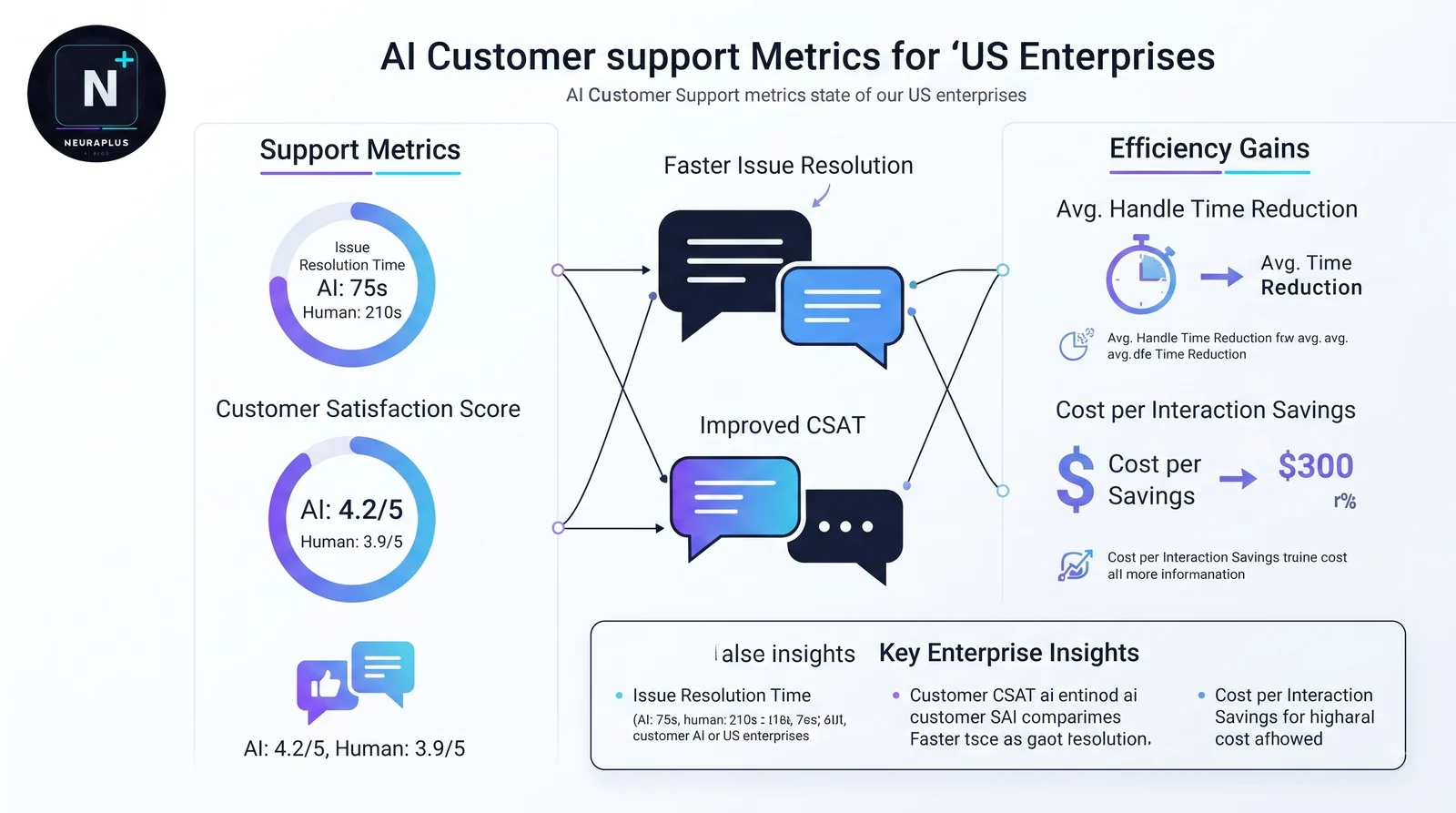
- CSAT lift: +18 points (from 3.8 to 4.5/5) due to faster first-response.
- Churn reduction: faster support correlated with 2.1% lower monthly churn on at-risk accounts.
Net ROI: roughly 4.7x on the tool spend, before counting the churn reduction. That's why AI support spend survived every budget review at the businesses we interviewed.
Conversational AI Platforms: When You Need More Than a Widget
Once your business crosses ~10,000 tickets per month or operates across multiple languages and channels, simple widget-based AI stops being enough. That's when businesses graduate to full conversational AI platforms — systems that orchestrate chat, voice, email, and messaging across channels while maintaining context across conversations.
These platforms handle complex flows: a customer who starts on chat, escalates to voice, and follows up via email — all while the AI remembers the context and the human agent sees the full history. For a deep comparison of the enterprise-grade options and when to make the switch, our conversational AI platforms guide covers the architecture decisions that separate a chatbot from a real support system.
The 90-Day Rollout Plan
| Phase | Weeks | Install | Success Check |
|---|---|---|---|
| Help center first | 1-3 | Clean & structure knowledge base | Docs cover top 30 questions |
| Chat AI second | 4-6 | Deploy on top helpdesk, train on docs | 40%+ deflection rate |
| Automation third | 7-9 | Connect ticket routing, tagging, tagging | Manual triage drops 50%+ |
| Audit | 10-12 | Cancel anything not hitting its number | Every tool earns its seat |
The Automation Layer That Makes It All Work
Chat AI alone isn't a support system. The real leverage comes when AI connects to your other tools — when a "where is my order" ticket triggers a Shopify lookup, or a billing question pulls data from Stripe, or a cancellation request updates your CRM.
That orchestration layer is where most businesses under-invest. For a full breakdown of how to wire AI support into your entire operations stack — from ticketing to CRM to billing — our smart customer automation guide covers the workflows that turn reactive support into a proactive retention engine.
Human-First Guardrails
- Escalation is a feature: Every AI response should offer "talk to a human" as a one-click option. Forcing customers through AI loops destroys trust.
- Human review for sensitive topics: Billing disputes, legal threats, and emotional support always route to humans — no exceptions.
- Transparency: Tell customers when they're talking to AI. Most US businesses now disclose this in the first message. Customers care about resolution speed, not the entity.
- QA at scale: Use analytics tools (Observe.AI, Idiomatic) to sample AI conversations weekly. One bad hallucination reaching a customer is worth more than a thousand good ones.
- Feedback loops: Every AI-resolved ticket should have a simple 👍👎 rating. Negative ratings auto-escalate to human review.
Where to Go Next (Pick Your Path)
- Strategy layer: AI-driven customer support — the principles behind the tools.
- Chatbot specifics: AI chatbot engagement tools — design, personalization, retention.
- Enterprise scale: conversational AI platforms — when to graduate from widgets to platforms.
- Orchestration: smart customer automation — wiring AI into your full stack.