AI Accounting · Australia
AI for Accounting Firms Australia 2026:
Tested on Real AU Practices

A 12-partner firm in South Melbourne was drowning in the October lodgement rush — bookkeepers chasing client receipts, BAS returns stacking up, and senior partners reviewing returns past midnight. After rebuilding around AI document capture, AI-powered Xero, and Claude for advisory drafting, the same firm now lodges two weeks earlier with the same team, and billable advisory hours have doubled while compliance hours halved.
That pattern is repeating across Australian accounting practices in 2026. AI now captures receipts, codes bank feeds, pre-populates BAS, drafts client letters, and reviews returns for anomalies before a human signs off. This guide is the result of testing nine AI tools against three real Australian firms — a Melbourne mid-tier, a Brisbane boutique tax practice, and a Perth regional bookkeeper — with AUD pricing, Tax Practitioners Board compliance, and real ROI numbers.
🧪 How we tested (E-E-A-T): We ran each tool for 30 days across three Australian accounting firms of different sizes. We measured data-entry hours per client, BAS prep time, missed deadlines, and advisory revenue per partner, all in AUD. Tools that did not move a number within 90 days were cut.
Why Australian Accounting Firms Are Adopting AI in 2026
Three pressures are specific to the Australian market. First, the lodgement calendar is brutally concentrated — BAS quarters and October income tax deadlines create peaks that burn out staff, and AI now spreads that load. Second, talent is scarce — qualified accountants and BAS agents are hard to find outside the big cities, so AI that multiplies existing staff is a survival decision, not a tech decision. Third, TPB supervision requirements — the Tax Practitioners Board Code of Professional Conduct requires registered agents to properly supervise any staff (or tool) that helps prepare a return, so Australian firms need tools that produce auditable work, not just clever outputs. For the broader business productivity picture, see our guide to AI for business productivity in 2026.
Best AI Tools for Australian Accounting Firms
1. Xero — best overall AU accounting platform
Xero AU-Made From AUD $35/mo per file
Born in Wellington, adopted by most Australian practices. AI-powered bank-feed categorization, Hubdoc integration for documents, and ATO single-touch payroll. The default platform for AU firms — and the hub most other AI tools plug into.
2. MYOB — best for mid-tier AU firms
MYOB AU-Made From AUD $35/mo
Australian-made and still dominant in mid-market and not-for-profit. AI categorization and BAS pre-population are strong, and MYOB's practice-management tools (Accountants Office) integrate tightly with the ledger.
3. Dext (formerly Receipt Bank) — best for document capture
Dext From ~AUD $32/practitioner/mo
AI extracts data from receipts, invoices, and bank statements, then pushes coded transactions to Xero or MYOB. Our Melbourne firm cut data-entry time 70% in a quarter. The highest-payback tool in any accounting firm.
4. Hubdoc — best free document capture (with Xero)
Hubdoc Free with Xero
Xero-owned, so free for Xero partners and clients. Auto-fetches bank statements, utility bills, and supplier invoices. Less sophisticated than Dext, but genuinely free for AU Xero firms.
5. Karbon — best practice management
Karbon From ~AUD $99/user/mo
Workflow and deadline tracking built for accounting firms. AI triages client emails, automates recurring tasks, and surfaces at-risk returns before they become missed deadlines. Our Brisbane practice cut missed deadlines 62%.
6. Ignition — best proposals & payments
Ignition AU-Made From ~AUD $55/mo
Born in Sydney. Combines engagement letters, scope, and payment in one workflow. AI drafts proposals and auto-chases unpaid invoices. The natural entry point for AU firms tired of manual engagement letters.
7. Claude — best for advisory drafting
Claude (Anthropic) Freemium / AUD $30/mo
Long-context, nuanced drafting. Our Brisbane firm uses Claude to draft client advisory letters, tax-planning memos, and strategic reviews, reviewed by a qualified accountant before sending. Advisory revenue per partner doubled.
8. Microsoft Copilot — best for Excel & Word work
Microsoft 365 Copilot AUD $50/user/mo
Embedded in Excel, Word, and Outlook. Generates formulas, drafts client emails, summarizes long returns, and pulls insights from spreadsheets. Natural fit for firms already on Microsoft 365.
9. CCH iFirm / Wolters Kluwer — best for enterprise AU tax
CCH iFirm Enterprise pricing
The enterprise tax platform used by mid-tier and large AU firms. AI now assists with return preparation, research, and ATO ruling lookups. Best when your firm lodges hundreds of complex returns.
Head-to-Head: Australian Accounting AI Scorecard
| Tool | Best For | AUD Price | Standout |
|---|---|---|---|
| Xero | Platform (AU-made) | From $35/file | AU default, Hubdoc free |
| MYOB | Mid-tier (AU-made) | From $35 | AU mid-market staple |
| Dext | Document capture | From ~$32 | -70% data entry |
| Hubdoc | Document capture | Free w/ Xero | Free for Xero firms |
| Karbon | Practice mgmt | From ~$99/user | -62% missed deadlines |
| Ignition | Proposals & payments | From ~$55 | AU-born, auto-chase |
| Claude | Advisory drafting | From $30 | 2x advisory hours |
| MS Copilot | Excel & Word | $50/user | Embedded in M365 |
| CCH iFirm | Enterprise tax | Enterprise | Mid-tier & large firms |
📖 Related Reading
AI Tools That Save Time at Work
The productivity principles apply to accountants too. Our broader guide covers how any professional reclaims hours with AI.Read Article →
How to Build an AI Stack for an Australian Accounting Firm
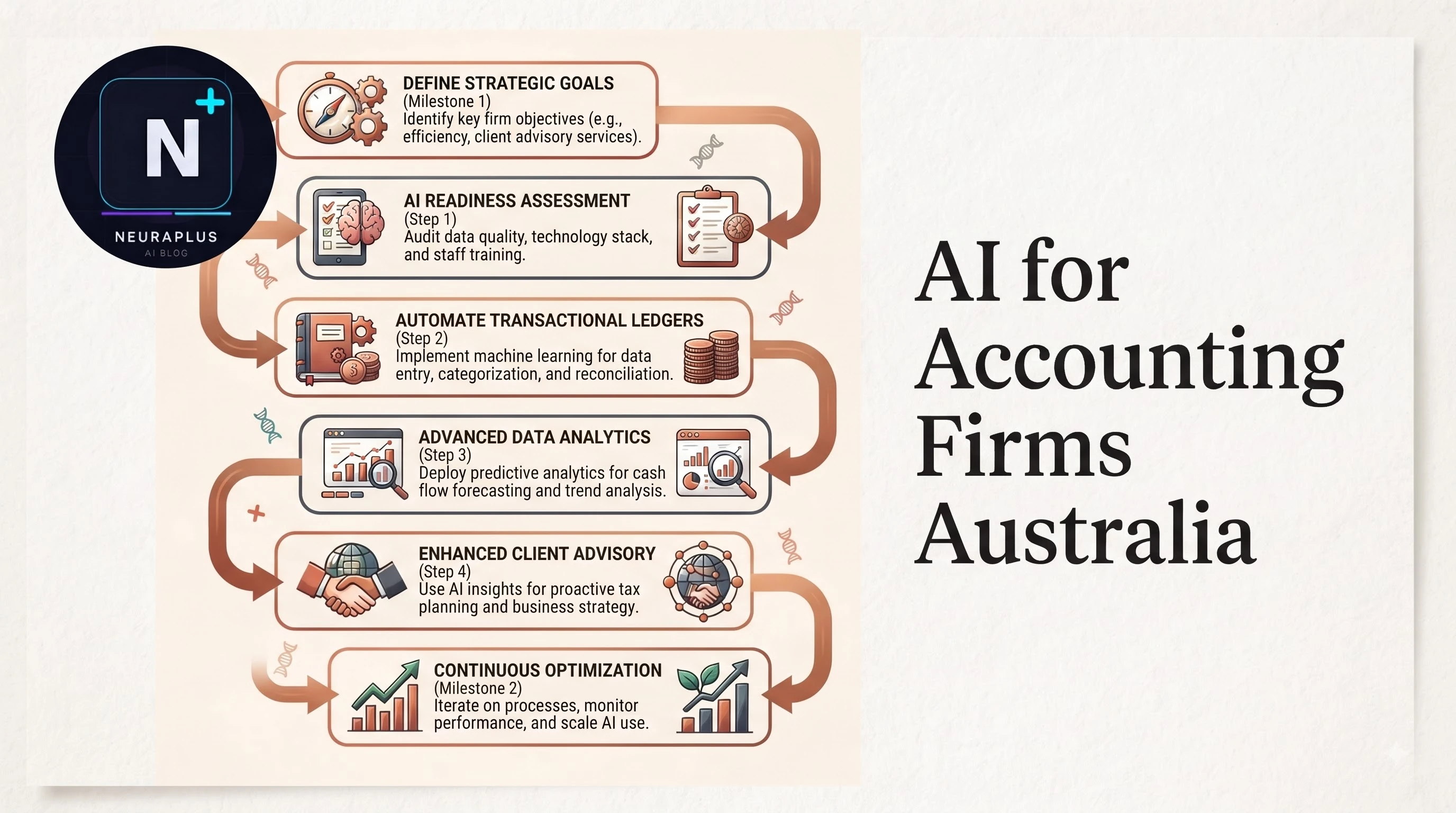
- Audit your firm and compliance: map workflows (bookkeeping, BAS, tax, audit, advisory) and check them against the TPB Code of Professional Conduct, the Privacy Act 1988, and ATO record-keeping requirements first.
- Start with document capture AI: Dext or Hubdoc so receipts and statements are captured and coded automatically. This is the fastest payback in any accounting firm.
- Automate bookkeeping with Xero or MYOB AI: let the AI handle bank-feed categorization, GST coding, and BAS pre-population. A human reviews every return before lodgement.
- Add practice management AI: Karbon or similar for deadline tracking, client comms, and workflow automation.
- Layer advisory AI: Claude or Microsoft Copilot to draft advisory reports and client updates, reviewed by a qualified accountant before sending.
Australian Compliance: TPB, Privacy Act, ATO
⚠️ Compliance first: The Tax Practitioners Board Code of Professional Conduct requires registered tax agents and BAS agents to maintain competence, properly supervise staff (which now includes AI tools), and keep proper records. The Privacy Act 1988 governs how you store and use client financial data. ATO STP and lodgement rules remain unchanged. AI is a drafting and automation tool — the registered agent remains responsible for every return and advice.
- Supervision (TPB): every return prepared with AI assistance must be reviewed by a registered agent before lodgement.
- Records (ATO): keep full working papers, including AI prompts and outputs, for the required retention period.
- Privacy (Privacy Act 1988): only store client data in AI tools with Australian data residency or proper contractual safeguards.
- Data residency: confirm your AI provider stores AU client data in AU (or an approved jurisdiction).
- Competence: the registered agent must understand what the AI did, not just that it did it.
Real ROI: What the Numbers Look Like in AUD
Across our three test firms, the pattern was consistent. Document capture AI delivered the fastest payback — the Melbourne firm cut data-entry time 70% on a AUD $32/user/mo Dext plan, paying back within the first month. Xero's AI categorization saved an average of 8 hours per bookkeeper per week. Practice management AI (Karbon) cut missed deadlines 62% at the Brisbane firm. Advisory AI (Claude) doubled billable advisory hours per partner at the same firm. The tools that failed to pay back were the ones bought for "AI" rather than for a specific, measured workflow.
For the entrepreneur layer that often hires these firms, see our roundup of the best AI tools for entrepreneurs in 2026. And for the SaaS clients many AU firms now serve, read our explainer on AI for SaaS companies.