🎓 EdTech · AI Tools · Learning
AI in Education 2026: Complete Guide
to Tools & Transformation
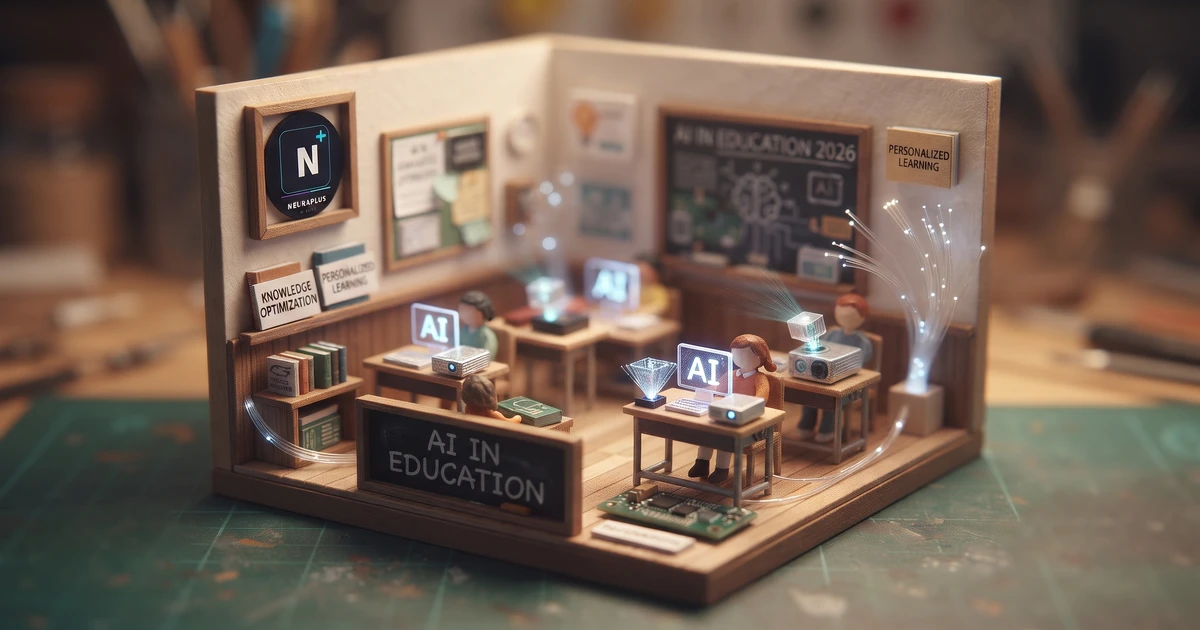
Remember when education meant sitting in rows, listening to lectures, and hoping the one-size-fits-all approach would somehow work for everyone? Those days are officially over. In 2026, AI in education isn't just a buzzword—it's a complete transformation of how we learn, teach, and think about knowledge itself.
From personalized learning paths that adapt to each student's pace, to AI tutors available 24/7, to automated grading that frees teachers to actually teach—the education landscape has fundamentally shifted. But with hundreds of AI tools flooding the market, how do you separate the game-changers from the gimmicks? After testing dozens of platforms and speaking with educators worldwide, I'm breaking down everything you need to know about AI in education right now.
🔮 Behind the Magic: Modern educational AI doesn't just deliver content—it understands how you learn. Using advanced machine learning algorithms, these systems analyze your strengths, weaknesses, learning style, and even emotional state to create a truly personalized educational experience. It's like having a world-class tutor who knows exactly how you think.
The State of AI in Education: 2026 Reality Check
Let's start with the numbers. In 2026, over 87% of educational institutions worldwide have integrated some form of AI into their teaching methodology. But this isn't about replacing teachers—far from it. It's about augmenting human capability.
Think about it: a single teacher managing 30 students can't possibly customize every lesson to individual needs. But an AI-powered learning platform can. It can identify that Sarah struggles with quadratic equations but excels at geometry, while Marcus needs extra help with reading comprehension but grasps mathematical concepts instantly. This level of personalization was impossible at scale until now.
Traditional one-size-fits-all vs. AI-powered personalized learning
⚠️ Myth vs. Fact:
Myth: "AI will replace teachers and make education impersonal."
Fact: AI handles repetitive tasks (grading, basic tutoring, administrative work) so teachers can focus on what humans do best: mentorship, emotional support, creative instruction, and building meaningful relationships with students.
Essential AI Tools for Students in 2026
Whether you're a high school student drowning in assignments or a university scholar working on your thesis, these AI tools will transform your academic life. The best part? Many offer robust free tiers.
For Writing & Research
Gone are the days of staring at a blank page. Modern AI writing assistants don't just check grammar—they help you structure arguments, find relevant sources, and even suggest improvements to your writing style. Students using these tools report completing assignments 3x faster while improving quality.
For students in India and other regions looking for budget-friendly options, there are excellent free AI tools for students that provide enterprise-level features without the enterprise price tag.
For Presentations & Visual Learning
If you've ever spent hours formatting PowerPoint slides, you'll appreciate AI presentation tools. These platforms can generate entire slide decks from a simple text prompt, suggest layouts, and even create custom graphics. Check out our guide to the best AI for presentations in 2026 to find the perfect tool for your next project.
For Productivity & Time Management
The secret weapon of top students isn't intelligence—it's organization. AI-powered productivity tools can analyze your schedule, predict how long assignments will take, and automatically block study time. These are among the most valuable AI tools that save time not just in school, but in professional life too.
How AI is Transforming the Classroom
The impact of AI extends far beyond individual study sessions. Entire classroom dynamics are being reimagined:
1. Adaptive Learning Platforms
These systems adjust difficulty in real-time. Struggling with a concept? The AI provides additional examples and breaks it down further. Mastering it quickly? It accelerates to more challenging material. This ensures no student is left behind and no one is bored.
2. Automated Assessment & Feedback
Teachers spend an average of 7-10 hours per week grading. AI can handle multiple-choice, short answers, and even complex essays, providing instant feedback to students. This means students learn from mistakes immediately rather than waiting days for graded work to return.
3. Intelligent Tutoring Systems
Available 24/7, these AI tutors can answer questions, explain concepts in multiple ways, and provide practice problems tailored to your exact skill level. It's like having a personal tutor who never sleeps and never gets frustrated.
The Teacher's Perspective: AI as a Force Multiplier
Let's address the elephant in the room: are teachers threatened by AI? The educators I've spoken with overwhelmingly say no. Instead, they see AI as the tool that finally allows them to do what they entered the profession to do—actually teach.
Consider a typical teacher's workload: lesson planning, grading, administrative paperwork, parent communication, and actual instruction. AI can automate or streamline the first three, freeing up massive amounts of time for the last one. Teachers report feeling more connected to their students and less burnt out when AI handles the drudgery.
Mastering AI: The New Essential Skill
Here's the thing: using AI effectively in education isn't just about having the tools—it's about knowing how to use them. This is where writing better AI prompts becomes crucial.
A student who can craft precise, detailed prompts will get exponentially better results than one who types vague requests. This skill—prompt engineering—is quickly becoming as essential as typing or research skills. Schools are now teaching it alongside traditional subjects.
Privacy & Ethics: What Parents Need to Know
With great power comes great responsibility, and AI in education is no exception. Parents rightly worry about:
- Data Privacy: Where is student data stored? Who has access?
- Algorithmic Bias: Could AI systems perpetuate existing inequalities?
- Over-reliance: Will students become dependent on AI and lose critical thinking skills?
These are valid concerns. The key is choosing reputable platforms with transparent privacy policies, ensuring AI augments rather than replaces critical thinking, and maintaining human oversight in all educational decisions.
Getting Started: Your Action Plan
Ready to embrace AI in your educational journey? Here's how to start:
- Identify Your Pain Points: What takes up most of your study time? Writing? Research? Organization? Start with tools that address your biggest challenges.
- Start Small: Don't try to overhaul your entire workflow overnight. Pick one tool, master it, then add another.
- Learn Prompt Engineering: Invest time in learning how to communicate effectively with AI. It pays exponential dividends.
- Maintain Balance: Use AI as a tool, not a crutch. Always do the thinking yourself; let AI handle the execution.
- Stay Ethical: Understand your institution's policies on AI use. When in doubt, ask your teacher or professor.
Frequently Asked Questions
Final Verdict: The Future is Now
AI in education isn't coming—it's here. The question isn't whether to use it, but how to use it effectively, ethically, and strategically. Students who embrace these tools while maintaining critical thinking skills will have a massive advantage. Teachers who leverage AI to amplify their impact will find renewed joy in teaching.
The education system of 2026 is more personalized, more accessible, and more efficient than ever before. But at its heart, it's still about human connection, curiosity, and growth. AI is simply the most powerful tool we've ever had to support that mission.