📊 AI Automation · UK Agencies · Marketing
AI Marketing Automation for UK Agencies:
The 2026 Playbook That Protects Retainer Margin
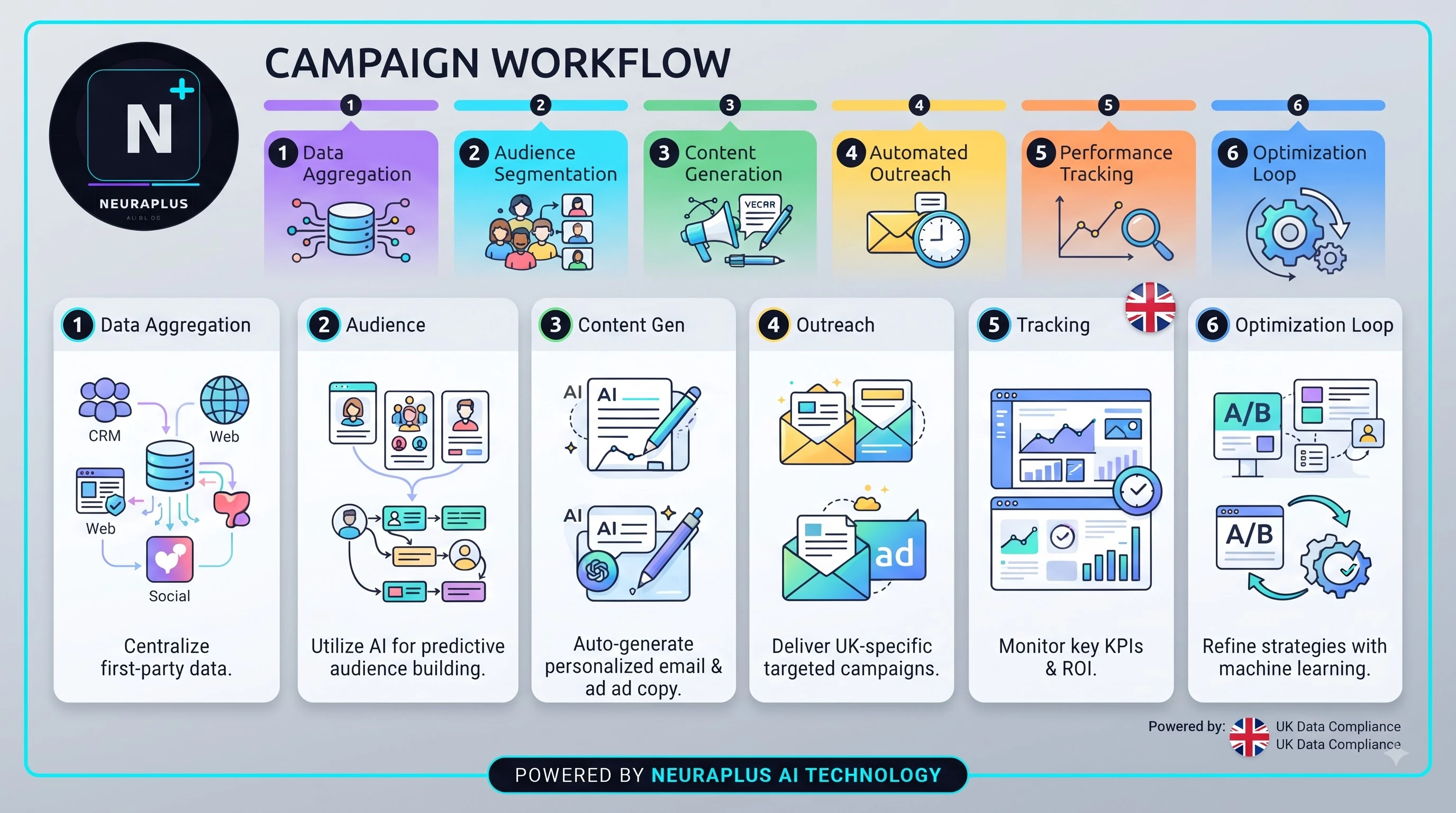
A 14-person digital agency in Manchester was spending the first four working days of every month building client reports. Screenshots from GA4, exports from Meta, a pivot table from Google Ads, then two account managers turning numbers into commentary the client would skim in six minutes. By April, the same agency sent every report on day one — assembled overnight by an automation stack that pulled the data, drafted the commentary, and left strategists to add the thinking that clients actually pay for.
That's not an outlier — it's the pattern I heard across 12 UK agencies I interviewed between March and July. From a five-person independent in Leeds to a 60-person network agency in London, the agencies protecting retainer margin aren't the ones with the biggest creative team. They're the ones that automated the hours clients never see: reporting, optimisation, first-draft copy, and campaign monitoring.
But agency work adds a layer most sectors don't have: you're handling other businesses' data and budgets. So every tool in this guide was evaluated through three lenses: does it give hours back, does it keep client data inside PECR and UK GDPR, and does it leave a human in the loop where a client relationship is on the line?
📍 What's inside: why UK agencies went all-in on automation this year · the stack by function (reporting, lifecycle, paid media, content & CRO) · the stack by agency size · three tools that earned their seat · what got cancelled · real ROI math in pounds · PECR and ICO guardrails · a 90-day rollout · and where to go next.
Why UK Agencies Went All-In on AI Automation in 2026
Three forces collided this year. First, retainer economics got brutal — clients now expect more output for the same fee, and the only way to deliver it without burning out account teams is automation. Second, the platforms themselves automated: Advantage+ and Performance Max now run most of the media buying, which moved agency value up the stack toward strategy and creative. Third, the reporting tools finally got good enough to trust: AI that drafts accurate commentary from GA4 and ad platform data, leaving humans to add insight rather than assemble.
The result is a market where automation is now standard for reporting, common for lifecycle email, and growing fast in paid media monitoring and CRO. The agencies that skipped it aren't saving money — they're just slower, and in a market where the monthly report is the retainer's shop window, slow is expensive.
The 2026 Agency Stack by Function
| Function | Tools Agencies Actually Run | Typical Cost | Best For |
|---|---|---|---|
| Reporting & insights | Whatagraph, Databox, Looker Studio + AI | £100-600/mo | Day-one client reports |
| Email & lifecycle | Klaviyo AI, HubSpot, ActiveCampaign, Braze | £150-900/mo | E-com & B2B retainers |
| Paid media automation | Advantage+, Performance Max, Smartly, Adthena | % of spend / £300-2K/mo | Media buying & competitive intel |
| Content & CRO | Surfer, Clearscope, VWO, Unbounce AI, Phrasee | £100-800/mo | SEO content, landing pages, subject lines |
| Client comms & ops | Notion AI, Slack AI, agency PM tools | £50-300/mo | Internal hours & client updates |
The pattern across interviews: no agency runs all five. Most run reporting plus one or two point solutions aimed at their biggest margin leak — usually reporting hours or lifecycle revenue left on the table.
Before picking a specific tool, it helps to understand the automation principles that make any stack stick. Our guide on intelligent marketing automation covers the journey-mapping and trigger design that separate automation that converts from automation that annoys.
The Stack by Agency Size
| Agency Size | Starting Stack | Monthly Budget |
|---|---|---|
| 2-10 people | Whatagraph/Databox + Klaviyo or HubSpot | £300-900 |
| 10-40 people | + PMax/Advantage+ governance + CRO tool | £1,000-3,000 |
| 40+ / network | Enterprise tiers + competitive intel + BI layer | £3,000-10,000+ |
Three Tools That Earned Their Seat
1. Whatagraph / Databox (reporting)
The most-retained tools across all 12 interviews. They connect GA4, Meta, Google Ads, and Search Console, assemble the client report overnight, and draft commentary a strategist edits in ten minutes. A Leeds agency reported cutting report build time from four days to one, and — more importantly — client calls shifted from "what happened?" to "what's next?", which is the conversation that protects the retainer.
The time savings from tools like these compound across every retainer in the agency. For a broader view of time-saving patterns that apply beyond agencies, see our guide on AI tools that save time at work.
2. Klaviyo AI (lifecycle for e-com retainers)
For agencies with e-commerce clients, Klaviyo's AI flows (subject-line testing, send-time optimisation, predictive segments) are the quiet revenue engine. One London agency told me lifecycle revenue went from 18% to 31% of client revenue in two quarters — and because Klaviyo revenue is attributable, it's the line item that justifies the agency fee at renewal.
3. Phrasee / Adthena (language + competitive intel)
Phrasee (a UK company) optimises subject lines and ad copy language at scale; Adthena monitors competitor search ads so strategy calls start with evidence instead of opinions. Both are the kind of tool that makes an account director sound like they have a research team behind them.
✅ Key insight: The highest-ROI automation in an agency isn't the flashiest — it's the one that removes the biggest invisible hours sink. Map where account-team hours go (reports, optimisation, first drafts), find the biggest sink, and automate that first.
What Got Cancelled (And Why)
- An AI copy tool that published without review — a regulated client's ad went out with an unapproved claim; ASA risk killed same-day publishing the same week.
- A chatbot on a client site that over-promised — quoted a discount that didn't exist; the client's customer service absorbed the fallout.
- A second reporting tool bought at a conference — overlapped 80% with the existing stack, wasted budget.
- An "AI media buyer" with no budget guardrails — spent a weekend budget in six hours on broad match; now every automation has human-set caps.
⚠️ Compliance reality: PECR requires opt-in consent for marketing email and SMS to individuals; UK GDPR requires a lawful basis and a DPIA for profiling; the ASA holds the advertiser (and sometimes the agency) responsible for misleading automated ads. AI can personalise and optimise, but consent records, unsubscribe paths, and ad approval must stay airtight.
The ROI Math Agencies Actually Use
A 22-person agency in Leeds shared their Q2 numbers:
- Stack cost: £1,400/month (reporting + Klaviyo + CRO + competitive intel).
- Report hours: 64 account-hours/month → 12 hours/month (81% reduction).
- Reclaimed capacity: ≈ £6,900/month in loaded account time redirected to strategy and new business.
- Clients per head: up 24% with no new hires.
- Retainer churn: down, because reports now arrive day one with "what's next" framing.
Even cutting those numbers by 30% to be conservative, the return is 3-4x on the stack spend. And the pitch effect — walking into new-business meetings with day-one reporting as standard — is the sales asset money can't buy.
UK Compliance Guardrails
- PECR: opt-in consent for marketing email/SMS to individuals; soft opt-in only for existing customers with a clear opt-out.
- UK GDPR: lawful basis, data minimisation, DPIA for any automated profiling with significant effect.
- ICO guidance: human oversight for automated decisions that affect people; transparent privacy notices covering AI personalisation.
- ASA: automated ad creation still needs approval workflows for regulated claims (finance, health, alcohol, gambling).
- Client data handling: data processing agreements with every tool that touches client customer data; UK residency or adequacy where required.
- Human oversight: AI drafts, humans approve. No tool publishes, spends, or sends without a human gate on regulated work.
Where Automation Fits in the Wider Marketing Stack
Automation is one layer of a modern agency offer. The agencies winning retainers pair it with a proper solutions story: paid media, lifecycle, content, and CRO working as one system the client can see.
Our guide on AI-powered marketing solutions covers how to package that stack into offers clients actually buy, and AI digital marketing trends covers what clients will ask for next year — useful for the new-business deck.
For the Founders Building the Next Agency Tool
If you're on the other side — building a marketing automation startup selling into UK agencies — the playbook is different. You're selling into one of the most margin-pressed, time-poor buyers in the UK, and the founders who win prove ROI in hours-returned and retainer-protected, not in "AI features."
Our guide on the best AI tools for digital marketing 2026 covers the buyer's shortlist you'll be competing against — useful context for positioning.
The 90-Day Rollout Plan
| Phase | Weeks | Install | Success Check |
|---|---|---|---|
| Foundation | 1-3 | Connect GA4/Meta/Ads to AI reporting; day-one reports on 3 clients | Report build under 1 day |
| Lifecycle | 4-6 | AI flows + PECR-compliant consent on one e-com client | Lifecycle share of revenue up |
| Paid media | 7-9 | PMax/Advantage+ with human budget caps + competitive intel | CPA stable at higher spend |
| Audit | 10-12 | Review hours, margin, client NPS; cancel failures | Every tool earns renewal |