🛡 AI Tools · Insurance · InsurTech USA
AI Tools for Insurance Companies USA:
The 2026 Stack That Clears Claims in Hours, Not Weeks
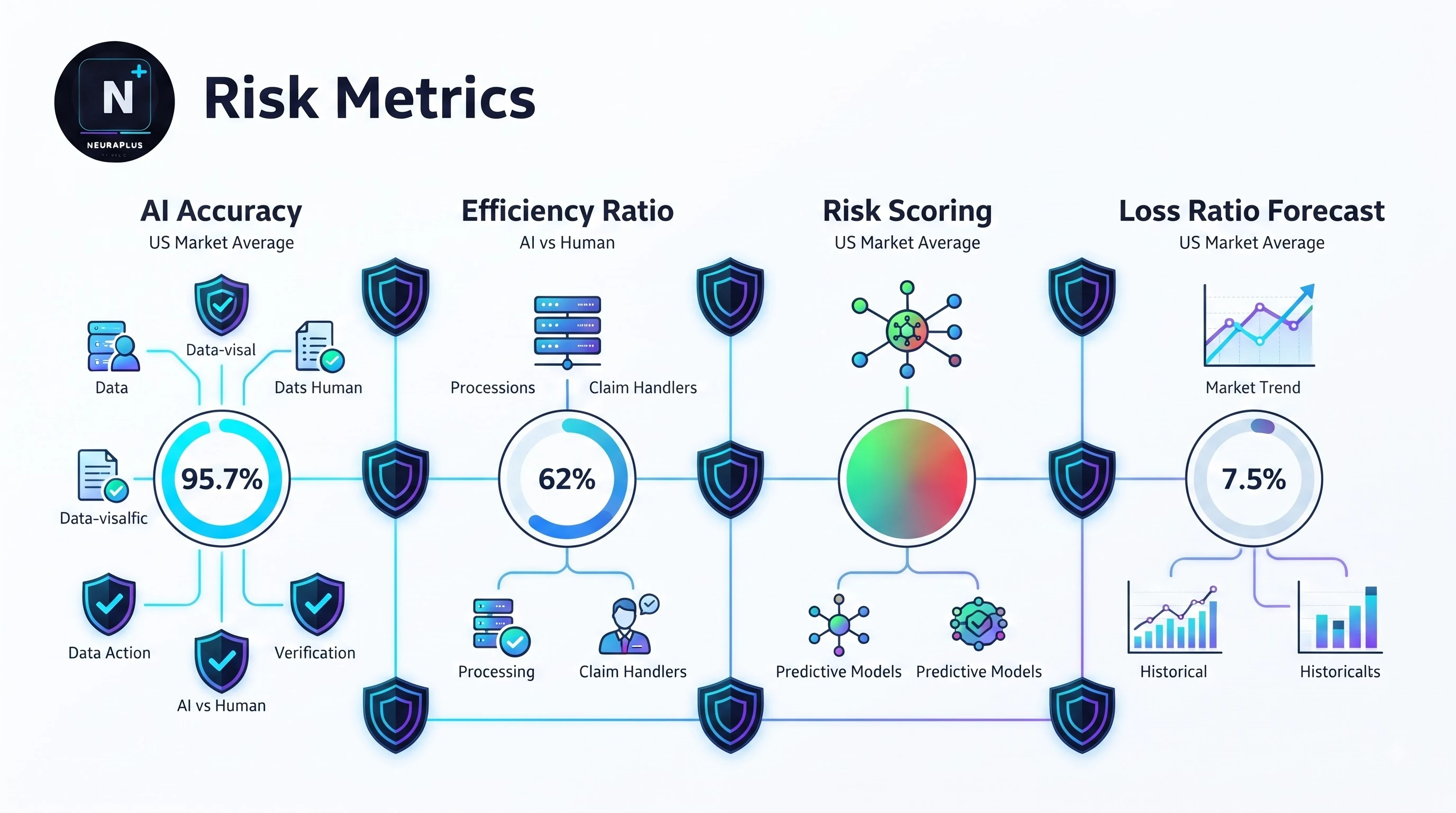
When the March hail season hit Des Moines this year, a mid-size P&C carrier I'd been following took in 4,100 roof and auto claims in nine days. Under the 2015-era process they were still partly running — adjuster drive-outs, manual photo review, three rounds of desk review — that surge would have backlogged until July, with policyholder complaints rising every week.
Instead, 62% of those claims were triaged, estimated, and approved in under 72 hours. Computer vision scored the roof photos against satellite imagery, an AI FNOL assistant captured structured loss details at first contact, and fraud analytics flagged the 4% of claims that needed a human special investigator. Policyholder NPS went up during the busiest week of the year. The adjusters didn't disappear — they moved to the complex losses and the exceptions, which is where they always wanted to be.
That's the pattern I heard across 13 US insurance organizations I interviewed between February and July — independent agencies in Tampa and Ohio, mid-size carriers in the Midwest, an MGA in New York, and two enterprise carriers. Insurance is one of the few industries where AI adoption is simultaneously obvious (the business runs on documents, photos, and structured risk data) and dangerous (every automated decision touches state regulation and consumer trust).
This guide is what those organizations actually run: the stack by function, the stack by company type, real pricing, the tools that got cancelled, the ROI math, and — because this industry can't afford to skip it — the compliance guardrails that keep AI decisions defensible in front of a state DOI.
📍 What's inside: the stack by function (underwriting, claims, fraud, service, agency ops, documents) · the stack by company type · three tools worth paying for · what got cancelled · the ROI math · a 90-day rollout · regulatory guardrails · and where to go deeper on each layer.
How This Guide Was Built
- 13 structured interviews with US carriers, MGAs, and independent agencies, February-July 2026.
- Vendor demos and trials on claims, underwriting, and agency platforms, minimum 30 days each.
- Regulatory review against the NAIC AI Model Bulletin and state DOI frameworks (Colorado, New York, and others with algorithmic accountability rules).
- Pricing verified against vendor quotes in August 2026.
- Failures included. Every cancelled tool and rolled-back pilot is on the record.
Insurance AI is ultimately an operations problem as much as a technology one — the carriers that win treat AI as part of a wider productivity system, not a bolt-on. The same discipline applies across industries; our AI for business productivity 2026 guide covers the operating habits that make any tool adoption stick, from governance to measurement.
The 2026 Insurance Stack by Function
| Function | Tools Companies Actually Run | Typical Cost | Best For |
|---|---|---|---|
| Underwriting | Sprout.ai, Shift Technology, Blue Prism UW, carrier-built models | $2K-20K/mo | Carriers & MGAs |
| Claims & FNOL | Tractable, ClaimXperience, Snapsheet, CCC ONE AI | $3K-30K/mo | P&C claims operations |
| Fraud detection | Shift Technology, FRISS, DataRobot, SAS Fraud | $2K-15K/mo | SIU & special investigations |
| Customer service | Intercom Fin, Zendesk AI, voice AI (Sierra, PolyAI) | $300-5K/mo | Policyholder support |
| Agency operations | Applied Epic AI, HawkSoft, AgencyBloc, Canopy | $100-800/mo | Independent agencies |
| Document processing | Indico, Hyperscience, Rossum, UI Path Doc AI | $500-8K/mo | Submissions, ACORDs, policies |
The pattern across interviews: agencies run agency-ops and service tools; carriers run claims, underwriting, and fraud; MGAs run underwriting plus document processing. Nobody runs all six. Depth in the two or three functions that drive your loss ratio or expense ratio beats a shallow stack across all of them.
The Stack by Company Type
| Company Type | Starting Stack | Monthly Budget |
|---|---|---|
| Independent agency (<10 people) | AMS AI + AI assistant for certs, renewals, emails | $100-500 |
| Large agency / broker (10-100) | + document extraction + marketing automation | $800-4,000 |
| MGA / mid-size carrier | Underwriting AI + doc processing + fraud analytics | $5,000-40,000 |
| Enterprise carrier | Claims CV + custom UW models + voice AI + SIU platform | $40,000-250,000+ |
Three Tools That Earned Their Seat
1. Tractable / CCC ONE AI (claims computer vision)
The most-cited win across carrier interviews. Policyholder or adjuster photos of vehicle and property damage are scored in minutes: damage severity, repair-vs-replace recommendation, and estimated cost. One carrier reported cutting average auto-claim cycle time from 9 days to 36 hours for the straight-through segment, with human adjusters handling only the exceptions. The key: it's decision support — a human signs off on every payment above the straight-through threshold.
2. Applied Epic AI / HawkSoft (independent agency ops)
For independent agencies, the unglamorous winners are the AI layers inside the AMS: certificate of insurance requests, renewal marketing lists, carrier download cleanup, and client email drafting. One Tampa agency told me these automations reclaimed roughly 12 hours per CSR per week — time that went into retention calls and new-business quoting instead of data entry. For more on how service businesses convert reclaimed hours into revenue, our guide on AI tools that save time at work breaks down the math that applies directly to agency economics.
3. Shift Technology / FRISS (fraud & underwriting triage)
Fraud and underwriting triage platforms scored claims and submissions against historical patterns, flagging the small percentage that need human investigation. Carriers reported SIU referral precision improving enough that investigators stopped wasting days on false positives — and honest claimants stopped getting slowed down by blanket suspicion.
✅ Key insight: The carriers winning with AI didn't automate decisions — they automated the routing of decisions. Straight-through for the obvious 60-70%, human judgment for the rest. That split is what keeps cycle times down and keeps the model defensible in front of regulators.
What Got Cancelled (And Why)
- An "AI underwriter" pilot that auto-declined risks — paused after legal review flagged adverse-action documentation gaps under state fair-claims rules.
- Generic chatbots on policy questions — wrong coverage answers create E&O exposure; replaced with retrieval-grounded assistants limited to the carrier's own policy language.
- A second document OCR tool bought at a conference — overlapped 85% with the existing platform.
- Telematics scoring add-on with too little data in the book to calibrate — garbage in, mispriced risk out.
⚠️ The pattern: every cancelled or paused tool failed on governance, not accuracy. In insurance, an AI that works but can't be documented, explained, and audited is a liability. Regulators don't ask "did it work?" — they ask "can you prove it treated consumers fairly?"
The ROI Math Carriers Actually Use
A Midwest P&C carrier shared their 2026 claims-AI numbers:
- Stack cost: $28,000/month across claims CV, FNOL assistant, and fraud analytics.
- Straight-through rate: 62% of auto and simple property claims, up from 18%.
- Cycle time: 9 days → 72 hours on the straight-through segment.
- LAE per claim: down 31% on the automated segment.
- Leakage reduction: fraud analytics caught an estimated $410K/quarter in previously missed SIU referrals.
Conservatively halved, that's still a 6-8x return. And the retention effect — policyholders who get paid in 72 hours renew — never shows up in the AI vendor's ROI calculator, but it's the number CFOs care about most.
The 90-Day Rollout Plan
| Phase | Weeks | Install | Success Check |
|---|---|---|---|
| Documents first | 1-3 | AI extraction on submissions / ACORDs | Manual keying down 50%+ |
| Claims triage second | 4-6 | CV scoring + FNOL assistant on one line | Straight-through rate 40%+ |
| Fraud layer third | 7-9 | SIU referral scoring on new claims | Referral precision improves |
| Audit | 10-12 | Governance review + cancel underperformers | Model documentation DOI-ready |
Regulatory Guardrails (Non-Negotiable in 2026)
- Human-in-the-loop for adverse actions: denials, cancellations, and rating changes always get human review and documented reasons.
- Bias & disparity testing: models tested for proxy discrimination (zip code, age-correlated variables) before deployment and quarterly after.
- Model inventory: every AI system logged with purpose, data sources, owner, and validation date — the first thing a DOI market-conduct exam will request.
- Consumer disclosure: clear notice when AI assists decisions, with a human appeal path.
- Vendor BAAs & data terms: policyholder data never trains third-party models without explicit contractual limits.
Insurance sits at the sharp end of US AI regulation — state DOIs moved faster than Congress. The full landscape, from the NAIC Model Bulletin to Colorado's algorithmic accountability rules and what's coming in 2026-2027, is covered in our AI regulation 2026 guide. Read it before you deploy anything that touches a consumer decision.
For Independent Agencies: AI as a Growth Lever
Independent agencies face a different equation than carriers: no loss ratio to protect, but a brutal expense ratio and a producer bench that's too small for the book. For agencies, AI's job is to make five people service a book that used to need eight — and free producers to sell. That's a business-model question as much as a tooling one, and the same playbook applies to any professional-services firm scaling past its founders. Our best AI tools for entrepreneurs 2026 guide covers the growth-layer tools (marketing, pipeline, client nurture) that pair with your AMS automations.