🛒 AI Tools · Ecommerce · UK
Best AI Tools for UK Ecommerce 2026:
The Seller Stack That Actually Pays

A Brighton skincare brand was shooting new product photography every Tuesday — model, photographer, studio, £800 a day — and the PDPs still went live on Friday. By June, the same brand shot on a phone on Monday morning and was live by lunch: AI-generated lifestyle scenes, size-guide overlays, and PDP copy drafted from the product spec sheet, with a human approving every frame before publish.
That's not an outlier — it's the pattern I heard across 12 UK ecommerce brands I interviewed between March and July. From a two-person homeware brand in Sheffield to a £6m apparel label in Manchester, the brands winning online aren't the ones with the biggest ad budget. They're the ones that get products live fastest, answer "where's my order" in seconds, and recover baskets while the customer is still thinking about it.
But UK ecommerce adds a layer most guides ignore: VAT on every sale, ASA rules on claims, CMA green-claims code, UK GDPR on customer data, and a customer base that expects next-day delivery and Klarna at checkout. So every tool in this guide was evaluated through three lenses: does it make you faster, does it keep you compliant, and does it leave a human in the loop where a customer relationship is on the line?
📍 What's inside: why UK ecommerce went all-in on AI this year · the stack by function (imagery, PDP copy, CRO, support, lifecycle) · the stack by store size · three tools that earned their seat · what got cancelled · real ROI math in pounds · ASA and UK GDPR guardrails · a 90-day rollout · and where to go next.
Why UK Ecommerce Went All-In on AI in 2026
Three forces collided this year. First, acquisition costs kept climbing — Meta and Google CPCs rose again, so the brands that win are the ones that convert and retain better, not just bid higher. Second, returns became a margin crisis — UK fashion return rates hover near 30%, and better imagery and sizing guidance is the cheapest way to cut them. Third, the tools finally got good enough to trust: product imagery buyers can't distinguish from studio shoots, PDP copy that sounds like your brand, and support AI that resolves "where's my order" without a human.
The result is a market where AI is now standard for product content, common for lifecycle email, and growing fast in CRO and support. The brands that skipped it aren't saving money — they're just slower, and in a market where the fastest PDP wins the basket, slow is expensive.
The 2026 UK Ecommerce Stack by Function
| Function | Tools Brands Actually Run | Typical Cost | Best For |
|---|---|---|---|
| Product imagery & video | Photoroom, Flair, Pebblely, Synthesia | £20-250/mo | Shoot-to-live in hours |
| PDP copy & SEO | Jasper, ChatGPT + Surfer, ChatGPT | £30-200/mo | PDP, category, blog content |
| CRO & personalisation | Nosto, LimeSpot, VWO, Unbounce AI | £100-600/mo | Recommendations, A/B tests |
| Support & returns | Tidio, Gorgias, Zendesk AI | £40-400/mo | WISMO, returns, pre-sale Q&A |
| Lifecycle email & SMS | Klaviyo AI, Attentive | £40-500/mo | Flows, basket recovery, win-back |
| Pricing & stock | Prisync, Invent AI | £50-400/mo | Competitor pricing, forecasting |
The pattern across interviews: no brand runs all six. Most run imagery plus one or two point solutions aimed at their biggest leak — usually shoot-to-live time or basket recovery.
Before picking a specific tool, it helps to understand the imagery layer in depth. Our guide on the AI image generator for ecommerce covers the shoot-to-live workflow, model-licensing questions, and the ASA line you must not cross.
The Stack by Store Size
| Store Size | Starting Stack | Monthly Budget |
|---|---|---|
| Solo seller (<£250k) | Photoroom + ChatGPT + Klaviyo free tier | £40-150 |
| Growing brand (£500k-£2m) | + Tidio + Klaviyo paid + CRO lite | £200-600 |
| Scaling brand (£2m-£10m) | + Nosto/LimeSpot + Gorgias + pricing AI | £700-2,000 |
| £10m+ / multi-brand | Enterprise tiers + personalisation + BI layer | £2,000-8,000+ |
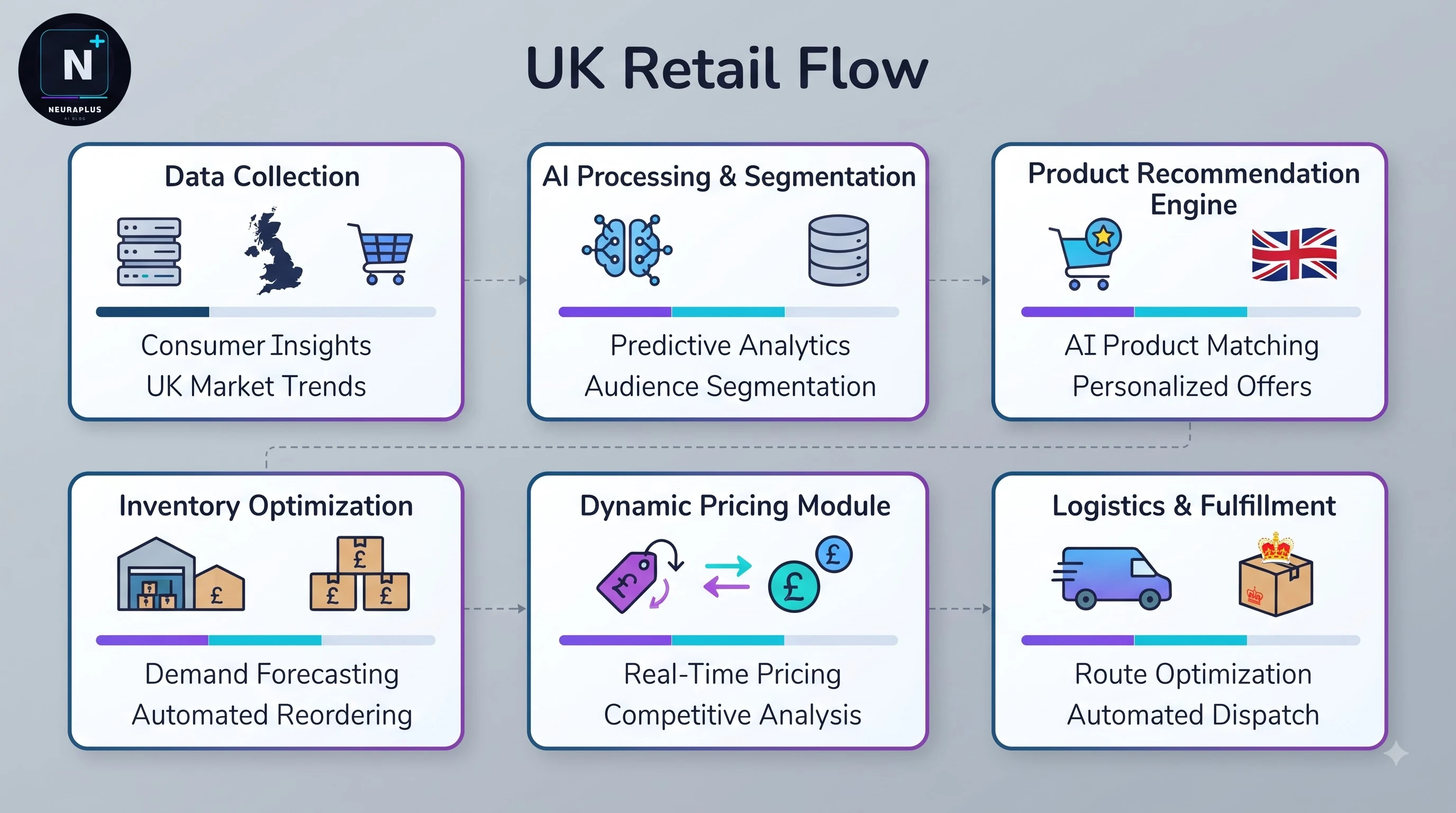
Three Tools That Earned Their Seat
1. Photoroom (product imagery)
The most-retained tool across all 12 interviews. Photoroom removes backgrounds, generates lifestyle scenes, and batch-processes whole drops in an afternoon. A Sheffield homeware brand reported cutting shoot-to-live from three days to four hours, and — more importantly — running 3x more SKUs because content cost stopped being the bottleneck.
2. Klaviyo AI (lifecycle)
The quiet revenue engine. Klaviyo's AI flows (welcome, abandoned basket, post-purchase, win-back) with send-time and subject-line optimisation are the line item that justifies the stack at board level. One Manchester apparel label told me lifecycle went from 22% to 34% of revenue in two quarters — attributable, repeatable, and the first number the board asks about.
3. Tidio / Gorgias (support & returns)
The unglamorous one that saves margin. AI resolves "where's my order", returns, and pre-sale Q&A in seconds, 24/7. A Brighton brand reported 58% deflection and a 12-point CSAT rise — because customers got answers at 11pm, not at 9am the next day.
✅ Key insight: The highest-ROI AI in UK ecommerce isn't the flashiest — it's the tool that removes the biggest delay between product and basket. Map where days and margin go (shoot-to-live, basket recovery, returns), find the biggest leak, and put the tool there first.
What Got Cancelled (And Why)
- AI imagery that altered the product — a lifestyle scene showed a bigger bottle than ships; returns and an ASA complaint followed. Now the product itself is never altered.
- A personalisation engine on low traffic — under 20k monthly sessions it had nothing to learn; switched to rule-based recommendations.
- A chatbot that over-promised delivery — quoted next-day on a 2-day courier; customer service absorbed the fallout.
- A second email tool bought at a conference — overlapped 80% with Klaviyo, wasted budget.
⚠️ Compliance reality: The ASA requires ads to be accurate; the CMA green-claims code bans false environmental claims; UK GDPR requires consent for marketing email/SMS and a lawful basis for profiling. AI can draft and optimise, but the product must be shown accurately, claims must be verifiable, and consent records must be airtight.
The ROI Math UK Brands Actually Use
A £4m apparel brand in Manchester shared their Q2 numbers:
- Stack cost: £1,150/month (Photoroom + Klaviyo + Tidio + CRO).
- Shoot-to-live: 3 days → 4 hours.
- Support deflection: 58% of tickets resolved without a human.
- Basket recovery: +19% recovered revenue from AI-optimised flows.
- Return rate: down 4 points on AI-improved imagery and sizing guidance.
Even cutting those numbers by 30% to be conservative, the return is 4-5x on the stack spend. And the speed effect — dropping new lines weekly instead of monthly — is the merchandising advantage money can't buy.
UK Compliance Guardrails
- ASA: ads must be accurate and not misleading; AI imagery must not alter the product itself (colour, size, contents).
- CMA green-claims code: environmental claims must be truthful, specific, and substantiated.
- UK GDPR / PECR: consent for marketing email/SMS; lawful basis and DPIA for profiling; airtight unsubscribe paths.
- VAT & pricing: prices shown to UK consumers must include VAT; AI pricing tools must not display ex-VAT by default.
- BNPL (Klarna/Clearpay): present repayment terms clearly; FCA expectations on affordability messaging apply.
- Human oversight: AI drafts, humans approve. No tool publishes imagery, claims, or delivery promises without a human gate.
Where AI Fits in the Wider Ecommerce Stack
AI is one layer of a modern UK ecommerce operation. The brands that win pair it with a proper organic and paid engine: product-led SEO, category pages that rank, and paid media that compounds rather than rents.
Our guide on the best AI tools for digital marketing 2026 covers the paid and content layer, and our ecommerce SEO agency UK guide covers how to win the organic layer that makes every AI-bought hour compound.
For the Founders Building the Next Ecommerce Tool
If you're on the other side — building an ecommerce AI startup selling into UK brands — the playbook is different. You're selling into one of the most margin-pressed buyers in the UK, and the founders who win prove ROI in conversion and return-rate, not in "AI features."
Our guide on AI for business productivity 2026 covers the operating habits that make any tool stack stick — useful whether you're buying the stack or selling it.
The 90-Day Rollout Plan
| Phase | Weeks | Install | Success Check |
|---|---|---|---|
| Foundation | 1-3 | AI imagery on top 20 SKUs + PDP copy drafts; ASA check | Shoot-to-live under 24h |
| Lifecycle | 4-6 | Klaviyo AI flows with UK GDPR consent; basket recovery | Lifecycle share of revenue up |
| Support & CRO | 7-9 | AI support for WISMO/returns; PDP + basket A/B tests | Deflection 50%+; CVR up |
| Audit | 10-12 | Review CVR, returns, deflection, email revenue; cancel failures | Every tool earns renewal |