🛒 E-commerce · Technical SEO · Agency Vetting
E-commerce SEO Agency USA 2026:
What to Check Before You Hire
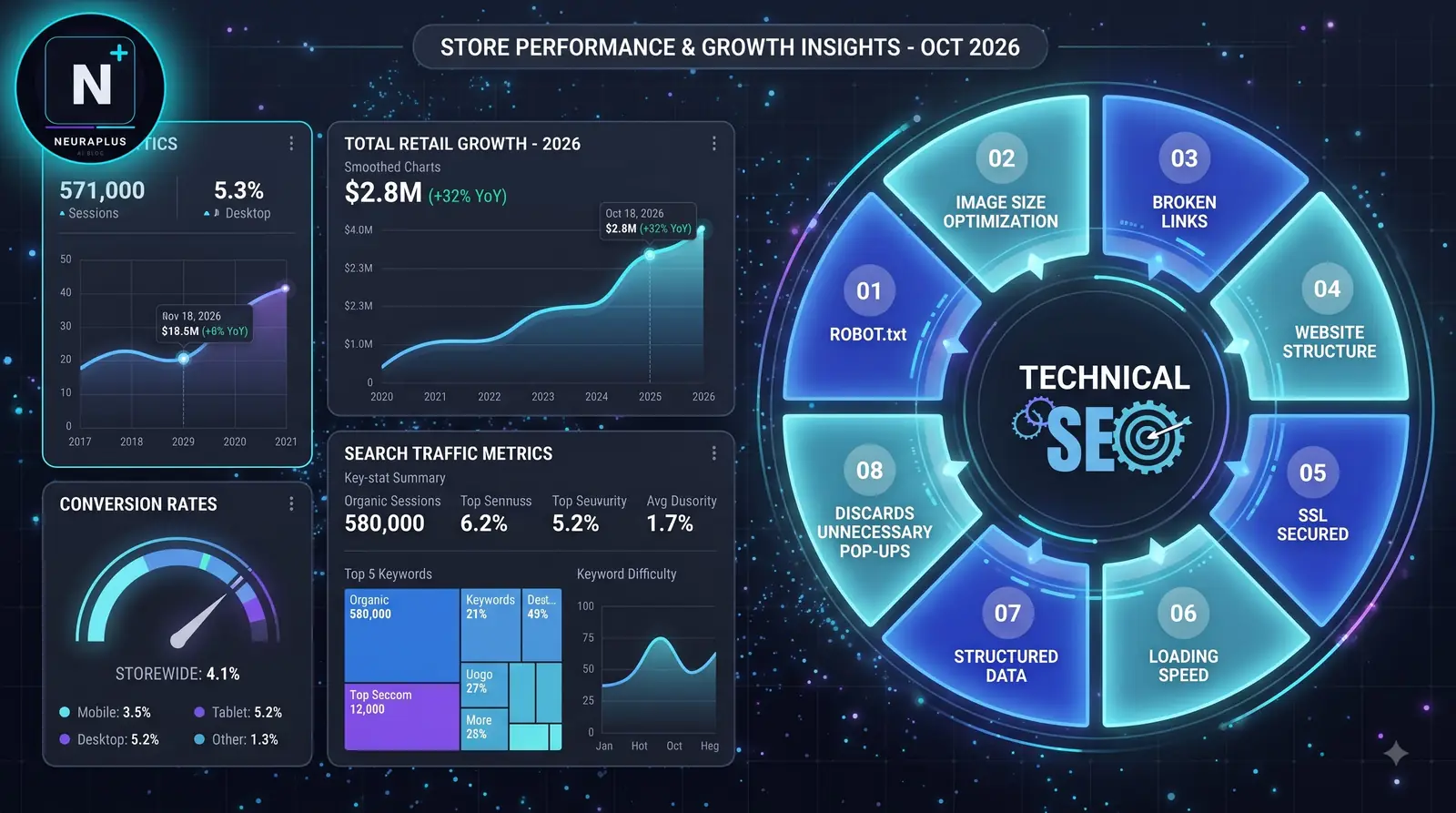
A DTC founder I spoke with last spring had already burned through two SEO agencies before she found us. Both had sent her glossy monthly reports full of "keyword opportunities" and "content calendars." Neither had ever once mentioned that half her product pages returned a 404 after a platform migration, or that her collection pages were duplicating the same 40 products across nine different URLs. She'd paid over $9,000 for reports that never looked at the store itself. That's the story behind most of the bad e-commerce SEO experiences small business owners describe — not bad intentions, usually, just an agency treating an online store like a blog with a checkout button bolted on.
💡 The core distinction: E-commerce SEO isn't blog SEO with a shopping cart. Product pages, category pages, faceted navigation, and platform-specific quirks (Shopify, WooCommerce, BigCommerce) each create technical problems a generic content agency usually never touches.
What an E-commerce SEO Agency Should Actually Do First
Before anyone talks to you about keywords, a competent agency should be crawling your store the same way Googlebot does. That means checking how your platform handles pagination, whether your product variants create duplicate URLs, how your site behaves when a product goes out of stock, and whether your internal linking actually helps a shopper — and a search engine — move from homepage to category to product without hitting dead ends. If the first conversation is entirely about content ideas and not a single question about your platform or your site architecture, that's usually a sign they're running the same playbook for every client regardless of what kind of business you actually run.
The Technical SEO Checklist Every Online Store Needs
| Area | What It Covers | Why It's Easy to Miss |
|---|---|---|
| 1 | Robots.txt & Crawl Rules | Filtered/faceted URLs often get crawled and indexed by mistake |
| 2 | Image Size Optimization | Product galleries are usually the heaviest assets on the page |
| 3 | Broken Links | Discontinued products leave 404s no one goes back to check |
| 4 | Website Structure | Deep category nesting can bury products past a useful click depth |
| 5 | SSL & Checkout Security | Mixed content warnings quietly hurt trust and rankings alike |
| 6 | Loading Speed | Apps and third-party scripts pile up faster on storefronts than blogs |
| 7 | Structured Data | Product, price, and review schema drive rich results in search |
| 8 | Removing Unnecessary Pop-ups | Aggressive interstitials on mobile directly hurt Core Web Vitals |
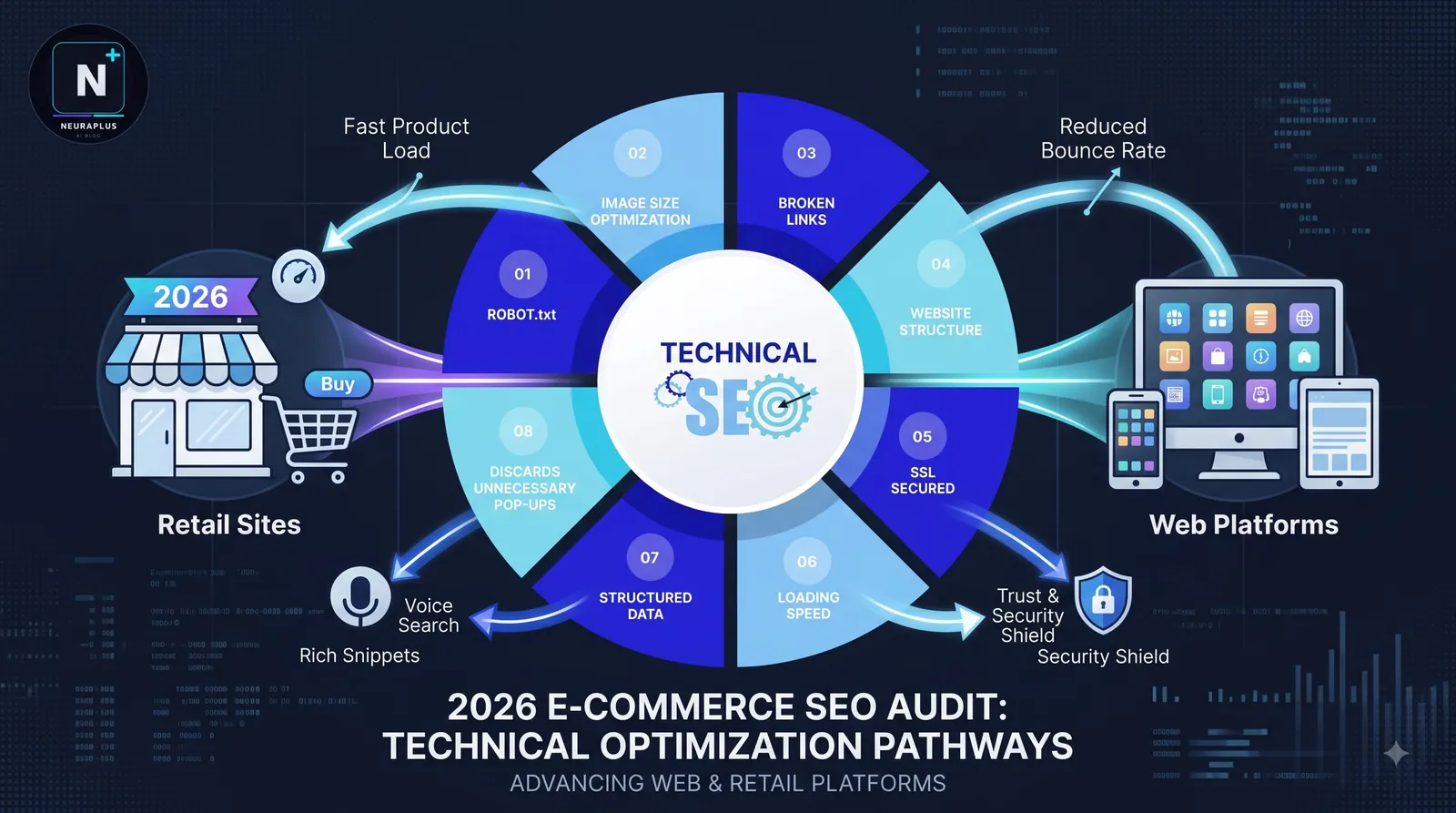
Every one of those eight areas above shows up repeatedly in store audits, and almost none of them require new content to fix. That's exactly why SEO strategy built around how modern crawlers and AI systems parse a website matters just as much for online stores as it does for content sites — the underlying technical signals are the same, even though the business model looks completely different.
Product Pages and Category Pages Aren't the Same Problem
Product pages need unique, specific descriptions, not manufacturer copy pasted from a spec sheet that a hundred other retailers are also using. Category pages need something different: a short block of genuinely useful text near the top that explains what a shopper will find and helps establish topical relevance, plus filters and sorting that don't spin off an endless number of near-duplicate indexable URLs. Agencies that understand how to build an AI-assisted content strategy for SEO tend to be much faster at writing genuinely differentiated product copy at scale, since AI tools can draft the first pass while a human editor keeps the brand voice and factual accuracy intact.
⚠️ A common trap: Auto-generated category descriptions that just restate the page title in a sentence add nothing. If a description reads like it was written to satisfy a word count rather than answer a shopper's question, it's not helping your rankings.
Questions to Ask Before You Sign a Contract
Ask to see a sample technical audit from a store similar in size to yours — not a generic template, an actual audit. Ask how they handle out-of-stock products (redirect, keep live with a waitlist, or let it 404 — the wrong answer here can quietly bleed rankings over months). Ask whether they're fluent in your specific platform's quirks; a Shopify-heavy agency can miss WooCommerce-specific plugin conflicts, and vice versa. And ask how they think about content that's likely to get pulled directly into featured snippets and AI-generated answer boxes, since more product research now starts in an AI assistant before it ever reaches a search engine results page.
What This Actually Costs in 2026
Most legitimate e-commerce SEO agencies in the US charge somewhere between $1,500 and $5,000 a month for small to mid-sized stores, scaling up from there for larger catalogs or highly competitive categories like apparel or supplements. Anything dramatically cheaper is usually either templated work applied to every client identically, or a red flag worth investigating closely. Anything promising guaranteed first-page rankings within weeks is worth walking away from entirely — no agency controls Google's algorithm, and claiming otherwise is itself a warning sign.
✅ What good looks like: A monthly report that ties specific technical fixes and content changes to actual movements in organic traffic, rankings, and revenue — not just a list of tasks completed. If a report can't answer "so what changed for my store," it's not doing its job.
Building an SEO Strategy That Compounds, Not Just a Checklist
The technical checklist above gets a store's foundation solid, but ongoing growth comes from a real strategy layered on top of it — one that treats content, technical health, and conversion data as connected rather than separate workstreams. If you're planning that longer-term approach yourself, a broader look at AI-assisted blog and content SEO strategy for 2026 is a useful companion to this checklist, since a store's blog and buying-guide content often drives the organic traffic that eventually lands on a product page.