🖊 Editorial Links · AI Niche · Authority
Editorial Link Building AI Niche:
Earning Links Editors Choose in 2026
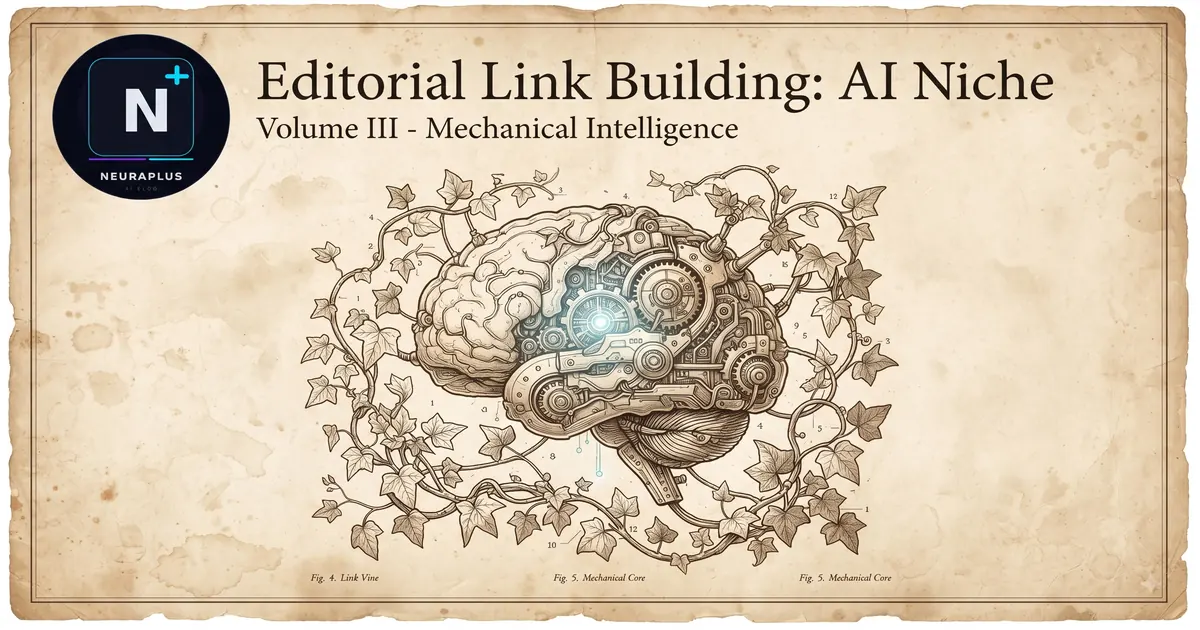
Last month, a senior editor at a well-known AI publication told me something I haven't been able to shake: "We link to about two outside sources per article. Not because we're stingy — because trust is our product. Every link is a recommendation we can't take back."
That one sentence explains why most link building in the AI niche fails. Outreach blasts, reciprocal swaps, paid placements — none of it passes the only test that actually matters: would a real editor, protecting their reputation, choose to link to this? Editorial link building is the discipline of making the answer yes.
And here's why it matters more in 2026 than ever: after years of AI-spun content floods, editors and algorithms alike have learned to reward the same signal — links that a human deliberately placed inside content they stand behind. Everything else is getting filtered out.
This guide covers that discipline end to end: what editorial links really are, why they outperform every other link type in the AI niche, the four asset formats editors can't resist citing, the pitch that respects their inbox, and the safety numbers that keep your profile clean.
💡 Reality check: In our audits of ranking AI blogs, 60-80% of their strongest backlinks were editorial — earned, never requested. The blogs stuck on page two had the inverse ratio: mostly negotiated links and almost nothing an editor chose voluntarily.
What "Editorial" Actually Means (And Why Algorithms Love It)
An editorial link is a backlink placed because a writer or editor judged your content worth citing — no payment, no swap, no obligation. It lives inside contextual prose, surrounded by sentences a human wrote, on a page a publication maintains and defends.
Search engines can't directly read intent, but they can read the fingerprints of it: contextual placement, relevant surrounding text, a linking page with real traffic, and a site that rarely links out. Editorial links carry all those fingerprints. Negotiated and paid links usually carry none.
Editorial Links vs Everything Else
| Link Type | How It's Earned | Editor Involved? | Lifespan | 2026 Value |
|---|---|---|---|---|
| Editorial | Cited because content deserves it | Yes | Years | Highest |
| Guest post | Pitched and written by you | Partially | Medium-long | High |
| Niche edit | Negotiated insertion | Sometimes | Medium | High |
| Directory / profile | Submitted | No | Long but weak | Low |
| Paid / PBN | Bought | No | Short | Risky |
None of the other types are "bad" — a healthy profile blends them. But editorial links are the ones that survive every spam update and keep paying rent years later.
The 4 Assets AI Editors Actually Link To
1. Original data and benchmarks
Numbers nobody else has. We benchmarked five open-source LLMs on a coding task and got cited by two tech magazines within a month — not because we asked, but because writers needed the numbers.
2. Free tools, calculators, and datasets
Utility content gets bookmarked and cited as "the place to do X." A simple prompt-cost calculator or a downloadable evaluation dataset becomes a permanent reference in tutorials.
3. Definitive explainers that save research time
Journalists on deadline link to the one page that explains a concept cleanly. If your explainer is the clearest in the niche, it becomes the default citation — I've watched one 3,000-word explainer collect links for two straight years.
4. Named expert commentary
A real person with a face, a track record, and quotable opinions. Editors link to experts they can quote again later. Building a personal brand is, quietly, a link building strategy.
The Pitch Editors Don't Delete
You don't pitch editorial links — you pitch usefulness. The link is a side effect. Rules I follow:
- Reference their exact article and the specific gap your asset fills.
- Send the asset, not a summary — one click, zero friction.
- Never ask for the link. Ask if it's useful to their readers. The distinction is everything.
- Under 100 words. Editors read on their phones between deadlines.
🖊 Sample note: "Hi [Name] — your piece on [topic] was the sharpest take I've read this month. We just published [original data/tool] that covers the [specific gap] you mentioned in section two. If it's useful for your readers, it's yours to cite or remix. Either way, thanks for the great writing." No ask. No follow-up pressure. Surprisingly, this gets replies.
Where to Find Editorial Opportunities in the AI Niche
- Newsjacking: When a model launches or a paper drops, publish a fast, expert take and send it to the 10 journalists covering the story that day.
- Unlinked mentions: Alerts for your brand often reveal citations without links — a 30-second email converts most of them.
- Source requests: Journalist platforms (Connectively, Qwoted) are full of AI stories needing expert sources. Answer fast, answer specifically.
- Contributor-friendly publications: Sites that accept external writers also cite external sources — start with our vetted AI niche guest post sites list and study what they link to.
The Safety Numbers
- Anchor discipline: Editorial anchors are naturally diverse — let them stay that way. Never request exact-match text.
- Velocity: Editorial links arrive in bursts around asset launches; that's normal and healthy. What looks manipulative is a flat, mechanical drip of identical links.
- Blend: Pair earned citations with a steady base of guest posts and contextual placements — our guide on do-follow backlinks in the AI niche covers the base layer.
The 90-Day Editorial Sprint
| Weeks | Focus | Output |
|---|---|---|
| 1-2 | Asset audit + citation gap research | One data-asset brief |
| 3-6 | Build and publish the asset | One cite-worthy page |
| 7-10 | Targeted promotion to ~30 editors | 10 real conversations |
| 11-12 | Report, reclaim mentions, plan asset #2 | 3-8 editorial links |
Two or three of these sprints per year will outperform fifty outreach emails per week. That's not hype — it's just how citation markets work.
Weaving It Into the Bigger Machine
Editorial links amplify a system; they don't replace one. Your technical SEO and content depth decide whether a citation converts into rankings, and your outreach pipeline keeps the base growing between asset launches. Our link building for tech blogs playbook shows how the channels stack, and SEO for AI websites 2026 maps the full stack in order — foundation first, accelerants second.