📊 Marketing AI · Automation
AI Marketing Automation 2026:
15 Tools That Cut Costs 34% (Ranked)
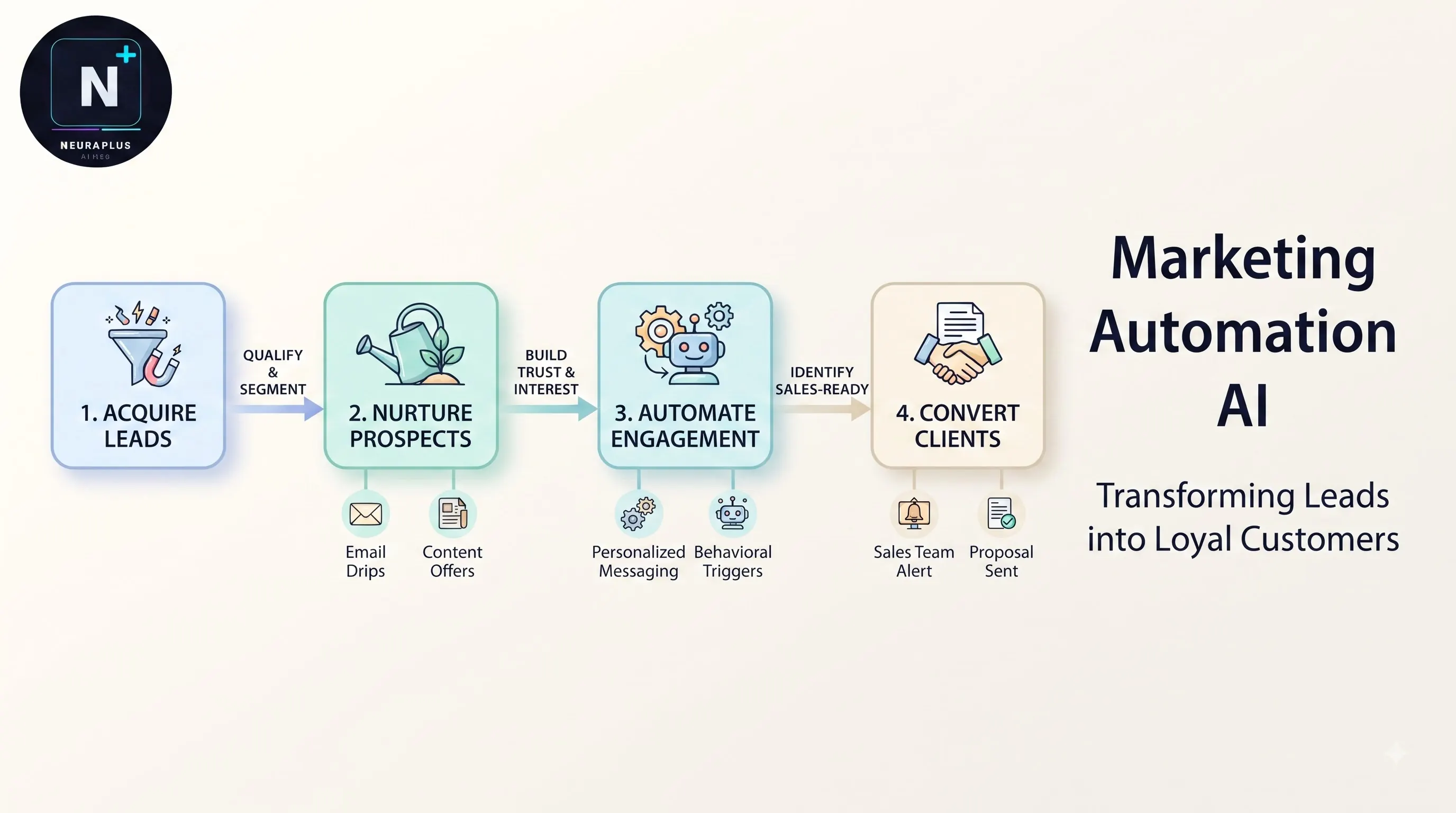
Marketing automation with AI in 2026 goes far beyond scheduling emails. AI-powered marketing platforms generate personalized content for each recipient, optimize ad spend in real time, predict which leads will convert, and create entire campaigns from a single brief — fundamentally changing the scale at which small teams can operate.
After hands-on testing 15 of the most important AI marketing tools across five channels (email, social, paid ads, SEO, content), we've ranked them by quality, ease of use, pricing value, and real-world ROI. This is the definitive guide to building a complete AI marketing stack in 2026.
💡 Proven Impact: Companies using AI marketing automation report 53% higher conversion rates, 34% reduction in marketing costs, and 3x faster campaign creation compared to traditional marketing automation tools. Small teams (3-5 people) now produce output equivalent to 15-20 person marketing departments.
Quick Verdict: The Top 5 AI Marketing Tools
Short on time? Here are the five tools every marketer should know in 2026:
- 🏆 Best Overall: HubSpot — unified CRM + AI across every channel
- 📧 Best for E-commerce Email: Klaviyo — predictive personalization
- 🤝 Best for B2B: ActiveCampaign — AI lead scoring + nurture
- 📱 Best for Social Content: Lately AI — content repurposing at scale
- ✍️ Best for Content Teams: Jasper — brand-voice AI writing
Category 1: Email Marketing AI Automation
Email remains the highest-ROI marketing channel — and AI has made it dramatically more effective. Modern AI email tools predict optimal send times per individual recipient, generate personalized subject lines and content, and build entire nurture sequences from a brief description.
Klaviyo AI From $20/mo
Why #1 for e-commerce: Gold standard for e-commerce email automation. AI predicts optimal send times per recipient, generates personalized subject lines, and creates product recommendation blocks based on individual browsing and purchase behavior. Flows AI creates entire email sequences from a brief description.
Best for: E-commerce brands (Shopify, BigCommerce, WooCommerce), DTC brands, and any business selling products online.
Standout feature: Predictive analytics that forecast customer lifetime value, churn risk, and next purchase date — enabling proactive retention campaigns.
Pricing: Free up to 250 contacts. Paid from $20/month scaling with list size.
ActiveCampaign From $15/mo
Why #1 for B2B: AI lead scoring, predictive sending, and personalization built for complex B2B sales cycles. Machine learning identifies when each contact is most likely to engage and sends at that moment — regardless of time zone. Sales automation integrates with CRM for seamless lead handoff.
Best for: B2B companies, SaaS businesses, agencies, and anyone with long, multi-touch sales cycles requiring nurture sequences.
Standout feature: Predictive sending uses ML to determine each contact's optimal engagement window, boosting open rates by 25-40% on average.
Pricing: Lite plan from $15/month. Plus from $59/month with advanced AI features.
Mailchimp AI Free up to 500 contacts
Why best free choice: Best free AI email tool with subject line recommendations, send time optimization, and AI content suggestions. Free plan covers most small business email needs. Generous feature set rivals many paid tools at entry level.
Best for: Small businesses, solopreneurs, nonprofits, and budget-conscious teams just starting with email marketing.
Pricing: Free up to 500 contacts. Essentials from $13/month.
HubSpot Marketing Hub Free CRM · From $800/mo Pro
Why unified choice: Full marketing suite with AI built into CRM, email, social, ads, and content. Content Assistant generates emails, blog posts, and social content from brief prompts. Breeze AI agent handles marketing tasks autonomously across the platform.
Best for: Growing businesses wanting all-in-one marketing + CRM. Particularly strong when email is part of a broader sales-marketing workflow.
📖 Related Reading
Best AI Tools for Email Writing: Complete 2026 Guide
Deep dive into AI email tools with prompt libraries, A/B testing frameworks, and deliverability best practices.Read Article →
Category 2: Social Media Marketing Automation
Social media AI has evolved from simple scheduling to intelligent content generation and predictive posting. Modern tools learn your brand voice, repurpose long-form content into dozens of platform-specific posts, and optimize posting times for maximum engagement.
Lately AI From $49/mo
Why repurposing leader: AI that learns your brand voice and automatically generates social posts from long-form content — blogs, podcasts, videos, newsletters. Creates dozens of platform-specific posts from each piece of content automatically. Best AI-native social media tool for content teams.
Best for: Content teams, marketing agencies, podcasters, and anyone producing long-form content that should become social posts.
Standout feature: Auto-generated threads and carousels from blog posts — one blog becomes 20+ social pieces across LinkedIn, Twitter, and Instagram.
Pricing: Starter from $49/month. Pro from $199/month.
Buffer AI Assistant Free (3 channels)
Why beginner choice: Generates platform-optimized social media captions from long-form content. Understands the different tone requirements of LinkedIn vs Twitter vs Instagram. Schedule posts for optimal times determined by AI based on your audience's behavior.
Best for: Small businesses, solopreneurs, and teams new to social media automation. Free tier is generous for getting started.
Pricing: Free plan for 3 channels. Essentials from $6/month per channel.
Jasper AI From $49/mo
Why brand voice leader: Purpose-built for marketing content at scale. Brand Voice trains on your existing content so new social posts, emails, and blogs sound consistent. Campaign workflows generate entire content strategies from a single brief.
Best for: Marketing teams producing content across multiple channels needing strict brand voice consistency.
Hootsuite OwlyWriter AI From $99/mo
Why enterprise choice: Enterprise-grade social media management with AI content generation, unified inbox, advanced analytics, and team collaboration. Used by large brands managing multiple accounts and teams.
Best for: Enterprise marketing teams, agencies managing multiple clients, and brands with complex social media operations.
Category 3: Paid Advertising AI Automation
AI has transformed paid advertising from manual campaign management to largely autonomous operation. Modern ad platforms use AI for bidding, targeting, creative testing, and budget allocation — often outperforming human media buyers on ROAS.
| Platform | AI Feature | What It Automates | Typical ROAS Improvement |
|---|---|---|---|
| Google Performance Max | Autonomous bidding | Bidding, targeting, ad creation across all Google channels | +20-40% |
| Meta Advantage+ | Creative optimization | Ad variations, audience targeting, budget allocation | +25-35% |
| Microsoft Advertising | LinkedIn integration | Smart bidding, professional audience targeting | +15-25% |
| TikTok Smart+ | Creative testing | Ad creative variants, audience discovery | +30-50% |
| LinkedIn AI Ads | Account targeting | ABM targeting, message personalization | +20-30% |
AdCreative.ai From $29/mo
Why creative leader: Generates hundreds of conversion-optimized ad creatives in seconds. AI analyzes your top-performing ads and brand guidelines to produce variations predicted to convert. Used by 3M+ marketers and agencies.
Best for: Performance marketers, agencies managing multiple clients, e-commerce brands running many ad variations.
Standout feature: Conversion scoring predicts which creatives will perform best before spending budget on testing.
Pencil (by Brandtech) From $99/mo
Why video ads choice: AI generates static and video ad creatives from brand assets. Predicts creative performance and automatically pauses underperformers. Particularly strong for video ad generation at scale.
Best for: Brands running video-heavy paid campaigns across Meta, TikTok, and YouTube.
📖 Related Reading
Generative AI for Content Creation: Tools & Strategies
See the complete stack for generating text, images, video, and audio that feeds your paid advertising campaigns.Read Article →
Category 4: SEO and Content Marketing Automation
AI has transformed SEO from manual keyword research and content creation to automated content optimization at scale. Modern tools predict ranking opportunities, generate SEO-optimized content, and monitor performance automatically.
Surfer SEO From $89/mo
Why SEO leader: AI analyzes top-ranking pages for any keyword and provides real-time content optimization scores as you write. Surfer AI generates complete articles optimized for target keywords. Used by content teams worldwide for data-driven SEO.
Best for: Content teams, SEO agencies, and bloggers wanting to rank higher on Google through data-driven optimization.
Standout feature: AI article generator produces complete, SEO-optimized articles in 15 minutes with internal linking suggestions.
SEMrush AI From $139/mo
Why all-in-one SEO: Comprehensive SEO platform with AI-powered keyword research, content optimization, technical audits, and rank tracking. ImpactHero AI identifies which content drives conversions. Copilot AI suggests personalized SEO strategies.
Best for: In-house SEO teams, agencies managing multiple clients, and businesses wanting a unified SEO platform.
MarketMuse From $149/mo
Why content strategy: AI analyzes your entire site's content inventory and identifies gaps, keyword opportunities, and content briefs. Automated content planning replaces hours of manual research with AI-driven strategy.
Best for: Large content teams, publishers, and enterprises managing hundreds or thousands of pages.
📖 Related Reading
Best AI Tools for Blogging and SEO in 2026
Complete guide to using AI for keyword research, content creation, and on-page optimization that ranks.Read Article →
Complete Comparison: All 15 Tools Side-by-Side
| Category | Tool | Best For | Pricing | AI Quality |
|---|---|---|---|---|
| Klaviyo | E-commerce | From $20/mo | ★★★★★ | |
| ActiveCampaign | B2B nurture | From $15/mo | ★★★★★ | |
| Mailchimp | Budget teams | Free tier | ★★★★☆ | |
| HubSpot | CRM integration | Free-$800/mo | ★★★★☆ | |
| Social | Lately AI | Content repurposing | From $49/mo | ★★★★★ |
| Social | Buffer | Beginners | Free tier | ★★★★☆ |
| Social | Jasper | Brand voice | From $49/mo | ★★★★★ |
| Social | Hootsuite | Enterprise | From $99/mo | ★★★★☆ |
| Ads | Performance Max | Google ads | Free (ad spend) | ★★★★★ |
| Ads | Advantage+ | Meta ads | Free (ad spend) | ★★★★★ |
| Ads | AdCreative.ai | Ad creative | From $29/mo | ★★★★★ |
| Ads | Pencil | Video ads | From $99/mo | ★★★★☆ |
| SEO | Surfer SEO | Content optimization | From $89/mo | ★★★★★ |
| SEO | SEMrush | All-in-one SEO | From $139/mo | ★★★★☆ |
| SEO | MarketMuse | Content strategy | From $149/mo | ★★★★☆ |
Building Complete AI Marketing Stacks by Budget
The real power of AI marketing automation comes from combining tools into a unified stack. Here are three proven configurations:
The Solo Marketer Stack ($0-60/month)
- CRM + Email: HubSpot Free CRM + Mailchimp Free (500 contacts)
- Social: Buffer Free (3 channels)
- Content: ChatGPT Plus ($20) for writing + Canva AI Free
- Ads: Google Performance Max + Meta Advantage+ (free, pay ad spend)
Total: $0-20/month. Handles everything a solo marketer needs with professional AI capabilities.
The Small Business Stack ($100-500/month)
- CRM + Email: HubSpot Starter ($80) or ActiveCampaign Plus ($59)
- Social: Lately AI Starter ($49) + Buffer Essentials ($18)
- Content: Jasper Creator ($49) + Surfer SEO ($89)
- Ads: AdCreative.ai ($29) + native platform AI
Total: ~$300/month. Produces output equivalent to a 5-person marketing team.
The Enterprise Stack ($2,500-10,000+/month)
- HubSpot Enterprise with Breeze AI agents
- Klaviyo or ActiveCampaign Enterprise for email
- Sprinklr or Hootsuite Enterprise for social
- SEMrush + MarketMuse for SEO
- Custom API integrations across all tools
💰 Cost Comparison: A typical 5-person marketing team costs $25,000-40,000/month in salaries alone. An AI marketing stack producing equivalent or greater output costs $100-500/month — a 50-400x cost reduction while maintaining or improving output quality and speed.
Industry-Specific AI Marketing Stacks
Different industries benefit from different tool combinations. Here are the highest-ROI stacks by industry:
| Industry | Best Tool Stack | Primary Use Case | Expected ROI |
|---|---|---|---|
| E-commerce | Klaviyo + Meta Advantage+ + AdCreative.ai | Cart abandonment, product recommendations | 8-15x |
| B2B SaaS | ActiveCampaign + LinkedIn AI + MarketMuse | Lead nurture, account-based marketing | 10-20x |
| Real Estate | HubSpot + Buffer + Google PMax | Lead follow-up, listing promotion | 6-12x |
| Healthcare | HubSpot + Mailchimp + Surfer SEO | Patient education, appointment reminders | 8-15x |
| Financial Services | ActiveCampaign + SEMrush + Jasper | Client nurture, content marketing | 10-20x |
| Education | Mailchimp + Lately + Performance Max | Student recruitment, course promotion | 8-15x |
| Hospitality | HubSpot + Buffer + Meta Advantage+ | Guest engagement, seasonal offers | 6-12x |
| Professional Services | ActiveCampaign + Jasper + SEMrush | Thought leadership, client nurture | 8-15x |
The 7-Step AI Marketing Automation Framework
After helping dozens of businesses implement AI marketing stacks, we've refined this seven-step framework that works across industries and company sizes:
- Audit current stack: Map every tool, workflow, and manual task across email, social, ads, SEO, and content. Identify the 3 highest-ROI automation candidates.
- Choose email automation: Pick based on business type — Klaviyo for e-commerce, ActiveCampaign for B2B, Mailchimp for budget teams, HubSpot for CRM integration.
- Add social media AI: Buffer for simple scheduling, Lately for content repurposing, Jasper for brand-consistent content, Hootsuite for enterprise.
- Automate paid ads: Enable Google Performance Max and Meta Advantage+ for autonomous bidding. Add AdCreative.ai for creative variations.
- Integrate SEO automation: Use Surfer SEO for content optimization, Jasper for SEO articles, SEMrush for keyword research and tracking.
- Connect tools via automation: Use Zapier or Make to connect all marketing tools into unified workflows. See our beginner's automation guide.
- Measure and optimize: Track conversion rate, cost per lead, time saved, and output volume. Target 53% higher conversions and 34% lower costs within 90 days.
📖 Related Reading
How to Use AI Automation for Business: 7-Step Framework
The complete business automation framework that includes marketing alongside sales, operations, and customer service.Read Article →
Real Marketing Workflows Powered by AI
The real power emerges when you combine tools into automated workflows. Here are five high-ROI workflows used by top marketing teams in 2026:
Workflow 1: The Content Multiplier
Input: Write one long-form blog post (2-3 hours of human expertise)
AI outputs:
- Jasper generates 5 social post variations per platform
- Lately creates 20+ LinkedIn, Twitter, and Instagram posts
- Buffer schedules posts at optimal times
- Mailchimp includes in weekly newsletter
- AdCreative.ai creates paid promotion creatives
Result: One blog becomes 40+ marketing pieces across channels in under 4 hours.
Workflow 2: The Lead Nurture Engine
Trigger: New lead downloads ebook from website
AI actions:
- ActiveCampaign scores lead based on behavior (AI)
- Jasper generates personalized follow-up email series
- AI schedules emails at predicted optimal engagement times
- High-intent leads get routed to sales team automatically
- Low-intent leads enter 90-day nurture sequence
Result: 3x more qualified leads reaching sales, 60% less time wasted on unqualified leads.
Workflow 3: The Ad Creative Factory
Input: Upload brand assets and top-performing ads
AI actions:
- AdCreative.ai generates 50 creative variations
- AI predicts top 10 performers based on historical data
- Meta Advantage+ auto-tests top performers
- Winners get more budget, losers get paused automatically
- New variations generated weekly based on performance
Result: 30-50% better ROAS than manual creative management.
Workflow 4: The SEO Content Machine
Input: Target keyword with commercial intent
AI actions:
- SEMrush identifies ranking opportunities and competitors
- Surfer SEO generates content brief with target keywords
- Jasper writes optimized article following brief
- Surfer scores content and suggests improvements
- Buffer promotes article across social channels
- AI monitors rankings and suggests updates
Result: First-page rankings in 60-90 days for 80% of target keywords.
Workflow 5: The E-commerce Revenue Engine
Triggers: Customer behavior events (browse, cart, purchase)
AI actions:
- Klaviyo predicts next purchase and churn risk
- AI generates personalized product recommendations
- Meta retargeting shows viewed products with AI creative
- Google PMax promotes high-LTV customer segments
- Post-purchase sequences drive repeat purchases
Result: 25-40% higher customer lifetime value, 15-25% lower customer acquisition cost.
Common Mistakes That Kill AI Marketing ROI
⚠️ Warning: These five mistakes destroy AI marketing ROI and waste thousands of dollars. Avoid them all.
Mistake 1: Using too many disconnected tools
The Fix: Choose one core platform (HubSpot or ActiveCampaign) and build around it. Data silos between tools destroy personalization and attribution. Fewer integrated tools beat many disconnected ones.
Mistake 2: Ignoring brand voice training
The Fix: Train Jasper, Lately, and other content tools on your existing content. Without brand voice, AI produces generic "AI voice" marketing that converts worse than human content.
Mistake 3: Not setting conversion tracking before AI
The Fix: AI optimizes toward what it can measure. Set up conversion tracking for every meaningful action before enabling AI bidding. AI without conversion data optimizes toward the wrong goals.
Mistake 4: Over-automating customer touchpoints
The Fix: Keep humans for high-value interactions — sales calls, complex support, strategic relationships. Use AI for operational scale, but don't automate every customer touchpoint.
Mistake 5: Not measuring quality alongside volume
The Fix: Track conversion rate, customer satisfaction, and brand perception alongside output volume. AI that produces 10x content at half the quality destroys brand value over time.
GDPR, Privacy, and Ethical Considerations
AI marketing automation exists within an evolving privacy landscape. Here's the current state of play in 2026:
- GDPR compliance: Major platforms (HubSpot, Klaviyo, ActiveCampaign, Mailchimp) are fully GDPR and CCPA compliant with built-in consent management, data residency options, and right-to-deletion features.
- Personalization limits: AI personalization must respect user consent preferences — you cannot use AI to target users who have opted out or to infer sensitive attributes without explicit consent.
- Data residency: Enterprise plans offer EU, US, or APAC data residency. Critical for businesses operating across multiple jurisdictions.
- Regulated industries: Healthcare, finance, and legal require HIPAA, SOC 2 Type II, or industry-specific compliance. Choose platforms with explicit certifications.
- AI disclosure: Emerging regulations in EU and US require disclosure when AI generates customer-facing content. Build disclosure into automated workflows.
🔒 Best Practice: Default to explicit consent for all personalization. Audit AI-driven campaigns quarterly for unintended targeting. Maintain human review of all customer-facing AI content in regulated industries.
The Future of AI Marketing (2026-2028)
Three trends will reshape marketing automation in the next 2-3 years:
Trend 1: Autonomous Marketing Agents
AI agents will plan, execute, and optimize entire campaigns autonomously. You'll set goals like "generate 100 qualified leads this quarter at $50 CPL" — the agent handles strategy, creative, targeting, and optimization. HubSpot's Breeze AI is the first mainstream example.
Trend 2: Hyper-Personalization at Scale
Every customer will receive unique content, offers, and experiences based on their behavior, preferences, and context. Millions of personalized variations from a single campaign brief. Klaviyo and Dynamic Yield are leading this shift.
Trend 3: Predictive Customer Lifetime Value
AI will predict each customer's lifetime value, churn probability, and optimal engagement strategy from the first interaction. Marketing spend will flow automatically to highest-LTV customers. See our deep-dive on how AI is transforming business operations.
ROI Calculator: Your Potential Savings
Here's what AI marketing automation delivers at different scales:
- Solo marketer: $20-60/month stack produces $5,000-10,000/month of equivalent agency value. 100-200x ROI.
- Small team (5 people): $300/month stack produces $30,000-50,000/month of equivalent agency value. 100-170x ROI.
- Mid-market (20+ people): $2,000/month stack replaces $150,000+/month marketing department. 75x+ ROI.
- Enterprise: Custom deployments save millions annually while increasing campaign velocity 3-10x.
📖 Related Reading
Best AI Automation Tools 2026: Top 12 Ranked
See the complete automation toolkit that connects your marketing tools into unified, autonomous workflows.Read Article →