Meta-Prompting Technique Guide: Use AI to Write Better Prompts
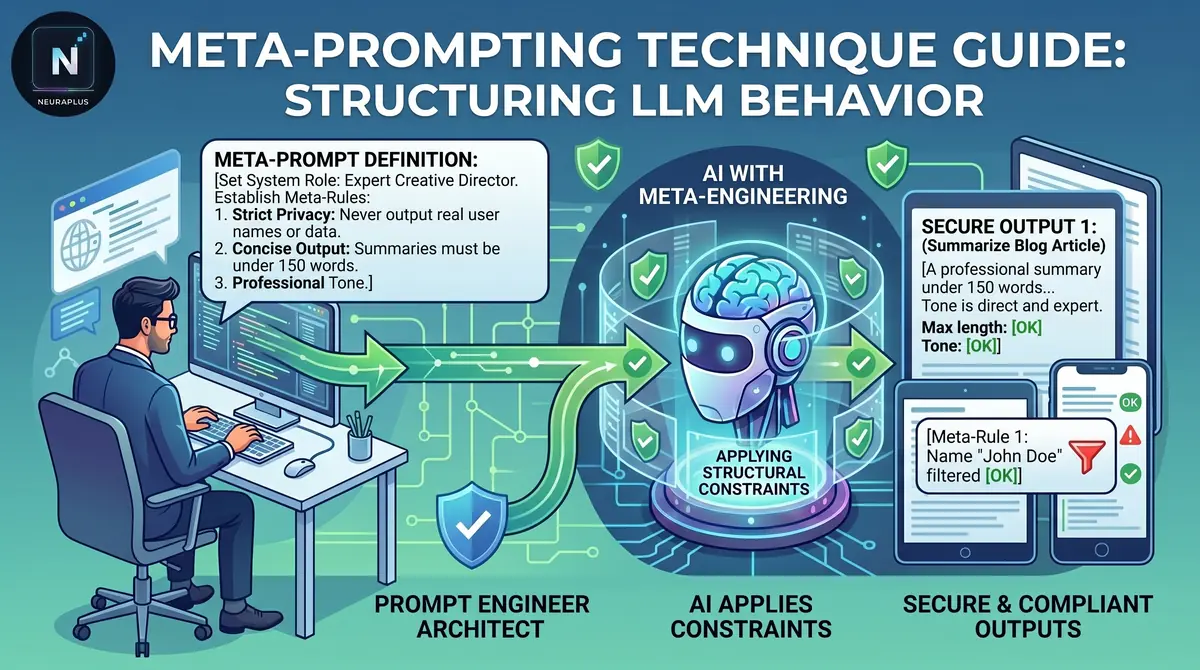
Let me tell you a story. A few months ago, I was struggling to get good results from Claude. I'd write a prompt, get a mediocre response, tweak it, try again, tweak it again... you get the idea. It was frustrating.
Then I discovered meta-prompting. Instead of writing prompts myself, I asked Claude to help me write better prompts. Mind blown. The results were dramatically better. It's like having a prompt engineer work for you.
In this guide, I'm going to show you exactly how meta-prompting works, why it's so powerful, and how you can use it to get dramatically better results from any AI model. This is the technique that changed everything for me, and I think it'll change everything for you too.
🎯 Quick Insight: Meta-prompting is using AI to generate prompts for AI. It's a meta-level technique that can meaningfully improve your prompt quality. If you're new to prompt engineering, start with our guide on writing better prompts first.
What Is Meta-Prompting? (And Why Should You Care?)
Meta-prompting is exactly what it sounds like: using prompts to create prompts. Instead of manually crafting a prompt from scratch, you ask AI to help you write a better prompt. It's like having a writing coach, but for prompts.
Here's the basic idea:
That's it. That's meta-prompting. But the results? Game-changing.
Here's why meta-prompting works so well:
- AI understands prompt engineering: AI models have been trained on millions of prompts. They know what makes a good prompt.
- AI adds what you miss: AI can add context, examples, and structure that you might forget to include.
- AI optimizes for your model: AI knows how to write prompts that work well with specific models.
- It's iterative: You can refine the meta-prompt to get even better prompts.
Why Meta-Prompting Matters (The Real Benefits)
Let me be honest with you. When I first heard about meta-prompting, I was skeptical. "Why would I need AI to write prompts? I can write prompts myself," I thought. Boy, was I wrong.
Here's what I've learned after using meta-prompting for months:
1. You Get Better Results (Obviously)
The biggest benefit is obvious: you get better results. When AI helps you write prompts, it adds elements you might miss. It adds context, examples, structure, and specificity that make your prompts more effective.
I've seen this over and over. I'll write a prompt, get a mediocre response. Then I'll ask AI to help me write a better prompt. The new prompt is almost always an improvement.
2. You Learn Prompt Engineering
Here's the thing I didn't expect: meta-prompting teaches you prompt engineering. When you see how AI writes prompts, you learn what makes a good prompt. You learn to add context, examples, and structure. You become a better prompt engineer.
This is huge. It's not just about getting better results today. It's about becoming better at prompt engineering over time.
3. You Save Time
Writing good prompts takes time. You have to think about context, examples, structure, and specificity. Meta-prompting automates this. You describe what you want, and AI writes the prompt. It's faster.
For longer or more complex prompts especially, this can save a meaningful chunk of time compared to drafting everything manually.
4. You Get Consistent Results
When you write prompts manually, the quality varies. Sometimes you write a great prompt, sometimes you write a mediocre one. Meta-prompting gives you consistent quality. AI always writes good prompts.
How to Use Meta-Prompting (Step by Step)
Alright, let's get into the practical stuff. Here's exactly how to use meta-prompting:
Step 1: Describe Your Task
First, describe what you want to do. Be specific. Don't just say "I want to write a blog post." Say "I want to write a 2,000-word blog post about meta-prompting for beginners, with examples and practical tips."
Step 2: Ask AI to Write the Prompt
Now, ask AI to help you write a better prompt. Be explicit about what you want. Ask for context, examples, structure, and any other elements that will improve the prompt.
Step 3: Review and Refine
AI will give you a prompt. Review it. Does it capture what you want? Is there anything missing? Refine it. Ask AI to add more context, more examples, or more specificity.
This is the iterative part. You're not just accepting the first prompt AI gives you. You're refining it until it's perfect.
Step 4: Use the Prompt
Now, use the prompt you've created. You should get much better results than if you'd written the prompt yourself.
For more on writing better prompts, check out our guide on best prompts for Claude.
Meta-Prompting Examples (Real Examples)
Let me show you some real examples of meta-prompting in action. These are actual prompts I've used.
Example 1: Blog Post Writing
Example 2: Code Generation
Example 3: Email Writing
Common Meta-Prompting Mistakes (And How to Avoid Them)
I've made all these mistakes, so you don't have to. Here are the most common meta-prompting mistakes:
Mistake 1: Being Too Vague
Don't just say "Help me write a prompt." Be specific. Say what you want, who it's for, what format you want, and any other requirements.
Mistake 2: Not Iterating
Don't just accept the first prompt AI gives you. Review it, refine it, ask for more context or examples. Iterate until it's perfect.
Mistake 3: Not Providing Context
Context is crucial. Tell AI who the audience is, what the purpose is, and any other relevant context. The more context you provide, the better the prompt will be.
Mistake 4: Not Being Specific About Format
Be specific about the format you want. Do you want a list? A paragraph? A step-by-step guide? Be explicit.
Advanced Meta-Prompting Techniques
Once you've mastered the basics, you can use these advanced techniques:
Technique 1: Chain-of-Thought Meta-Prompting
Ask AI to think step-by-step when writing the prompt. This can lead to even better prompts.
For more on chain-of-thought prompting, check out our chain-of-thought prompting guide.
Technique 2: Few-Shot Meta-Prompting
Provide examples of good prompts, and ask AI to write a similar prompt for your task.
Technique 3: Iterative Refinement
Start with a basic meta-prompt, then iteratively refine it. Ask AI to add more context, more examples, or more specificity with each iteration.
Frequently Asked Questions
Meta-prompting is the technique of using AI to generate prompts for AI. Instead of writing prompts manually, you ask AI to help you craft better, more effective prompts. It's like having a prompt engineer work for you.
Meta-prompting improves quality because AI understands prompt engineering principles. It can add context, structure, examples, and specificity that you might miss. The AI acts as a prompt engineer, optimizing your prompts for better results.
Yes, meta-prompting works with any AI model. You can use ChatGPT, Claude, or any LLM to generate prompts. The key is to give the AI clear instructions about what kind of prompt you need.
No, they're different techniques. Chain-of-thought asks AI to think step-by-step when answering. Meta-prompting asks AI to help you write better prompts. They can be combined for even better results.
Conclusion
Meta-prompting is one of the most useful prompt engineering techniques to have in your toolkit. It's simple, but it's effective. It can change how you write prompts, and the results you get.
If you're not using meta-prompting yet, it's worth trying. You may get better results, save time, and become a better prompt engineer along the way.
At NeuraPulse, we're passionate about helping you master AI. We've spent time testing prompt engineering techniques, and we're sharing what we've learned. If you want to learn more about prompt engineering, check out our guides on writing better prompts and best prompts for Claude.
And if you want to learn about other advanced prompt engineering techniques, check out our chain-of-thought prompting guide. It's another useful technique that can improve your results.