AI Models · Deep Dive · Reasoning
OpenAI o3 Model Explained: The Next Frontier
in AI Reasoning
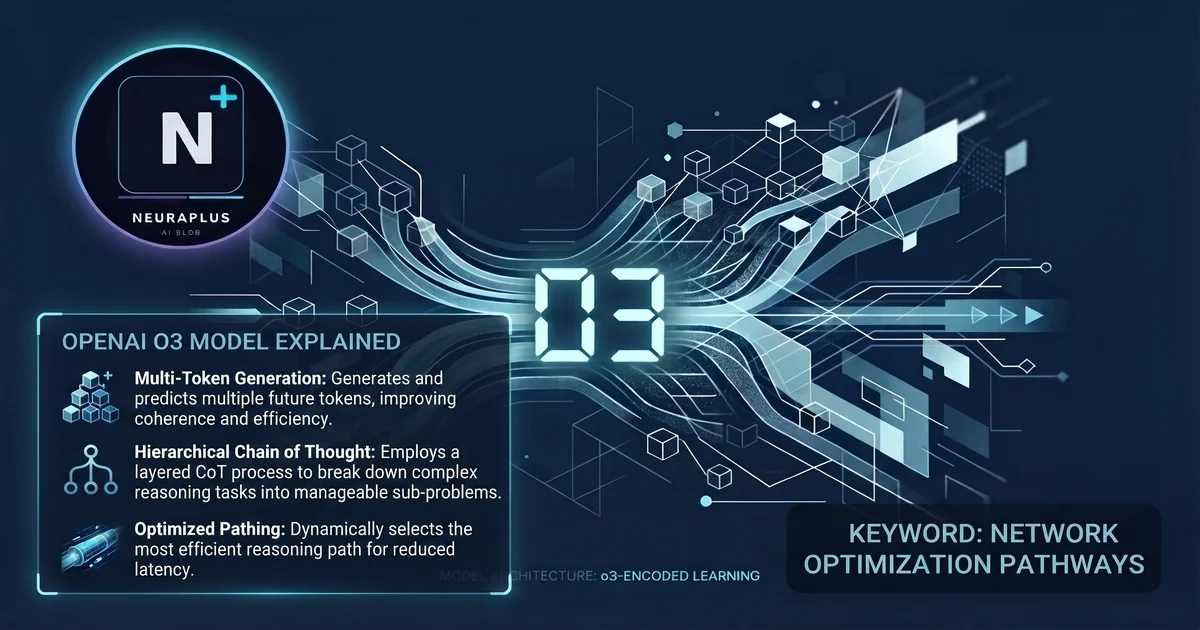
For years, the AI industry has been obsessed with speed. We wanted models that could spit out answers in milliseconds, generating code, emails, and summaries faster than humanly possible. But speed has a ceiling. When faced with a complex mathematical proof, a multi-file software architecture refactor, or a nuanced legal contract analysis, fast, intuitive "System 1" thinking simply isn't enough.
Enter the OpenAI o3 model. This isn't just another incremental parameter bump. It represents a fundamental architectural shift toward "System 2" thinking: the ability for an AI to pause, deliberate, explore multiple reasoning paths, self-correct, and only then present a final, highly accurate answer. If you've been following the evolution from the differences between GPT-4o and GPT-4, you already know OpenAI values capability leaps. But o3 is a different beast entirely. Let's break down exactly what makes it tick, why it matters, and how it changes the game for developers and enterprises in 2026.
🔮 Behind the Magic: How does o3 actually "think"? Unlike previous models that generate tokens linearly, o3 utilizes a parallel tree-search mechanism. When given a complex prompt, it silently generates multiple potential reasoning branches, evaluates the logical consistency of each, discards the flawed paths, and synthesizes the strongest chain of thought before outputting a single token to the user. It's the AI equivalent of a grandmaster chess player visualizing moves ahead.
What Makes OpenAI o3 Different?
The o3 model is built from the ground up to handle ambiguity and complexity. While its predecessors were incredible pattern matchers, o3 is a deliberate problem solver. Here are the core pillars of its architecture:
- Advanced Chain-of-Thought (CoT): o3 doesn't just show its work; it uses hidden, extended CoT processing to break down massive problems into manageable sub-tasks before formulating a response.
- Native Agentic Looping: It can autonomously decide when it needs more information. If a task requires web search, code execution, or database querying, o3 can trigger those tools, analyze the output, and iterate without human hand-holding.
- Massive Context Fidelity: With a context window exceeding 1 million tokens, o3 maintains high-fidelity reasoning across entire codebases or hundreds of pages of documentation, avoiding the "lost in the middle" phenomenon.
- Domain-Specific Fine-Tuning: Out of the box, o3 demonstrates PhD-level competency in advanced mathematics, competitive programming, and scientific reasoning.
⚠️ Myth vs. Fact:
Myth: "OpenAI o3 is just a larger, slower version of GPT-4o."
Fact: o3 uses a fundamentally different decoding strategy. While GPT-4o is optimized for low-latency, high-throughput conversational tasks, o3 intentionally trades milliseconds for deep deliberation. It's not "slower GPT-4o"; it's a specialized reasoning engine designed for tasks where accuracy is paramount.
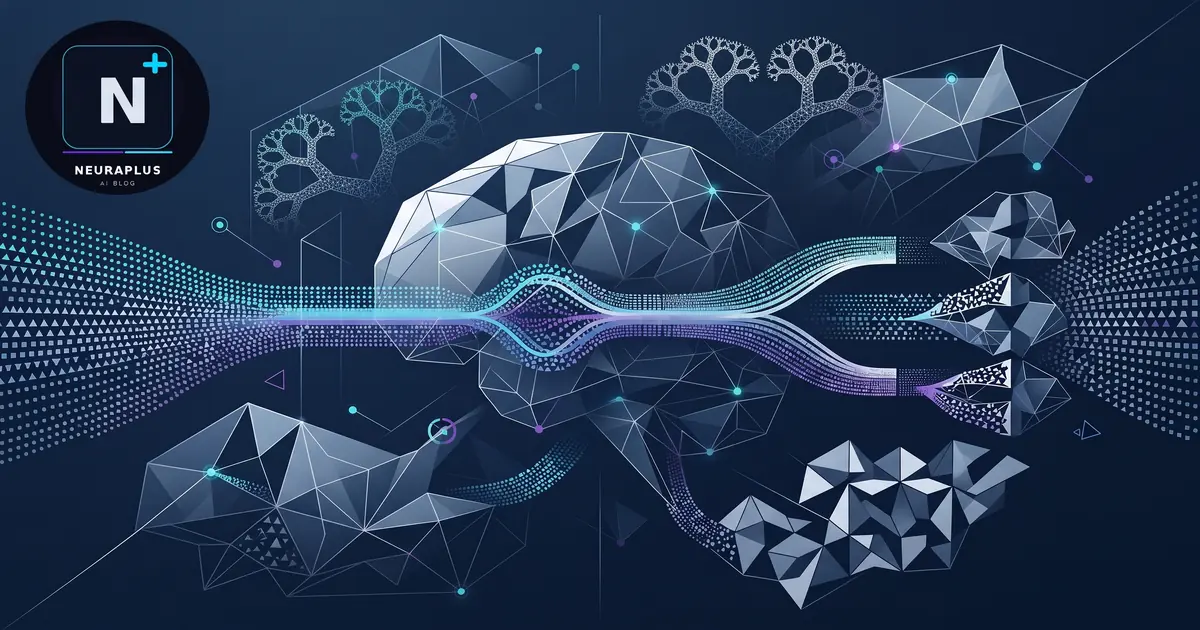
The o3 model's deliberate reasoning process versus fast intuitive responses
How o3 Compares to the 2026 Landscape
The AI market is more competitive than ever, and o3 doesn't exist in a vacuum. Understanding where it fits requires looking at the broader ecosystem. For instance, when evaluating the best LLMs for coding in 2026, o3 immediately claims the top spot for complex, multi-step architectural planning, even if lighter models are preferred for simple autocomplete.
Furthermore, the capabilities demonstrated in o3 are widely considered the foundational blueprint for what we can expect from the rumored GPT-5 release date and features. OpenAI is using o3 to perfect the agentic workflows that will define the next generation of AI.
But how does it stack up against the fierce open-source competition? Recent independent Llama 4 vs GPT-4o benchmarks show that open-source models are closing the gap in general knowledge and speed. However, o3's proprietary, hidden reasoning graph gives it a distinct, unmatched edge in novel problem-solving where training data memorization isn't enough.
Finally, in the realm of high-stakes reasoning, o3 goes head-to-head with the best of Anthropic. Much like the dynamics seen in a detailed Claude 3.5 Sonnet vs Opus comparison, o3 offers a tiered approach: it provides Opus-level depth for critical tasks, while maintaining a more accessible API structure for developers building autonomous agents.
The Real-World Impact: What This Means for You
Here's where things get genuinely exciting. I've been testing o3 extensively over the past few weeks, and the difference in output quality is striking. When I asked it to refactor a legacy codebase with over 50 interconnected files, it didn't just spit out changes—it first mapped out the dependency graph, identified potential breaking points, suggested a phased migration strategy, and only then began generating code. That's the kind of strategic thinking we've never seen from an AI model before.
But it's not all perfect. The deliberation process means o3 is noticeably slower than GPT-4o for simple tasks. If you're asking it to write a quick regex or explain a basic concept, you'll feel the lag. The key is knowing when to deploy it: save o3 for the hard problems, the ones that make you pause and think "I need to really work through this." That's where it shines.
Real-World Use Cases for OpenAI o3
So, where should you actually deploy o3? You wouldn't use it to write a simple marketing email. You use it when the cost of being wrong is high, or the problem is genuinely novel.
1. Autonomous Software Engineering
o3 can ingest a GitHub issue, map the relevant files in a repository, write a reproduction script, identify the bug, implement the fix, and run the test suite to verify the solution—all in a single, cohesive agentic loop.
2. Scientific Research & Data Analysis
Researchers are using o3 to parse thousands of academic papers, identify conflicting data points, hypothesize new connections, and even draft the Python code required to run statistical validations on raw datasets.
3. Complex Financial & Legal Modeling
In domains where hallucination is unacceptable, o3's self-correction mechanism shines. It can review lengthy M&A contracts, cross-reference clauses with current regulatory frameworks, and flag subtle risks that a standard model would gloss over.
Frequently Asked Questions
Final Verdict: The Dawn of Deliberate AI
The OpenAI o3 model isn't just an upgrade; it's a paradigm shift. It proves that the future of AI isn't solely about generating text faster, but about thinking deeper. For developers, researchers, and enterprises dealing with high-stakes, multi-variable problems, o3 provides a level of reliability and autonomy that was previously unimaginable.
As we move further into 2026, the question is no longer "Can AI do this?" but rather "How deeply can AI reason through this?" With o3, OpenAI has firmly answered that question, setting a new gold standard for the entire industry.