💼 SEO · Small Business · NeuraPulse
SEO Packages for Small Business USA:
What's Actually in Each Tier
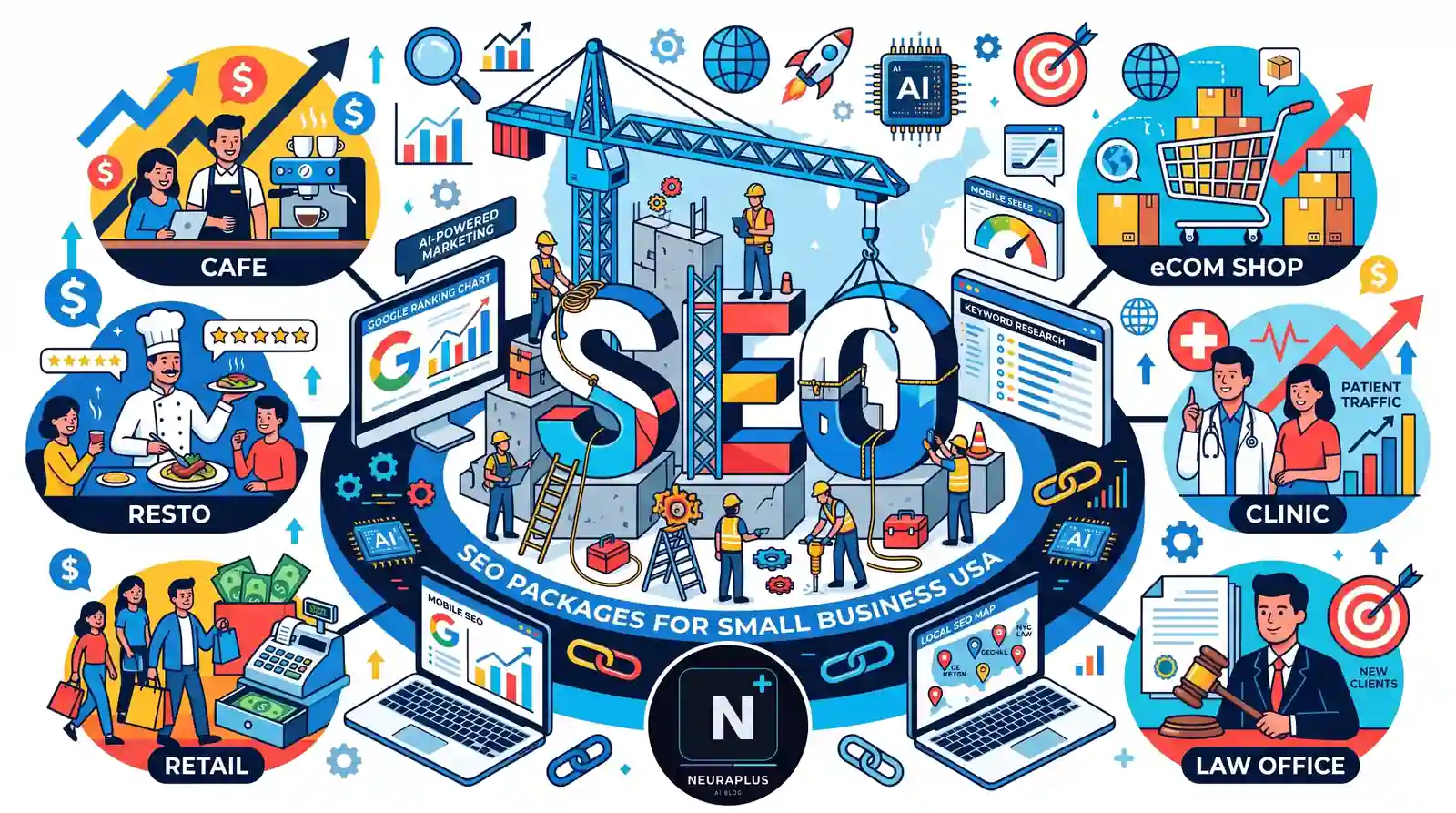
A bakery owner in Austin once forwarded us three SEO quotes she'd gotten in the same week — $299 a month, $1,200 a month, and $4,500 a month — and asked, half-joking, "are these even the same service?" The honest answer was: not really, no. "SEO package" gets used as a label for wildly different amounts of actual work, and the price alone tells you almost nothing about what you're buying. This is the breakdown we gave her, cleaned up into something anyone comparing SEO packages for their small business can actually use.
💼 Quick framing: An SEO "package" is really just a bundle of hours and deliverables dressed up as a fixed monthly price. The name of the tier tells you nothing — the actual line items inside it tell you everything.
The Three Tiers Most Providers Actually Sell
| Tier | Typical Monthly Cost | What You Usually Get |
|---|---|---|
| 1 | Starter | $400 - $900, technical audit, Google Business Profile setup, on-page fixes for a handful of pages |
| 2 | Growth | $1,000 - $2,500, monthly content, basic link building, ongoing local citation cleanup |
| 3 | Full-Service | $2,500 - $5,000+, dedicated strategist, larger content volume, competitive link building, AI-answer testing |
Notice what's missing from that table: a guaranteed ranking position, a specific number of "keywords targeted," or any promise about traffic volume. Any legitimate provider avoids those promises, because nobody controls Google's algorithm closely enough to guarantee an outcome. What a legitimate package promises is a defined amount of work and a transparent way to measure whether it's moving the numbers that matter.
What Actually Separates a Good Package From a Weak One
Two packages can carry the exact same price tag and deliver completely different value, and the difference almost never shows up in the sales pitch. It shows up in the specifics: how many pages of content get written each month, whether that content is genuinely researched or lightly templated, whether link building means real editorial placements or a stack of low-quality directory submissions, and whether reporting shows raw numbers or just a polished-looking summary slide. Ask any provider to show you an actual sample month's deliverables from an existing client before you sign anything — a legitimate provider will have no problem showing you.
The content quality question matters more than most small business owners realize going in. Thin, keyword-stuffed content used to work reasonably well years ago; it performs poorly now, both in classic Google rankings and increasingly in how AI systems evaluate and cite a business's content. Our own breakdown of what a solid AI-aware blog and SEO strategy looks like in 2026 is a useful benchmark to compare against whatever content samples a package includes.
⚠️ Red flags across every price tier: Guaranteed rankings, vague deliverables with no specific page or content counts, long lock-in contracts with no exit clause, and a price that seems dramatically cheaper than every other quote you've received without a clear reason why.
Package vs. Custom Plan: Which One Actually Fits Your Business
Packages work well for straightforward, low-competition local businesses — a single-location service business in a mid-sized city, for example, where the competitive landscape is manageable and the work genuinely fits into a standardized bundle. A custom plan tends to make more sense once a business gets more complicated: multiple locations, a niche industry with specialized terminology, or direct competition against well-funded national brands with years of content and backlinks already built up. In those situations, a rigid package often either underdelivers on scope or overcharges for work you don't actually need.
This same "know your actual situation before buying a bundle" logic shows up constantly in how small businesses evaluate tools generally, not just SEO. We see it in how owners choose which AI tools are actually worth adopting versus which ones just sound impressive, and in the broader wave of AI tools small businesses are using to save real operational time. The pattern is the same: match the tool or the package to the actual size and complexity of the problem, not to whatever tier sounds the most impressive on a sales page.
Why 2026 Packages Need an AI-Search Line Item
A package built purely around classic Google rankings is already measuring an incomplete picture. A meaningful and growing share of local and product searches now get answered directly by AI assistants and Google's AI Overviews, often before a customer ever clicks through to a website. A small business SEO package in 2026 that doesn't at least test how the business shows up inside those AI-generated answers is working from an outdated scoreboard. We cover the fuller version of this shift in our guide on how SEO for AI-era websites is evolving, and the small business version of the same logic is simple: ask any package you're considering whether AI visibility is tracked at all, not just assumed to follow automatically from good rankings.
✅ The honest bar to set: A good SEO package for a small business should feel boring in the best way — clear deliverables, honest reporting, no guarantees that sound too good, and a provider who can explain in plain language exactly what your money bought this month.
A Simple Way to Compare Quotes Side by Side
When you're staring at three different quotes the way that Austin bakery owner was, the fastest way to compare them fairly is to ignore the tier names entirely and build your own simple checklist: how many pages of new content per month, how many hours of technical work, what the link-building approach actually is, how often you get a real report with real numbers, and whether AI-answer visibility gets tracked at all. Lay all three quotes against that same checklist, and the actual differences — and the actual value — become a lot easier to see than they are in a glossy sales deck.