🏷️ SEO · Agency Growth · NeuraPulse
White Label SEO Services in the United States:
How the Partnership Actually Works
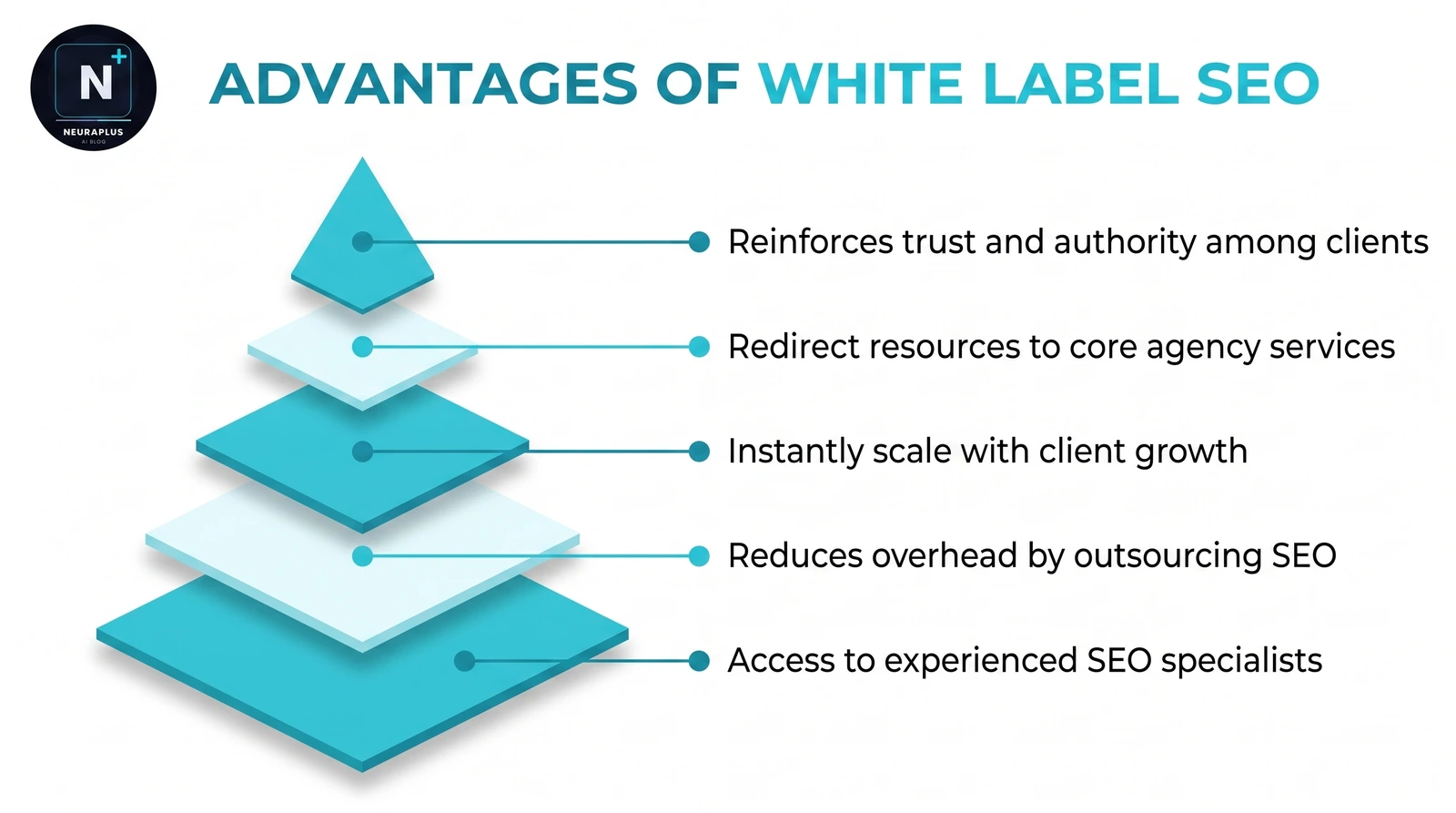
A marketing agency owner told me something a couple of years ago that stuck with me: "Every client eventually asks about SEO, and every time I say yes without actually being able to deliver it, I'm gambling with the relationship." That's the exact tension white label SEO exists to solve. She didn't need to hire an SEO team, build out a link-building process, or learn technical audits from scratch. She needed a partner who could quietly do the actual work behind her agency's name, so she could say yes to SEO the same way she already said yes to paid ads or social — with a real team standing behind the promise.
💡 In plain terms: White label SEO means one company performs the SEO work — audits, content, technical fixes, link building, reporting — while another company sells and presents that work to its own clients under its own name. The client never sees who actually did the work.
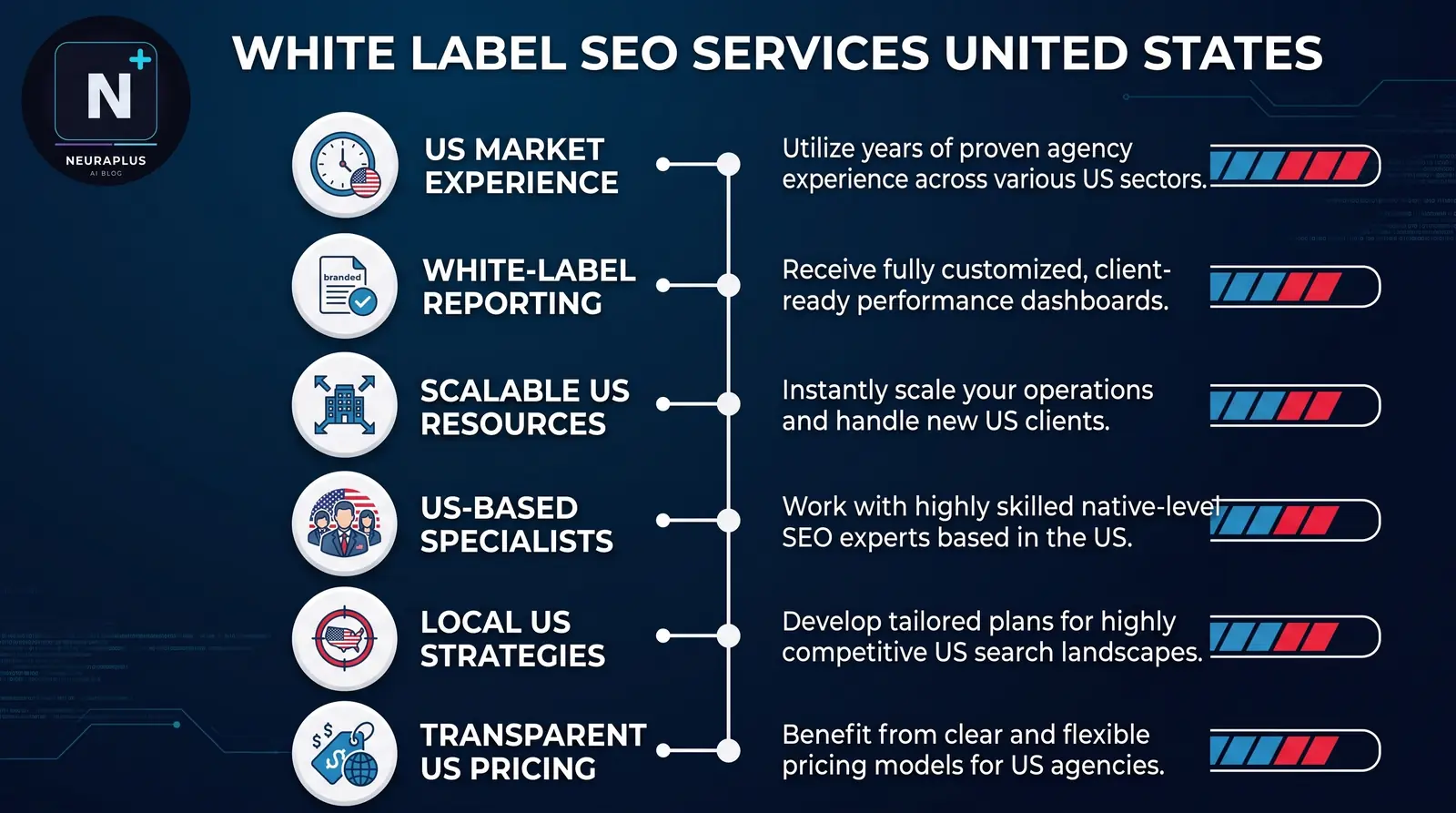
How the White Label Relationship Actually Works
The mechanics are simpler than most people expect once you strip away the sales language. A marketing agency, web design shop, or digital consultancy signs a client for SEO. Instead of doing the work in-house, they hand the account off to a white label partner, who audits the site, builds out the content and technical roadmap, executes link building, and tracks rankings — all under a non-disclosure arrangement. Every deliverable, from the monthly report to the strategy call deck, carries the reselling agency's logo and branding. The end client typically has no idea a third party is involved at all, and that's exactly the point.
What separates a good partnership from a shaky one is usually communication cadence and transparency between the two agencies, not the client-facing side. The reselling agency needs to trust that the work being done under their name is actually good — that a ranking drop won't blindside them in a client call, that a strategy shift gets flagged before it happens, not after. We've written before about what a strong AI-informed content strategy actually looks like, and that same discipline — clear planning, documented reasoning, no black-box decisions — is what makes a white label relationship durable instead of a constant source of anxiety.
What's Actually Included in a White Label SEO Package
| Step | Deliverable | What It Covers |
|---|---|---|
| 1 | Technical Audit | Site speed, crawlability, indexation, structured data |
| 2 | Content & On-Page | Keyword-mapped pages, internal linking, metadata |
| 3 | Link Building | Outreach, guest posting, editorial placements |
| 4 | Reporting | White-labeled dashboards, ranking and traffic reports |
Not every provider includes every layer above by default, and this is exactly where agencies get burned. Some white label vendors only do link building and expect the reselling agency to handle content and technical work themselves. Others bundle everything into a flat monthly retainer with almost no customization. Before signing anything, ask exactly which of those four layers are included, which are add-ons, and who owns the strategy decisions when priorities conflict.
⚠️ A common mistake: Agencies sometimes pick a white label partner purely on price and end up with generic, templated content that doesn't match their client's voice or industry. Ask for writing samples specific to your client's niche before committing, not just a general portfolio.
How to Choose a White Label SEO Partner in the US
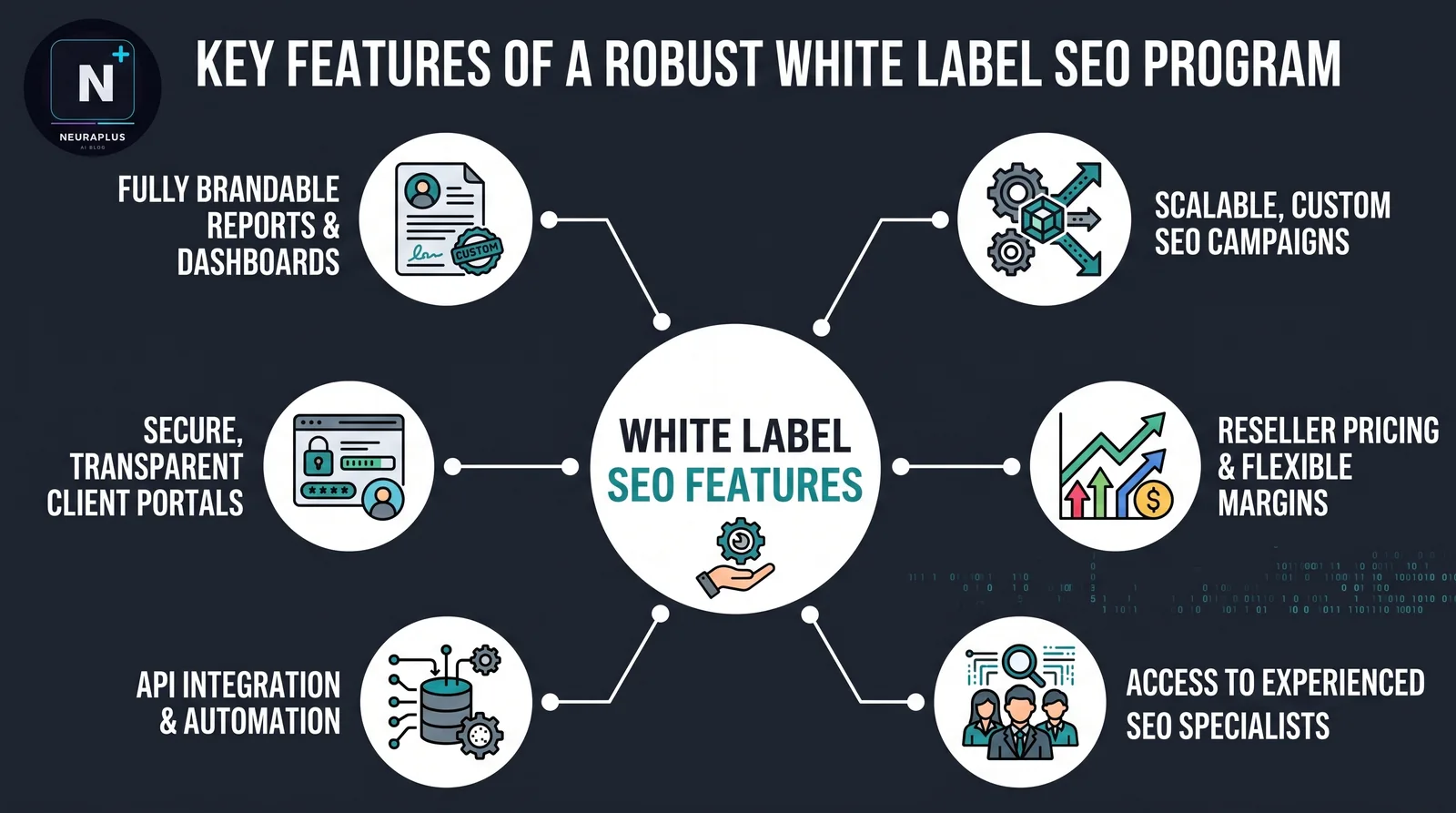
There's no shortage of vendors claiming to offer white label SEO, and the market is genuinely uneven in quality. Here's what we tell agencies to check before signing a contract.
- Can they show real ranking results, ideally with permission to share case studies, not just claims of "proven strategies"?
- Is account management US-based, or at minimum working US business hours, so client calls and urgent fixes don't get stuck in a time zone gap?
- Do they build proper backlinks — the kind covered in our breakdown of do-follow link building in the AI niche — rather than relying on low-quality directory spam that can eventually hurt a client's domain?
- Do their dashboards and reports actually white-label cleanly, meaning no accidental logo leaks, watermarks, or footer mentions of the provider's own name?
- Are they current on how search itself is changing? A partner still selling 2019-era SEO tactics without any awareness of how AI-driven search is reshaping optimization is going to leave your clients behind.
Why White Label SEO Now Has to Include AEO
This is the part of the conversation that's changed the most in the last year. A white label package that only covers classic ranking factors is already incomplete, because a growing share of searches now get answered directly by AI systems before a user ever clicks a link. We laid out the fundamentals of that shift in our guide on building an AI-aware blog and SEO strategy for 2026, and the short version is this: content structured only for classic keyword ranking is going to underperform in an AI Overview or ChatGPT citation, even if it ranks perfectly well in the old ten blue links.
A genuinely modern white label partner should be building schema markup, structuring content around direct-answer formatting, and testing visibility inside AI tools as part of the standard package, not as a separate expensive upsell. If your current provider can't speak to any of that, it's worth asking pointed questions before your clients start asking you why a competitor is showing up in AI-generated answers and they aren't.
✅ The honest version: A good white label SEO partner should feel invisible to your clients and indispensable to you — reliable enough that you'd stake your agency's reputation on their work, because you already are.
Who White Label SEO Makes Sense For
Not every agency needs a white label partner, but a few situations make it an obvious fit. Web design and development shops that keep getting asked "can you also handle our SEO?" after a site launch are a natural match, since the relationship and trust with the client already exists. Paid media and social agencies looking to round out a full-funnel offering without hiring a dedicated SEO department benefit the same way. And smaller boutique agencies that want to compete for larger retainers against bigger competitors can use a white label partnership to punch above their actual headcount, presenting a fully staffed-looking SEO department that's really a trusted partner working quietly in the background.
If that sounds like your agency, the right move is to start with a smaller pilot client rather than migrating your entire book of business at once. Test the communication, the reporting quality, and the actual ranking movement before deciding whether to expand the partnership further.