🧭 SEO · Hiring · Guide
Hire an SEO Consultant in the USA:
What to Know Before You Sign Anything
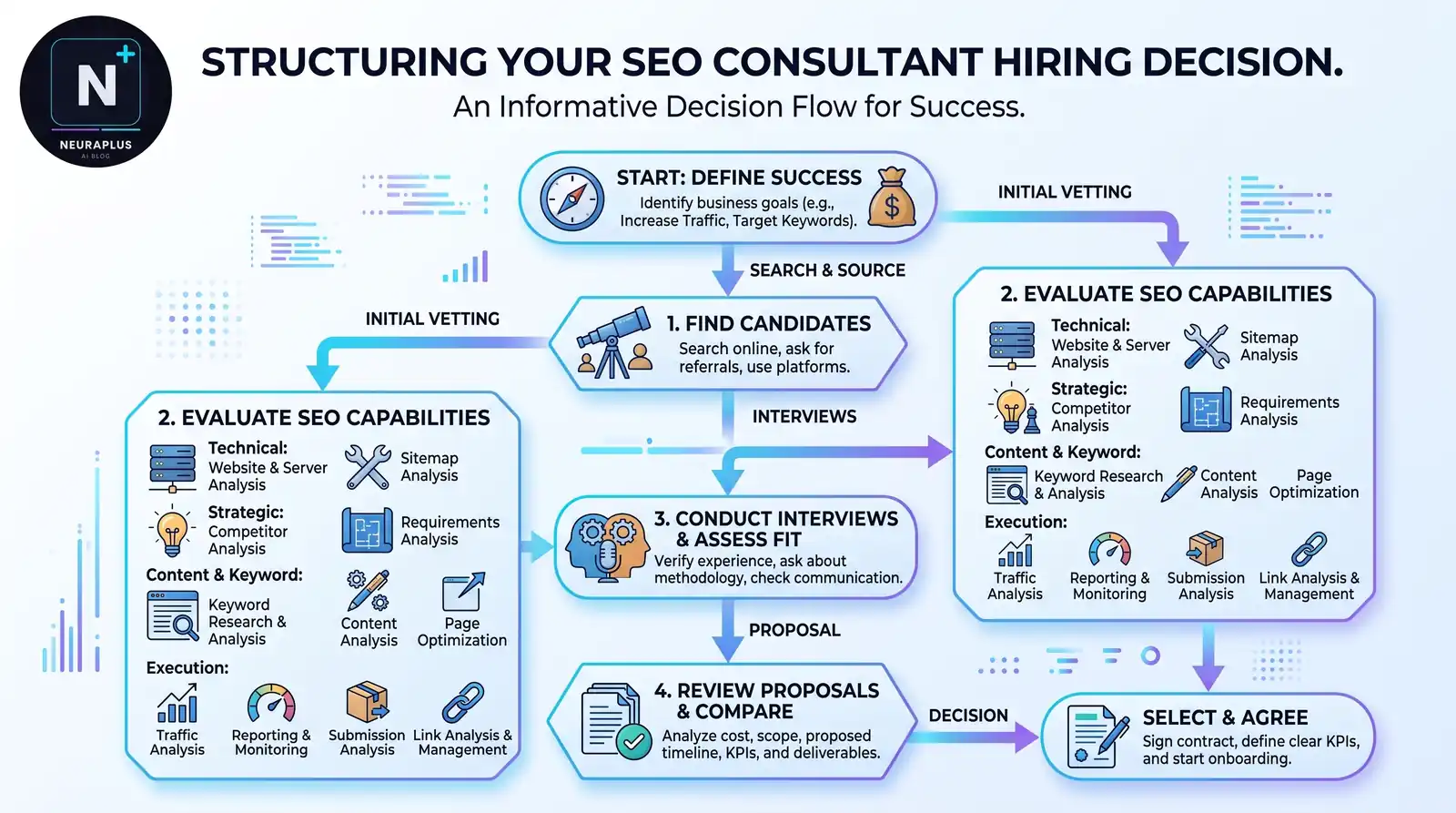
A founder emailed us a few weeks back with a question that sounded simple but wasn't: "How do I know if the SEO consultant I'm about to hire is actually good, or just good at sales?" It's a fair worry. SEO is one of those services where the buyer usually can't judge the quality of the work until months after they've already paid for it. That gap between "sounds convincing in a sales call" and "actually moves the needle six months later" is exactly where a lot of businesses get burned. This guide is the version of that answer we wish existed before we had to write it ourselves — what a consultant actually does, what it should cost in the US market right now, and the specific things that tell you whether the person across the table knows what they're doing.
🧭 Quick framing: "SEO consultant" isn't a licensed title — anyone can call themselves one. That makes vetting more important than in almost any other service category you'll hire for this year.

What a Good SEO Consultant Actually Does
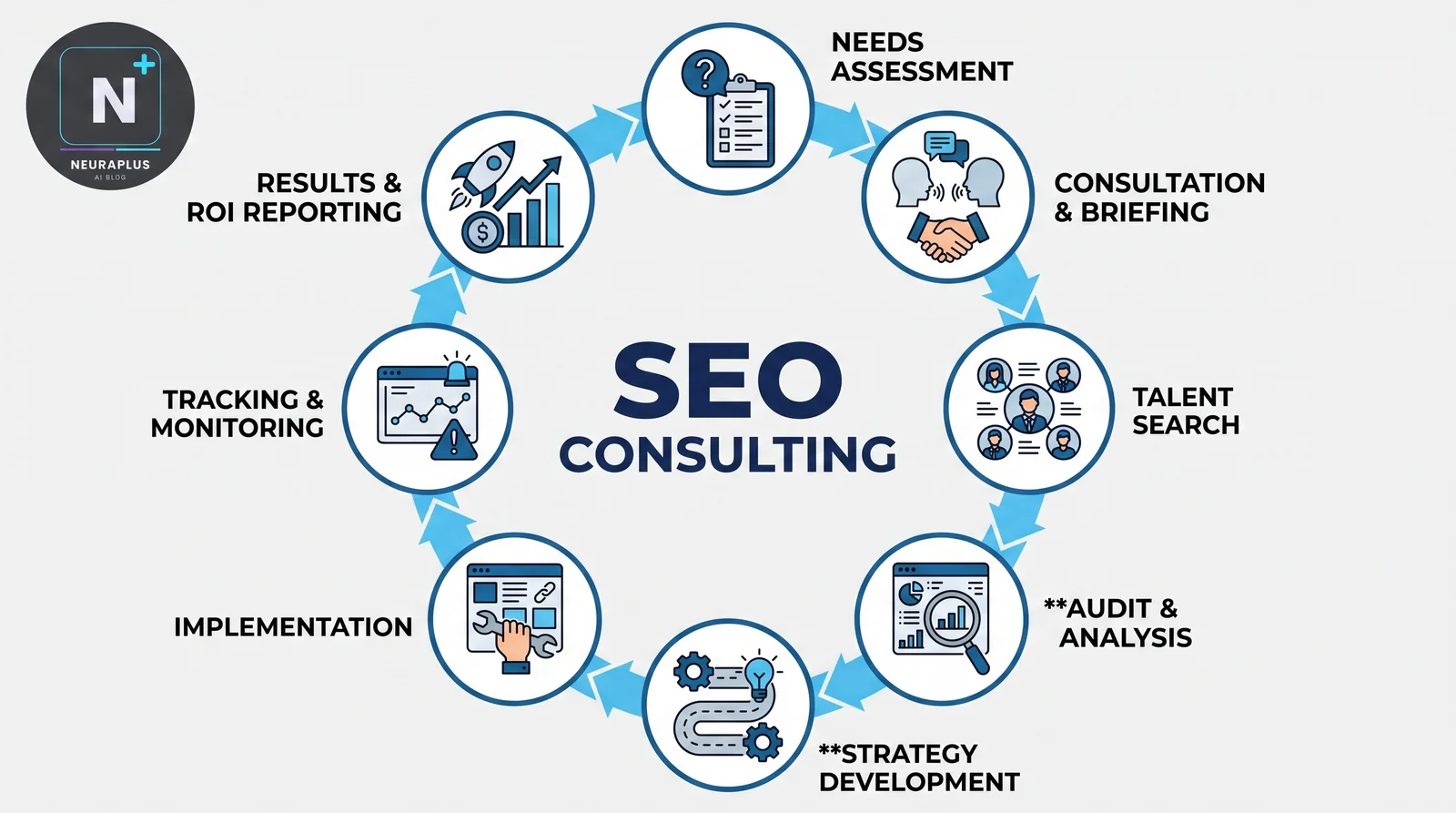
Strip away the jargon and the work usually breaks into four honest categories. First, a technical audit — checking that your site is actually crawlable, fast, and free of the kind of structural problems (broken redirects, duplicate pages, missing sitemaps) that quietly cap how well anything else you do can perform. Second, content strategy — figuring out which topics and questions your ideal customers are actually searching for, and building content that answers them clearly. Third, on-page and structured data work, making sure each page's headers, metadata, and schema markup give search engines (and increasingly AI systems) an unambiguous read on what the page is about. Fourth, and this is the part that separates a real consultant from someone reading a checklist, ongoing measurement — tracking what's actually moving, reporting it honestly, and adjusting the plan instead of running the same playbook regardless of results.
If you want a deeper look at how that content strategy piece works in practice, our own breakdown of the best AI content strategy for SEO walks through how we structure topics and briefs before a single article gets written.
What This Should Actually Cost You
| Engagement Type | Typical US Range | Best Fit For |
|---|---|---|
| 1 | Hourly consulting | $100 - $300/hr, one-off audits or advisory calls |
| 2 | Monthly retainer | $1,500 - $6,000/mo, ongoing strategy and execution |
| 3 | Project-based | $2,000 - $15,000, site migration or full content overhaul |
Those ranges will move up sharply for enterprise sites or highly competitive industries, and down for a small local business with a simple site. The honest rule of thumb: if a quote feels dramatically cheaper than everything else you've heard, ask exactly what's included before you assume you found a bargain. Cheap SEO work is rarely fast SEO work, and it's very often not real SEO work at all.
⚠️ Five red flags, in order of severity: Guaranteed #1 rankings on Google. No access to your own analytics dashboard. Pricing tied to a specific "number of backlinks." Vague monthly reports with no specific traffic or ranking numbers. Reluctance to explain, in plain language, what they're actually doing to your site.
Questions to Ask Before You Sign Anything
- Can you show me a real before-and-after result from a client in a similar industry, with actual numbers, not just a logo on a slide?
- Will I have direct access to my own Google Search Console and analytics for the full duration of the engagement, not just summary screenshots?
- What's your process for measuring whether it's working, and how often will you show me the raw data behind that?
- Do you test how AI search engines represent my brand, or only track classic Google rankings? This one matters more every month.
- What happens if the agreed strategy isn't working after 90 days — is there a plan to pivot, or do they just keep billing the same retainer regardless?
Why 2026 Changes the Vetting Bar
Here's the part a lot of consultants haven't caught up on yet: a growing share of the people who used to type a query into Google are now asking an AI assistant instead and getting a single synthesized answer with a handful of sources cited. A consultant who only tracks where you rank in the classic ten blue links is measuring half the picture. If you're evaluating candidates, ask specifically whether their process accounts for this — our guide on how to rank a blog on Google in the current environment covers exactly where the old playbook still holds and where it's changed.
The content itself has shifted too. Writing that's stuffed with keywords for a crawler to parse reads badly to a person and, ironically, often performs worse in AI-generated answers as well, since those systems reward content that answers a question clearly rather than content that repeats a phrase unnaturally. If a consultant's writing samples read like they were built purely to please a 2015-era algorithm, that's worth noticing. We go into this in more depth in how to write SEO articles that AI tools actually understand, which is a good gut-check for any writing samples a candidate shows you.
✅ The honest bar to set: A good SEO consultant in 2026 should be able to explain, without flinching, exactly what changes when you move from optimizing for a ranked list of links to optimizing for a generated answer. If they can't articulate that difference clearly, they're likely still selling last decade's service under this year's label.
Building a Long-Term Content Engine, Not Just a One-Time Fix
One thing worth setting expectations on early: SEO isn't a project you finish. It's closer to a habit your business needs to keep, the same way you keep bookkeeping current or keep your inventory stocked. A consultant worth hiring should leave you with something more durable than a single traffic bump — ideally a repeatable content and strategy framework your team can keep running, even after the engagement ends. Our own internal playbook for that longer-term view is laid out in our AI blog SEO strategy for 2026, which is a useful benchmark to compare against whatever plan a candidate presents to you.
If you're weighing whether to hire a solo consultant versus a full agency, the honest answer is that it depends less on price and more on how hands-on you want the relationship to be. A solo consultant usually means direct access to the person doing the actual work, faster decisions, and a tighter feedback loop — but also less bandwidth if you need multiple things moving in parallel. An agency can throw more people at a problem, but you'll often be talking to an account manager rather than the person actually writing your content or fixing your schema. Neither is automatically "better." It's a genuine trade-off worth being deliberate about before you sign anything.