🤖 AEO · Strategy · NeuraPulse
Best AEO Agency in the US 2026:
Why Answer Engines Are the New Front Page
A client asked me something last month that I couldn't stop thinking about: "Why did ChatGPT recommend our competitor by name, when we rank higher on Google?" That question, more than any keyword report or backlink audit, is why NeuraPulse spends most of its time these days on something we now call AEO — Answer Engine Optimization — instead of pure SEO. The search box hasn't disappeared. But a growing share of the people who used to type a query into Google are now asking a question to an AI assistant and getting a single, synthesized answer with maybe three or four sources cited underneath it. If your brand isn't one of those three or four sources, you're invisible in that moment, no matter how well you rank in the old ten blue links.
💡 In plain terms: AEO is the practice of structuring your content so AI systems — ChatGPT, Perplexity, Gemini, Google's AI Overviews — can find your specific claims, trust them, and quote or cite them directly inside a generated answer.
What an AEO Agency Actually Does Day to Day
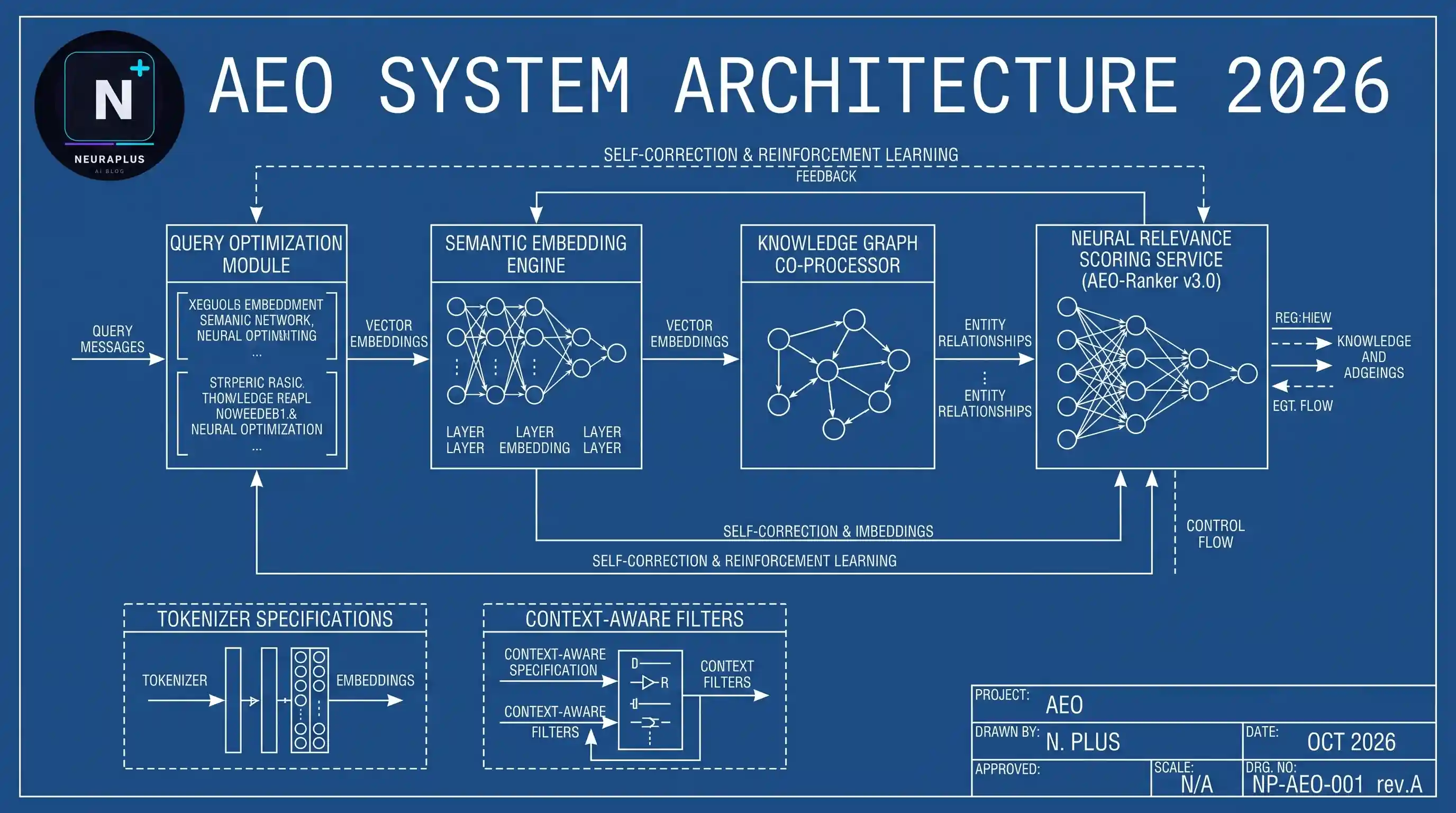
Strip away the buzzwords and an AEO engagement usually comes down to four connected workstreams. First, we map the entities around your brand — the people, products, categories, and claims that a knowledge graph needs to associate with you correctly. Second, we restructure existing content into a format that's easy for a language model to lift cleanly: direct answers near the top, supporting detail below, clear headers that mirror the way people phrase questions out loud. Third, we build out the technical layer — schema markup, FAQ markup, sitemap hygiene — that gives crawlers and AI retrieval systems unambiguous signals about what a page is and isn't. Fourth, and this is the part most agencies skip, we test the output for real: running your target queries through the major answer engines and checking whether your brand shows up, gets it right, and gets cited.
That last step matters more than people expect. It's entirely possible to do everything "correctly" on paper — clean schema, solid content, decent domain authority — and still get quietly left out of an AI-generated answer because a competitor's page happened to phrase a claim in a more directly quotable way. AEO work is iterative for exactly that reason. You publish, you test against real prompts, you adjust, and you test again.
SEO vs. AEO: What Actually Changes
| Dimension | Classic SEO | Answer Engine Optimization |
|---|---|---|
| 1 | Primary Goal | Rank in a list of links |
| 2 | Content Shape | Long-form, keyword-dense pages |
| 3 | Success Metric | Ranking position, click-through rate |
| 4 | What Wins | Backlinks and domain authority |
To be clear, this isn't an either/or situation, and any agency that tells you to abandon SEO entirely is giving bad advice. Technical health, site speed, and a solid backlink profile still feed directly into whether an AI system trusts your domain enough to cite it. AEO builds on top of SEO. It doesn't replace it. What changes is the layer of formatting, structure, and direct-answer clarity sitting on top of that same foundation.
⚠️ A common mistake: Several agencies have simply relabeled their existing SEO packages as "AEO services" without changing the actual deliverables. Ask any agency you're evaluating to show you a before-and-after AI citation test, not just a keyword ranking report.
How to Evaluate an AEO Agency in the US
Because the term is new, the market is pretty noisy right now. Here's what we tell prospective clients to ask any agency they're considering, including us.
- Can they show real schema and structured data work, not just a promise to "add some markup" later?
- Do they test against actual AI tools — running your brand's core questions through ChatGPT, Perplexity, and Google's AI Overviews — rather than relying only on traditional rank-tracking software?
- Do they understand entity and knowledge graph strategy, meaning they can explain how your brand, your founders, and your product categories are (or aren't) currently connected in the data these systems draw from?
- Do they have a content team that can write for both humans and machines at once, since content that reads as robotic to a person usually performs worse everywhere, including inside AI answers?
- Are they transparent about timelines? Early signal in 6 to 10 weeks is realistic. Anyone promising guaranteed citations in two weeks is overselling.
How NeuraPulse Approaches AEO
We built our own process around that same checklist, because we were tired of watching clients get sold recycled SEO decks with a new acronym stapled on top. Our engagements start with an entity audit — an unglamorous but essential step where we map every place your brand's facts, founders, pricing, and claims currently live online, and flag the inconsistencies that confuse AI retrieval systems. From there we move into content restructuring, converting your highest-value pages into a format built around direct, quotable answers, paired with the supporting depth that keeps human readers engaged too. It's the same underlying anxiety we hear when people ask us whether AI will replace programmers — the tools are moving fast, but the businesses that adapt their structure early are the ones that stay visible, whether that's in a hiring pipeline or an AI-generated answer. On the consumer side, the same pattern shows up in something as simple as which AI apps people install on Android — the ones that get recommended are the ones AI assistants already trust and can describe accurately.
The technical layer comes next: schema markup across products, FAQs, articles, and organizational data, plus a cleanup pass on anything that's currently sending mixed signals to crawlers. And then, every single time, we close the loop by running your priority questions through the major answer engines ourselves, documenting exactly where you show up, where a competitor is winning the citation instead, and why. That last piece is the one most agencies quietly skip, and it's the one that tells you whether the work is landing at all. If you're newer to how these systems reason and retrieve in the first place, our plain-language explainer on what agentic AI actually means is a good place to start.
✅ The honest version: AEO isn't magic, and no agency — us included — can guarantee a specific citation inside a specific AI tool, since those systems change constantly and aren't fully transparent about their retrieval logic. What a good AEO partner can guarantee is a structured, testable, continuously improving process aimed at exactly that outcome.
Who AEO Actually Matters For Right Now
Not every business needs to drop everything for this today, but a few categories should be paying close attention. SaaS companies competing on comparison and "best X for Y" queries are already seeing AI Overviews absorb a meaningful share of that search intent. Ecommerce brands are watching product recommendation queries get answered directly by AI shopping assistants before a shopper ever reaches a retailer's site. Local service businesses — plumbers, lawyers, clinics — are starting to appear (or fail to appear) in AI-generated local recommendation answers the same way they used to fight over the Google Maps pack. And publishers and content sites, understandably, are the most anxious group of all, since their entire business model depends on being the click, not just the cited source with no visit attached. The same shift is playing out one level down too — we've seen it firsthand covering AI tools for content creators in India and the wave of free AI tools students are already using, both of which depend on the same answer-engine discovery this article is about.
If your business sits in any of those categories, the practical move is to start now rather than wait for the space to fully mature. Early movers in any structural search shift tend to hold an advantage for years, simply because entity trust and citation history compound over time — the same way domain authority did in the early SEO era.
Frequently Asked Questions
*Based on internal before/after citation testing across client accounts; individual results vary by industry, starting domain authority, and competitive landscape.