💻 Dev Careers · Future of Work · AI
Will AI Replace Programmers in 2026? The Truth
About Coding Careers
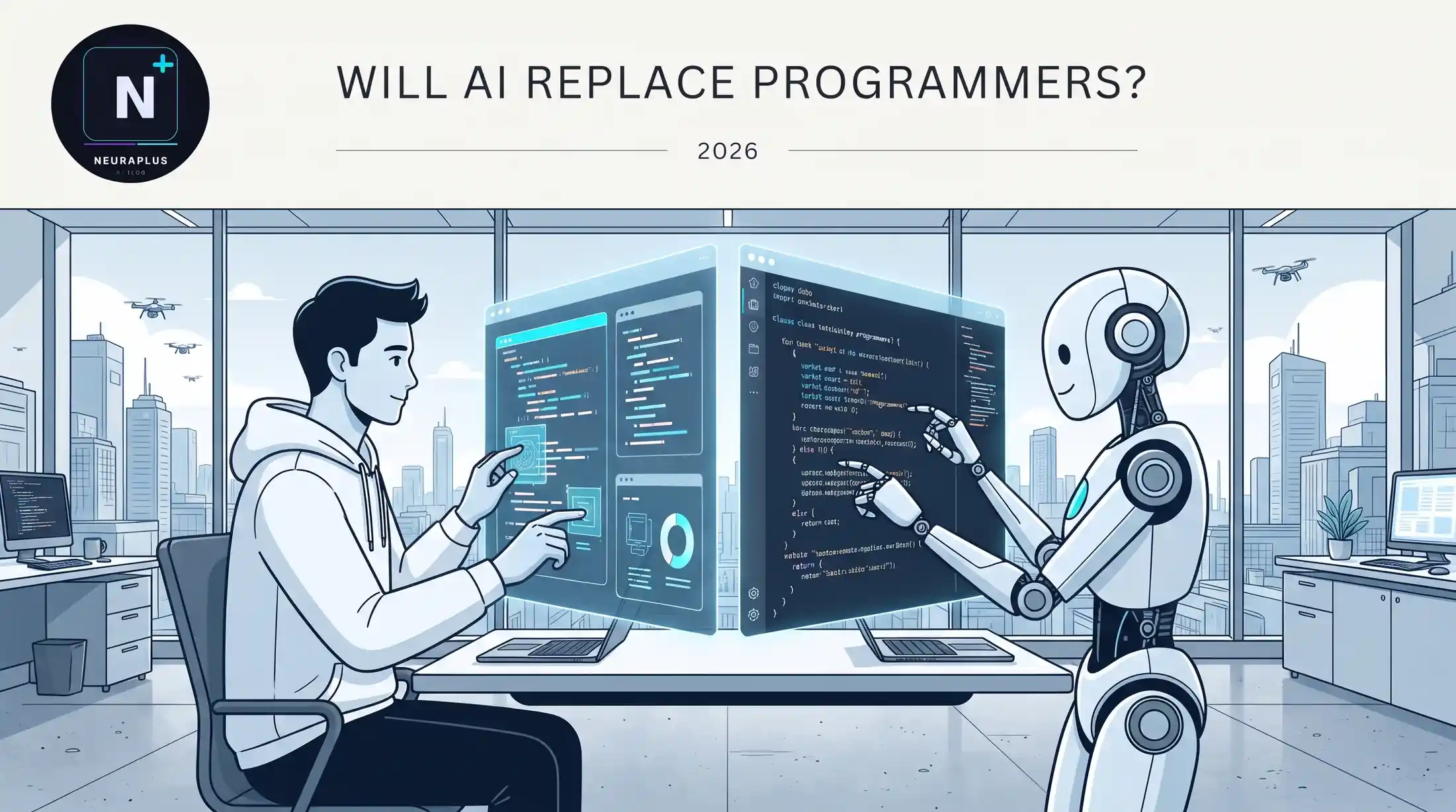
Let's cut through the noise and address the anxiety that keeps many developers awake at night: Is my career about to be automated out of existence? It's a fair question. We've seen AI write boilerplate, debug complex errors, and even generate entire applications from a single prompt. The technology is undeniably impressive.
But after analyzing hiring trends, speaking with engineering leaders at top tech firms, and building production systems alongside AI, I can give you a definitive answer: No, AI will not replace programmers in 2026. However, it will replace programmers who refuse to adapt. The role isn't dying; it's undergoing the most significant evolution since the invention of the compiler.
🔮 Behind the Magic: Why isn't AI taking over completely? Because writing code is only about 20% of a software engineer's job. The other 80% involves understanding ambiguous business requirements, negotiating with stakeholders, designing scalable system architecture, and making high-stakes trade-offs. AI is a brilliant typist, but it lacks the contextual awareness and accountability required for true software engineering.
The Great Shift: From Coder to Architect
The days of being paid purely to translate clear specifications into syntax are ending. In their place, a new paradigm is emerging. We are moving from an era of "code generation" to "code orchestration."
This is where the concept of vibe coding comes into play. Developers are no longer judged by how fast they can type or how many lines of code they produce. Instead, value is placed on the ability to direct AI systems, validate their outputs, and maintain the overall "vibe" or flow state of a project. You are becoming a manager of intelligent agents, not just a writer of functions.
⚠️ Myth vs. Fact:
Myth: "AI writes perfect, production-ready code instantly."
Fact: AI writes plausible code. It frequently hallucinates APIs, introduces subtle security vulnerabilities, and fails on edge cases. Human review, testing, and architectural oversight are more critical now than ever before.
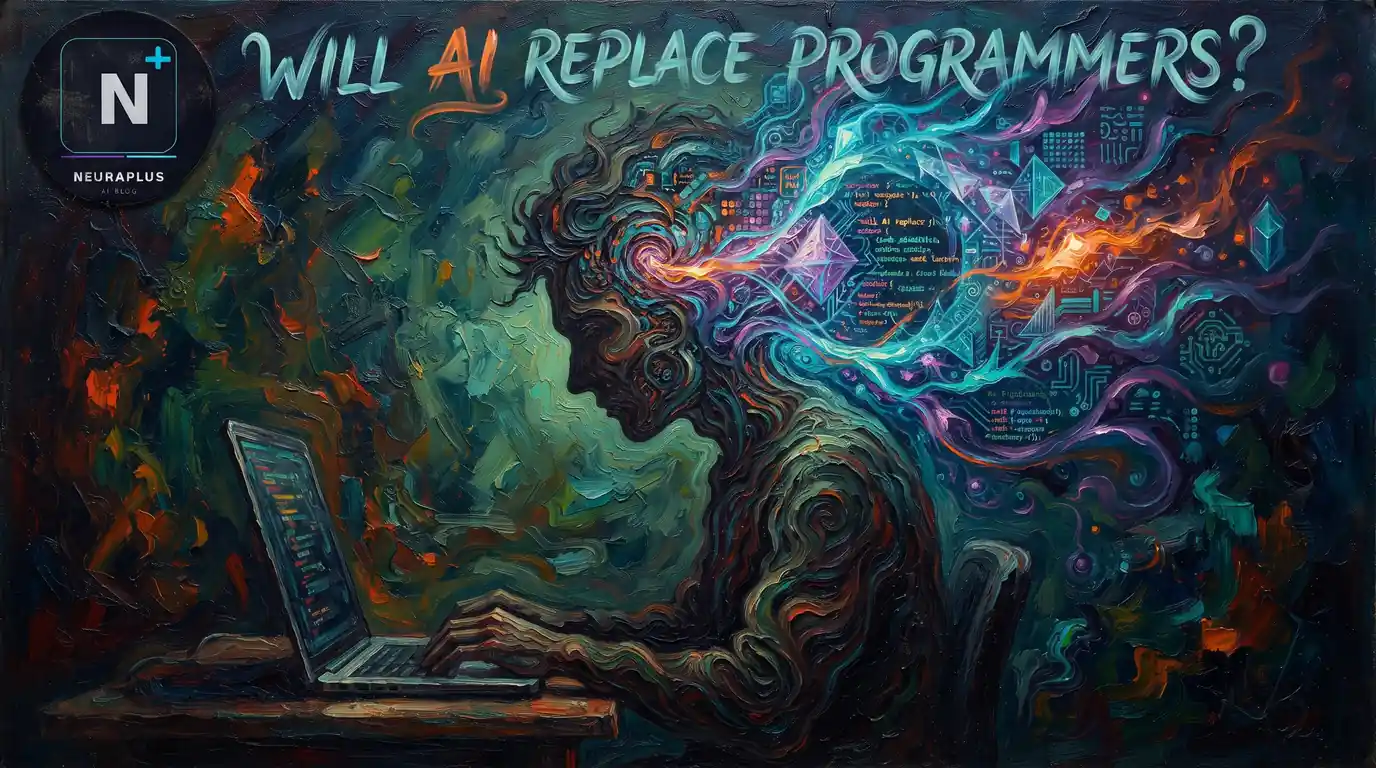
The shift from manual coding to AI-augmented system architecture
Why the Right Tools Make You Irreplaceable
The developers who are thriving in 2026 aren't fighting AI; they are leveraging it to become "10x engineers." But this requires mastering the right stack. If you are still manually writing boilerplate or searching Stack Overflow for basic syntax, you are putting yourself at a severe disadvantage.
To stay competitive, you need to integrate the best AI coding tools in 2026 into your daily workflow. The market has matured significantly, moving beyond simple autocomplete to full-context, repository-aware assistants.
For example, the ongoing debate between GitHub Copilot vs Cursor AI highlights a crucial choice: do you want a helpful sidebar assistant, or do you want an IDE that fundamentally understands your entire codebase and can execute multi-file refactors autonomously? For many serious developers, the latter is becoming the non-negotiable standard. In fact, our in-depth Cursor AI review for developers highlights exactly why this shift in tooling is creating a new class of highly productive, AI-native engineers.
The Macro View: Job Market Realities
When we zoom out and look at the broader artificial intelligence jobs future in 2026, the data is reassuring. While entry-level "code monkey" roles are being consolidated, the demand for senior engineers, system architects, security specialists, and AI-orchestration experts is skyrocketing.
Companies are realizing that building software with AI is not a "set it and forget it" process. It requires rigorous governance, complex integration, and continuous refinement. The barrier to starting a project is lower, but the barrier to building a secure, scalable, and maintainable enterprise system is higher than ever. That is where human expertise commands a premium.
How to Future-Proof Your Coding Career
If you want to ensure you are on the right side of this technological shift, here is your actionable playbook:
- Master System Design: AI can write a function, but it struggles to design a microservices architecture that handles millions of concurrent users. Deepen your knowledge of distributed systems, databases, and cloud infrastructure.
- Become an AI Power User: Don't just use AI for basic autocomplete. Learn to write complex, multi-step prompts, use AI for test generation, and automate your CI/CD pipelines.
- Focus on Business Logic: The most valuable developers are those who understand the why behind the code. Align your technical decisions with actual business outcomes and user needs.
- Double Down on Soft Skills: Communication, mentorship, and cross-functional collaboration are entirely human domains. An AI cannot negotiate a project timeline with a frustrated product manager.
Frequently Asked Questions
Final Verdict: Adapt or Get Left Behind
The question "Will AI replace programmers?" is the wrong question to ask. The right question is: "How can I use AI to become the best, most impactful engineer I can be?"
The tools are here, the paradigm has shifted, and the opportunities for those who embrace this change are limitless. Stop fearing the machine. Learn to command it. Your career as a software engineer isn't ending; it's just getting an incredible upgrade.