🌊 Dev Trends · AI · Future of Work
What is Vibe Coding? The 2026 Trend
Reshaping Software Development
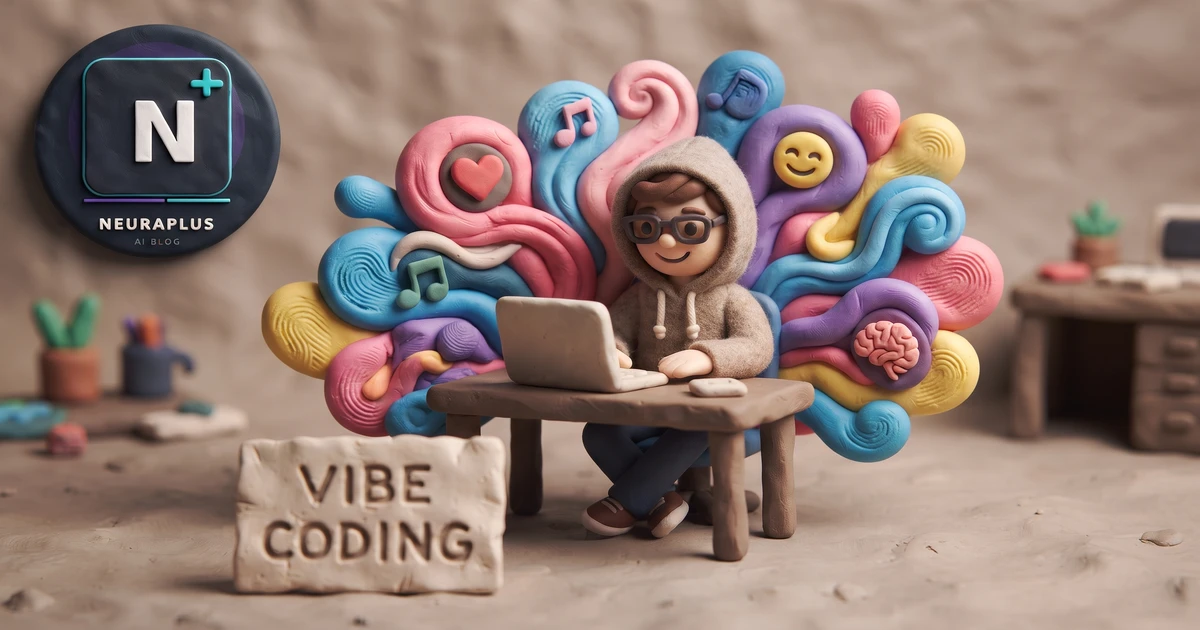
Picture this: You sit down at your desk with a vague idea for a new feature. Instead of opening Stack Overflow, hunting down documentation, or wrestling with a missing semicolon, you simply describe the architecture to your AI partner. It drafts the boilerplate, suggests the optimal database schema, and writes the API endpoints. Your job isn't to type every line; your job is to review, refine, and guide the overall direction. You are no longer a code typist. You are a director. Welcome to vibe coding.
If you've spent any time on developer Twitter or tech forums lately, you've undoubtedly heard the term "vibe coding" thrown around. But what exactly is it? Is it just a trendy buzzword for lazy programming, or does it represent a genuine paradigm shift in how we build software? After spending the last six months exclusively building projects using this methodology, I can confidently say it's the latter. Let's break down what vibe coding is, the technology powering it, and why it's the most important skill to master in 2026.
🔮 Behind the Magic: Vibe coding isn't magic; it's the culmination of advanced Large Language Models (LLMs) with massive context windows and agentic capabilities. Modern AI coding tools don't just autocomplete your next word; they parse your entire repository, understand your architectural patterns, and execute multi-step refactoring tasks autonomously. This shifts the computational heavy lifting from your brain to the machine, freeing you to maintain a continuous creative flow state.
Defining Vibe Coding in 2026
At its core, vibe coding is a software development methodology where the developer relies heavily on AI assistants to handle syntax, boilerplate generation, and routine debugging. This allows the human developer to focus entirely on high-level system architecture, creative problem-solving, and product logic.
It's called "vibe" coding because the primary goal is to maintain the "vibe"—the elusive flow state where you are deeply immersed in the creative process without being jolted out of it by trivial syntax errors or forgotten library imports. When you're vibe coding, you are operating at the level of intent, not implementation.
⚠️ Myth vs. Fact:
Myth: "Vibe coding means you don't need to know how to code anymore."
Fact: Vibe coding actually requires stronger foundational knowledge. Because the AI generates code at lightning speed, you must possess the architectural expertise to review it, spot subtle logical flaws, and guide the AI effectively. You are evolving from a bricklayer to an architect.
The shift from syntax-focused typing to intent-focused direction
The Toolkit: What Powers the Vibe?
You can't achieve a true flow state with clunky, outdated tools. The vibe coding revolution is entirely dependent on a new generation of AI coding tools in 2026 that are designed to be collaborative partners rather than simple autocomplete engines.
For many developers, this journey begins with choosing the right environment. The debate often centers around the differences between GitHub Copilot and Cursor AI. While Copilot remains a fantastic inline assistant, true vibe coders often gravitate toward agentic IDEs like Cursor or Windsurf. In fact, many teams are actively running a Windsurf vs Cursor IDE comparison to determine which platform offers the smoothest, most unobtrusive AI integration that keeps them in the zone.
The common thread among all top-tier vibe coding tools is their ability to understand context. They don't just look at the current file; they index your entire codebase, allowing you to ask questions like, "Where is the user authentication logic, and how can we add OAuth?" and receive a comprehensive, multi-file solution in seconds.
How Vibe Coding Changes the Daily Workflow
Let's contrast a traditional development day with a vibe coding day to see the tangible impact.
The Traditional Workflow (The "Grind")
- Read 15 pages of API documentation to understand a new library.
- Write boilerplate setup code manually.
- Run the code, encounter a cryptic syntax error, and spend 20 minutes debugging.
- Copy-paste the error into a search engine, sift through outdated forum posts, and apply a fix.
- Repeat. Flow state is broken multiple times an hour.
The Vibe Coding Workflow (The "Flow")
- Open your AI-native IDE and type a natural language prompt: "Set up a Next.js app with Tailwind and connect it to a Supabase database."
- The AI scaffolds the project, installs dependencies, and writes the initial connection logic.
- You review the code, spot a minor configuration tweak, and ask the AI to adjust it.
- You spend 90% of your time thinking about the product's unique business logic and user experience, not fighting the compiler.
The Elephant in the Room: Will This Replace Us?
It's the question every developer asks when a new AI breakthrough drops: Am I going to lose my job? The short answer is no, but your role will fundamentally transform. This isn't about AI replacing programmers; it's about programmers who use AI replacing programmers who don't.
As we explore in our deep dive on whether AI will replace programmers in 2026, the demand for software isn't decreasing—it's exploding. Vibe coding lowers the barrier to building complex applications, which means more ideas will be prototyped and shipped. The developers who thrive will be those who can effectively manage AI agents, validate their outputs, and stitch together complex systems. The value shifts from "how fast can you type" to "how well can you architect."
How to Start Vibe Coding Today
If you're ready to elevate your workflow and chase that perfect flow state, here is a practical roadmap to get started:
- Pick Your Weapon: Don't try to vibe code in a basic text editor. Download an AI-first IDE. Check out our in-depth Cursor AI review for developers to see why it's currently the gold standard for this workflow.
- Learn to Prompt Architecturally: Stop asking the AI to "write a function." Start asking it to "design a modular service layer for user authentication that handles rate limiting and JWT validation."
- Review Ruthlessly: Never blindly trust the AI's output. Treat it like a brilliant but occasionally hallucinating junior developer. Read the code it generates, understand it, and test it.
- Protect Your Flow: Turn off non-essential notifications. Use AI to handle the mundane setup tasks so you can dedicate your peak mental energy to the hard, creative problems.
Frequently Asked Questions
Final Verdict: Catch the Vibe
Vibe coding isn't about cutting corners; it's about removing friction. It's about recognizing that your human brain is a terrible syntax parser but an incredible creative engine. By offloading the mundane to AI, you reclaim your time, your energy, and most importantly, your joy in building things.
The tools are here, the models are incredibly capable, and the community is already reaping the benefits. The only question left is: are you going to keep grinding through the boilerplate, or are you ready to catch the vibe?